
Jun 5, 2009
Why, oh why do I make you cry? (Suis la lune) awesome swedish Screamo
Wunderschöner Song der Schweden Suis la lune (Screamo oder so). Sehr nette Präsentation auch. Taken from vimeo.
Heißt eigentlich Fingers. Voice. Heart. Shake. Shake. Shake und ist von ihrer letzten LP Quiet, Pull the Strings. (Es fehlt das Intro.) Aber die Melodielinie am Ende des Songs ist so verdammt gut, dass es beinahe schmerzt. Die Band hat vor kurzem eine neue EP herausgebracht, wirklich schöne Musik ist da drauf, so eine Melange aus ruhigen, sphärischen Gitarrenpassagen und lauten Eruptionen mit sehr emotionalem Gesang. Kompositorisch immer durchdacht.
Suis la lune sind schon lange eine meiner Lieblingsbands, und das Besondere ist, dass man jeden einzelnen ihrer Songs hoch schätzen muss, denn man weiß nicht wann überhaupt mal wieder etwas erscheinen wird. In gefühlten fünf Jahren seit Gründung haben sie eine LP, zwei EPs (eine davon wird bereits nicht mehr gedruckt) und mehrere Splits und Kompilationsbeiträge herausgebracht (u.a. einen 30 Sekunden-Kracher zur Emo Apocalypse).
More songs to listen to at lastfm.
Sehr diy, sehr schön, sehr emo in the true sense of the word.

May 16, 2009
Dianmo 點墨 Kulturspezial Taiwan
Was lange währt, wird endlich gut. Und das so richtig.
Eine feine Ausgabe, die wir auf den Weg gebracht haben, es finden sich Artikel über Taiwans Ureinwohner, einen Film Hou Hsiao-hsiens, ein Vergleich von Justiz in Übergangsregimen (DDR und Taiwan), Eindrücke und Erlebnisberichte, Bilder, Taiwanstudien und vieles mehr. Ab gestern online auf der Adresse eures Vertrauens.
Am 28. Mai 2009 wird sich Dianmo als AG des StuRa der Uni Leipzig im Foyer des GWZ (Beethovenstraße) vorstellen, geschlagene vier Stunden lang, von 10 bis 14 Uhr, mit Schnaps, Tee und Tanz. Interessierte und Streuner immer herzlichst willkommen, mal vorbeizuschauen!
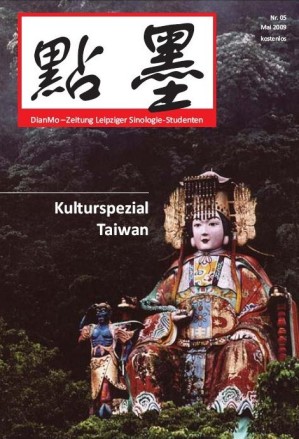
Viel Spaß beim Schmökern! :)
Eine feine Ausgabe, die wir auf den Weg gebracht haben, es finden sich Artikel über Taiwans Ureinwohner, einen Film Hou Hsiao-hsiens, ein Vergleich von Justiz in Übergangsregimen (DDR und Taiwan), Eindrücke und Erlebnisberichte, Bilder, Taiwanstudien und vieles mehr. Ab gestern online auf der Adresse eures Vertrauens.
Am 28. Mai 2009 wird sich Dianmo als AG des StuRa der Uni Leipzig im Foyer des GWZ (Beethovenstraße) vorstellen, geschlagene vier Stunden lang, von 10 bis 14 Uhr, mit Schnaps, Tee und Tanz. Interessierte und Streuner immer herzlichst willkommen, mal vorbeizuschauen!
Viel Spaß beim Schmökern! :)
Mar 23, 2009
A Zombie Amongst Us
The appearance of a Zombie is a frightening sight.
What bothers me with recent German scholarship on China and Taiwan is that it still follows two outdated leads to view Taiwan as either a) as part of China proper (although not openly falling in with the "renegade province" CP hymn), or b) as the "other", the "free" China, as the alternative to authoritarian rule and role model for China's development.
Either one does little to enhance our understanding of Taiwanese society.
What they actually do is carry on colonialist and imperialist myth, the only difference being not Western colonialism the culprit, but the Chinese claim on the island in its place taken for granted. In a way, Taiwan has grown to play the part of the reparation the West is willing to pay for all the harm and sorrow it has shed on China in the past.
Since the 1980s the metaphor of the "other China" has become less and less attractive due to China's opening up and integration into the capitalist World system. Notions of democratic change through economic liberation and rising incomes are still going strong, so the hopes for China becoming a democratic state have increased since then. On the other hand, relativism has told us that democracy does not follow a teleologic script. It might just not fit in everywhere.
But does that ease our mind on the fact that we abandon countries which have democratized all by themselves? Can we value potential economic gain over our ideological commitment to fellow democracies (which in the long run is a commitment to our very own democracy)?
Viewing Taiwan as "China" or at least as part of it has nothing to do with Taiwan. It is about Western hopes and fears, not to mention the distinctly European origin of the mere constructs that have enabled political entities such as the nation state to rise to global domination in the first place. Taiwan has had millions of years not belonging to anybody but itself. And that's the way it should be. If there ought to be someone to judge the political affiliation of that island at all, it is its population and no one else.
In light of post-colonial theories, the troublesome concepts of Chinese Taiwan should be abandoned in an instant. All they do is continue an outmoded way of thinking, and this thinking has already profoundly impacted the ways in which Taiwanese see themselves. True liberation of the minds comes through liberation from colonial thinking.
A Zombie, even a mere conceptual one, should be laid to peaceful rest eventually, not to trouble future generations with its "one country" claims.
What bothers me with recent German scholarship on China and Taiwan is that it still follows two outdated leads to view Taiwan as either a) as part of China proper (although not openly falling in with the "renegade province" CP hymn), or b) as the "other", the "free" China, as the alternative to authoritarian rule and role model for China's development.
Either one does little to enhance our understanding of Taiwanese society.
What they actually do is carry on colonialist and imperialist myth, the only difference being not Western colonialism the culprit, but the Chinese claim on the island in its place taken for granted. In a way, Taiwan has grown to play the part of the reparation the West is willing to pay for all the harm and sorrow it has shed on China in the past.
Since the 1980s the metaphor of the "other China" has become less and less attractive due to China's opening up and integration into the capitalist World system. Notions of democratic change through economic liberation and rising incomes are still going strong, so the hopes for China becoming a democratic state have increased since then. On the other hand, relativism has told us that democracy does not follow a teleologic script. It might just not fit in everywhere.
But does that ease our mind on the fact that we abandon countries which have democratized all by themselves? Can we value potential economic gain over our ideological commitment to fellow democracies (which in the long run is a commitment to our very own democracy)?
Viewing Taiwan as "China" or at least as part of it has nothing to do with Taiwan. It is about Western hopes and fears, not to mention the distinctly European origin of the mere constructs that have enabled political entities such as the nation state to rise to global domination in the first place. Taiwan has had millions of years not belonging to anybody but itself. And that's the way it should be. If there ought to be someone to judge the political affiliation of that island at all, it is its population and no one else.
In light of post-colonial theories, the troublesome concepts of Chinese Taiwan should be abandoned in an instant. All they do is continue an outmoded way of thinking, and this thinking has already profoundly impacted the ways in which Taiwanese see themselves. True liberation of the minds comes through liberation from colonial thinking.
A Zombie, even a mere conceptual one, should be laid to peaceful rest eventually, not to trouble future generations with its "one country" claims.
Mar 17, 2009
萊比錫書展,我的感想
每年三月是萊比錫書展,德國第二大的 (只法蘭克福的更大)
這次也是臺北書展基金會第一次來到萊比錫
有許多臺灣作家演講
其中有比較 established 的 (陳玉慧)、有代表年輕臺灣文學的 (伊格言)、也有動心的詩人 (鴻鴻)
很好!
我很幸運,有機會認識了一些很善良的人
演講也算是很成功的
有德國出版公司對伊格言的作品很有興趣
所以十分希望明年臺北書展基金會可以再來
我雖然不在那工作,仍然大部分的時間都在他們攤子那裏
或隔壁的臺北代表處之攤子
因爲我們與臺灣只能有偷偷的國際關係,所以臺灣也不能有所謂的領事館
雖然功能一莫一樣
you may call that humiliating
since that is what it is
要不然威力的鄰居會生氣
德國商人可能沒有別國家商人的好處
太可惜了
我跟臺北代表處的一些人聊聊天,不小心談政治
代表處員對臺灣獨立國的未來並不樂觀
因爲已經可看到將來的暗示
國民黨政府不只不願意對金錢外交再花那麽多錢
而在外交的預算案都逐漸減少
臺北代表處在德國能花的錢越來越少
已經不知道明年能不能再來書展
1992年第一次來的
這種文化代表很重要:
雖然中國的攤子一定比我們的大、比我們的漂亮、中國作家比我們多、也一定會收較多注意
還是有人故意來找我們
還是有人在管臺灣小寶島的命運
因爲他們知道臺灣與中國不同的部分在哪
他們知道臺灣人努力地達到自由和民主
給他們看臺灣不斷以這種努力為澳很重要
這樣對臺灣已經有意見的人才不會放棄它
去年換了執政黨對代表處很有關係
在德國非常受歡迎的臺灣代表謝志偉被趕走
換了一個官僚主義者
代表處員告訴我,德國記者打電話想知道臺灣對莫一件事情的看法,
新的代表不會出一件
這樣工作氣氛對代表處員來說已經沒有意義了
好像代表對臺灣這地沒有特別的意見
這對臺灣在西方人的角度内有不好的結果
記者的影響力隨處都很大
記者如果不會收代表處的意見資料
就會去找別的資源
這樣做會間接地幫助中國看法更普及
而注意臺灣的人越來越少
支持臺灣這個民主國家的人
不少
可是他們需要先見到臺灣人民自己願意不惜代價地保護珍貴的民主制度
以及表示臺灣人自己要民主、要平等、要獨立
目前還趕得到時間
怕七年後會太晚
目前的政府已在準備經濟合作與中國大陸越來越密切,更多地靠大陸
同時把國際代表減少
對我來說,都暗示到我不想經歷的未來
我們一起努力吧
我們別分開兩派
我們做真正的我們吧!
這次也是臺北書展基金會第一次來到萊比錫
有許多臺灣作家演講
其中有比較 established 的 (陳玉慧)、有代表年輕臺灣文學的 (伊格言)、也有動心的詩人 (鴻鴻)
很好!
我很幸運,有機會認識了一些很善良的人
演講也算是很成功的
有德國出版公司對伊格言的作品很有興趣
所以十分希望明年臺北書展基金會可以再來
我雖然不在那工作,仍然大部分的時間都在他們攤子那裏
或隔壁的臺北代表處之攤子
因爲我們與臺灣只能有偷偷的國際關係,
雖然功能一莫一樣
you may call that humiliating
since that is what it is
要不然威力的鄰居會生氣
德國商人可能沒有別國家商人的好處
太可惜了
代表處員對臺灣獨立國的未來並不樂觀
因爲已經可看到將來的暗示
國民黨政府不只不願意對金錢外交再花那麽多錢
而在外交的預算案都逐漸減少
臺北代表處在德國能花的錢越來越少
已經不知道明年能不能再來書展
1992年第一次來的
這種文化代表很重要:
雖然中國的攤子一定比我們的大、比我們的漂亮、
還是有人故意來找我們
還是有人在管臺灣小寶島的命運
因爲他們知道臺灣與中國不同的部分在哪
他們知道臺灣人努力地達到自由和民主
給他們看臺灣不斷以這種努力為澳很重要
這樣對臺灣已經有意見的人才不會放棄它
在德國非常受歡迎的臺灣代表謝志偉被趕走
換了一個官僚主義者
代表處員告訴我,德國記者打電話想知道臺灣對莫一件事情的看法,
新的代表不會出一件
這樣工作氣氛對代表處員來說已經沒有意義了
好像代表對臺灣這地沒有特別的意見
這對臺灣在西方人的角度内有不好的結果
記者的影響力隨處都很大
記者如果不會收代表處的意見資料
就會去找別的資源
這樣做會間接地幫助中國看法更普及
而注意臺灣的人越來越少
支持臺灣這個民主國家的人
不少
可是他們需要先見到臺灣人民自己願意不惜代價地保護珍貴的民主制
以及表示臺灣人自己要民主、要平等、要獨立
目前還趕得到時間
怕七年後會太晚
目前的政府已在準備經濟合作與中國大陸越來越密切,更多地靠大陸
同時把國際代表減少
對我來說,都暗示到我不想經歷的未來
我們一起努力吧
我們別分開兩派
我們做真正的我們吧!
Mar 10, 2009
50 Jahre tibetischer Aufstand
Der Deutschlandfunk hatte eine Reportage im heutigen Kalenderblatt:
(leider dürfen die Beiträge des Kalenderblattes, jeden Tag um 9:05 Uhr, nicht mehr als stream online gestellt werden, darum hier der reine Text)
Weiter geht es hier.
Dafür gibt es ein Interview mit dem Gesandten des Dalai Lama in Deutschland, Keysan Gyaltsen.
Die Lage beschreibt er schon ziemlich drastisch, v.a. wenn man die dürftige Quellenlage zur Hand nimmt. "Das ganze Land ein großes Gefängnis"... Ist natürlich die Darstellung nur der einen Seite. Dennoch: man muss doch nicht das Land abschließen bzw. für ausländische Tibeter, die die Unabhängigkeit vertreten, unzugänglich machen. Ist ja schon so, als würde ihnen damit ein - ich möchte es mal "Menschenrecht" nennen, genommen, nämlich die Rückkehr in die Heimat. Stimmt schon, das passiert heute an leider viel zu vielen Orten. Auch kommt das Interview um einiges nüchterner und realistischer daher als so manche Partei-Propaganda.
Die Zeit hat schon etwas zynisches an sich. Lässt man sie durch Nichtstun verstreichen, löst sie manche Fragen wie von selbst. In einigen Jahren wird es die Debatte um den "Freiheitskampf der Tibeter", über das Wie und Wann, vielleicht gar nicht mehr geben. Tibet könnte dann so in die VR inkulturiert sein, dass die tibetische Kultur zu einem musealen Artefakt wird. Zwar wird dann hoffentlich Frieden herrschen, aber die Tibeter werden in ihrer Mehrzahl wohl Chinesen sein. Da können die einzelnen Personen vor Ort natürlich nichts für.
Ich mache mir bloß gerade Gedanken, über welch extraordinäre Macht das Modell des "Nationalstaates" eigentlich verfügt, wenn es Legitimation für Besetzung, Ausübung von Vorherrschaft, Bildung einer einheitlichen "nationalen" Kultur werden kann. Ohne dass es als historisches Produkt hinterfragt würde! Es gibt keine real existierenden Grenzen (von einigen natürlichen mal abgesehen), sie sind nur künstlich von uns gezogen. Ich habe beim Schreiben einer Hausarbeit über die Vormacht des "Staates" über "Religionen" (bei vorheriger "säkularer" Trennung der beiden "Bereiche") reflektiert, doch das gleiche ließe sich auch von "Kulturen" oder "Ethnien" sagen. Dieses Modell des modernen Nationalstaates hat uns, der Erdbevölkerung, viel Leid und Zwietracht gebracht. Vielleicht gehört es deswegen in die Schublade der (postmodernen) Geschichte.
(leider dürfen die Beiträge des Kalenderblattes, jeden Tag um 9:05 Uhr, nicht mehr als stream online gestellt werden, darum hier der reine Text)
"Am frühen Morgen des 10. März 1959 versammelten sich nach Sonnenaufgang Tausende von Tibetern vor der Sommerresidenz des Dalai Lama. Die große Menschenmenge strömte wegen eines Gerüchts zusammen, wonach die chinesischen Kommunisten planten, den Dalai Lama zu einer Kulturveranstaltung in das chinesische Militärhauptquartier einzuladen und dort festzunehmen. Bis zum Mittag hatte sich der Aufruhr in einen allgemeinen Volksaufstand verwandelt."Aufstand der Tibeter
Vor 50 Jahren: 80.000 Tote bei Protesten gegen die chinesische Besatzung
Von Otto Langels
Schon im Herbst 1949, gleich nach der Machtübernahme der Kommunisten in Peking, erhob China Anspruch auf das Territorium Tibets. Ein Jahr später marschierte die Volksbefreiungsarmee Mao Zedongs in den Himalaya-Staat ein. Versuche der tibetischen Bevölkerung, sich mit der kommunistischen Regierung zu arrangieren, schlugen fehl. Die Proteste und bewaffneten Aktionen gegen die Besatzungsmacht eskalierten schließlich Anfang März 1959.
So beschreibt der chinesisch-amerikanische Historiker Chen Jian in seiner Geschichte der tibetischen Rebellion den Ausbruch der Unruhen in der Hauptstadt Lhasa.
Die Vorgeschichte des Aufstands reicht in das Jahr 1949 zurück, unmittelbar nach der Gründung der Volksrepublik China, als die kommunistische Regierung Jahrhunderte alte Ansprüche auf die Himalaya-Region geltend machte. Peking ignorierte die 1913 proklamierte staatliche Unabhängigkeit Tibets und erklärte, das Land von den so genannten "imperialistischen Kräften" und dem "reaktionären Feudalregime in Lhasa" befreien zu wollen. 1950 marschierte die chinesische Armee in Tibet ein. Ein Jahr später schloss eine Delegation des Dalai Lama, des geistlichen und weltlichen Oberhaupts der Tibeter, mit der chinesischen Regierung ein 17-Punkte-Abkommen. Darin heißt es unter Anderem:
"Das tibetische Volk soll in die große Völkerfamilie des Mutterlandes der Volksrepublik China zurückkehren. Das tibetische Volk hat das Recht zur Ausübung regionaler Autonomie unter der Führung der zentralen Volksregierung."
In den Augen der Tibeter war das Abkommen jedoch nicht rechtmäßig, sondern durch massiven politischen und militärischen Druck aus Peking zustande gekommen.
"Tibet sah sich diesem großen Nachbarn aus dem Osten ausgesetzt, alleine, und da blieb nichts anderes, als das Beste aus der Situation zu machen. Und die einzige Möglichkeit war natürlich, den Feind zu beschwichtigen."
Weiter geht es hier.
Dafür gibt es ein Interview mit dem Gesandten des Dalai Lama in Deutschland, Keysan Gyaltsen.
Die Lage beschreibt er schon ziemlich drastisch, v.a. wenn man die dürftige Quellenlage zur Hand nimmt. "Das ganze Land ein großes Gefängnis"... Ist natürlich die Darstellung nur der einen Seite. Dennoch: man muss doch nicht das Land abschließen bzw. für ausländische Tibeter, die die Unabhängigkeit vertreten, unzugänglich machen. Ist ja schon so, als würde ihnen damit ein - ich möchte es mal "Menschenrecht" nennen, genommen, nämlich die Rückkehr in die Heimat. Stimmt schon, das passiert heute an leider viel zu vielen Orten. Auch kommt das Interview um einiges nüchterner und realistischer daher als so manche Partei-Propaganda.
Die Zeit hat schon etwas zynisches an sich. Lässt man sie durch Nichtstun verstreichen, löst sie manche Fragen wie von selbst. In einigen Jahren wird es die Debatte um den "Freiheitskampf der Tibeter", über das Wie und Wann, vielleicht gar nicht mehr geben. Tibet könnte dann so in die VR inkulturiert sein, dass die tibetische Kultur zu einem musealen Artefakt wird. Zwar wird dann hoffentlich Frieden herrschen, aber die Tibeter werden in ihrer Mehrzahl wohl Chinesen sein. Da können die einzelnen Personen vor Ort natürlich nichts für.
Ich mache mir bloß gerade Gedanken, über welch extraordinäre Macht das Modell des "Nationalstaates" eigentlich verfügt, wenn es Legitimation für Besetzung, Ausübung von Vorherrschaft, Bildung einer einheitlichen "nationalen" Kultur werden kann. Ohne dass es als historisches Produkt hinterfragt würde! Es gibt keine real existierenden Grenzen (von einigen natürlichen mal abgesehen), sie sind nur künstlich von uns gezogen. Ich habe beim Schreiben einer Hausarbeit über die Vormacht des "Staates" über "Religionen" (bei vorheriger "säkularer" Trennung der beiden "Bereiche") reflektiert, doch das gleiche ließe sich auch von "Kulturen" oder "Ethnien" sagen. Dieses Modell des modernen Nationalstaates hat uns, der Erdbevölkerung, viel Leid und Zwietracht gebracht. Vielleicht gehört es deswegen in die Schublade der (postmodernen) Geschichte.
Mar 8, 2009
Wenn Kinder das Sagen hätten...
Kinder drücken meist direkt und ehrlich das aus, was sie denken. Was läge also näher, als Kinder zu den Themen zu Wort kommen zu lassen, die so klar und einfach beantwortet werden können, über die wir uns jedoch böse die Köpfe zerbrechen und manchmal sogar gegenseitig einschlagen würden...?
Surrender : Director: Tung-Wang Wu | Genre: Documentary | Produced In: 2004
Synopsis: SURRENDER is a documentary in which Taiwanese children of 4 to 8 years old talk about their views on surrendering to China. Asking children big questions sounds silly, and living under China's threat to Taiwan is no laughing matter. As in my other recent works, I explore the concept of reversal to provoke an accidental stream of unexplored thoughts and discover alternative perspectives on the conventional wisdom about social issues, in this case, China's constant threat to Taiwan.
Die hier interviewten hinreißenden Kinder leben auf Kinmen, der Insel direkt vor der Festlands-Küste, die aber zu Taiwan (resp. der Republik China) gehört. Infos über den Autoren, der 2004 mit "Surrender" auf dem Talent Campus der Berlinale vertreten war, hier.
Ich habe ein Weilchen hin und her überlegt, ob man Kinder unbedingt mit solchen Fragen konfrontieren muss... Und ich bin zu keinem Schluss gekommen. Warum sollte man ihnen nicht den Verstand zutrauen, auch mit solch heiklen Dingen umzugehen?
Dann wiederum drücken Kinder oft genug genau das aus, was sie in ihrem sozialen Umfeld tagtäglich zu hören und sehen bekommen. Mit diesem Gedanken im Hinterkopf können wir durchaus Schlüsse aus den Aussagen der Kinder ziehen... In Taiwan wird auch in der nächsten Generation kein "chinesisches" Bewusstsein entstehen, sondern sich der statistisch schon nachgewiesene Trend fortsetzen, sich distinkt, artikuliert und selbstbewusst als "Taiwaner" zu identifizieren.
Was mir nicht gefällt, ist dieser nationalistische Unterton bei allem und jedem, was das Verhältnis zwischen Taiwan und China anbetrifft. Ist verstärkter Nationalismus eine Form der Kompensation für die nicht gewährte Anerkennung dessen, was im Gefühl schon lange Realität ist, nämlich ein de jure anerkannter taiwanischer Staat? Ist der Nationalismus eine natürliche Reaktion auf die Drohung des "Anderen", sich der mühsam erkämpften Rechte und Freiheiten zu bemächtigen? Eine Trotzreaktion, die durch die so unverhältnismäßige machtpolitische Unterlegenheit einer kleinen Insel gegenüber dem Kontinent-gleichen China nur noch gesteigert wird?
Hier noch ein zweiter Eindruck des Regisseurs, Wu Tung-wang:Mar 3, 2009
the sound for now - my playlist feb. 2009
Zeit für ein wenig Leben hier...
Was folgt, ist ein kurzer Einblick in die Musik, die mich diesen Monat am Laufen und Leben und meine Abspiel-Software am Rotieren hielt - die Alben sind in keiner spezifischen Reihenfolge aufgelistet, sondern stimmungsabhängig zu genießen. Abwechslung ist die Kunst, und dies ist bei weitem keine neue Einsicht!
Thursday - Common Existence(Epitaph 2009)

Thursdays "Full Collapse" (2001) war eines jener musikalischen Erlebnisse, die meine Jugend formten. Es ist noch heute einmalig in seiner Intensität und Leidenschaft. Zumindest in Europa war es damals auch überhaupt kein Problem, zu seinen Gefühlen zu stehen und somit "Emo" zu sein. Das ist mittlerweile wohl anders. Zum Glück war Emo für mich nie eine Art, wie man seinen Scheitel und die Jeans trägt... "Common Existence" ist natürlich kein zweites "Full Collapse", und auch wenn es eine Zeit gab, in der ich mir nichts sehnlicher gewünscht hätte als das ("War all the Time" war schon eine Enttäuschung!), funktionieren Thursday mittlerweile um einiges besser als auf ihren letzten Alben. Es scheint wirklich so, dass der Labelwechsel zu Epitaph und eine wait and see-Einstellung Wunder gewirkt haben. Natürlich gibt es technisch anspruchsvollere Kapellen, doch das etwas postrockigere Gewand steht Thursday ausgesprochen gut. Die oft angeführten Envy-Referenzen aufgrund einer gemeinsamen EP (, die übrigens relativ schwach ausfiel, was aber v.a. an den heute so zahnlosen Japanern von Envy lag) kann ich nun nicht wirklich ausmachen, Thursday bleiben auch aufgrund der stimmlichen Präsenz Geoff Rickleys immer noch Thursday. Sie werden zum Ende von "Common Existence" hin zunehmend ruhiger und ich ertappe mich dabei, die Musik nur noch im Hintergrund zu verfolgen, während meine Aufmerksamkeit sich anderen Dingen zuwendet. Das zumindest wäre anno 2001 nicht vorgekommen. Ich werde wohl gleich noch einmal "Full Collapse" hervorkramen; Eine solche Atmosphäre, die mit einem Intro aufnimmt und einem Outro wieder in die normale Welt entlässt, ist einmalig! Samt der großartigen Steigerung "Autobiography of a Nation", dem emotionalen Wechselbad "Paris in Flames" und dem zu Tränen rührenden Schlussakt in "How Long is the Night?".
Anspieltipps hier: Tracks 1-4 zur Eingewöhnung und dann den Rest durchhören!
Gifts From Enola - Loyal Eyes Betrayed the Mind (Mylene Sheath 2006)

Es ist wie ein Traum.
Ich wandere über sanften Boden. Das Gras ist nass, ich spüre es an meinen nackten Füßen, die hinüber schweben, obwohl doch Winter ist und nur welkes Gras aus dem letzten Jahr auf Wiederbelebung wartet. Von rechts summt eine Melodie heran, eine Gitarre verfängt sich im Delay ihres stark rhythmisierten Metalriffes, wird von einer zweiten Melodie verfolgt und geht in einen himmlischen Basslauf über, nur um sich direkt im Anschluss in noch gewaltigere Höhen zu schrauben, mit einer absolut gewaltigen und dennoch klaren Verzerrung. Ein sphärisches Zwischenstück lässt unseren Traum sanft ausklingen. Und das in nur einem Stück.
Gifts From Enola spielen instrumentalen Postrock. Das ist soweit nichts Neues und gerade mächtig in Mode, möchte man kritisch anmerken. Der Unterschied aber liegt darin, dass sie uns genau das geben, was wir uns immer gewünscht haben: Neben all diesen wundervollen atmosphärischen und verträumten Parts, zu denen man einfach nur mit offenem Mund staunen kann und Tränen ob ihrer verschwenderischen Schönheit vergießen möchte, können Gifts From Enola nämlich auch noch richtig geil rocken! Ich bin versucht zu sagen, genau das hat in diesem Genre bisher gefehlt... Nur dass jetzt ja nicht Zehntausend auf den Gedanken kommen, genau das nachmachen zu wollen!
Ist besser als Caspian oder Russian Circles, die ich in letzter Zeit angebetet habe. Ein Stück Musik gewordene Schönheit, wie sie in Worten nicht auszudrücken ist.
Anspieltipps: Track 1 "Behind Curtains Closing" gibt die Richtung wie in Abstract-Form optimal vor. Zum Glück gehen hernach die Ideen nicht aus. "In the Company of Others" (Track 3) wäre aufgrund seines musikalischen Abwechslungsreichtum einem jeden Musikliebhaber ans Herz zu legen. Wundervolle Leads! Das Delay bei dieser hohen Verzerrung mit einer trocken verzerrten Stakkato-Rhythmusgitarre rockt ohne Ende! Dann kommt eine atmosphärische, elektronisch aufgebügelte Ruhepause, die aber nicht von langer Dauer ist. Gifts From Enola schaffen es glücklicherweise, Stimmungen auf- und abzubauen, mit "Screaming at Anything That Moved" als heimlichem Höhepunkt (Track 7). Absolut umwerfend!
PS: Die Band gibt es erst seit etwa drei Jahren. Wer nach zusätzlichem Stoff sucht, sei auf die ebenfalls geniale Split mit You May Die in the Desert verwiesen.
The Fall of Troy - Phantom on the Horizon EP (Equal Vision 2008)
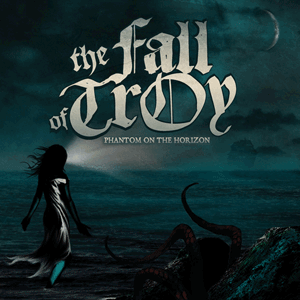
Ein hässliches Plattencover soll uns nicht davon abhalten, diese 37-Minuten-EP zu unseren neuen Lieblingen hinzuzufügen...
Das Thema des musikalischen Reifungsprozesses dieses Autoren wurde oben bereits zur Genüge ausgewalzt. Ausgelassen wurde jedoch, welche Rolle the Fall of Troy in diesem Prozess spielten. Diese drei verrückten Jungspunde öffneten Augen! Dass so etwas möglich ist, wer hätte das schon gedacht... Astreinen Psychedelic Rock mit heiserem Gekeife und aberwitziger Arbeit an den Instrumenten zu kombinieren und dabei Momente von musikalischer Erhabenheit zu erschaffen, die unter Drogeneinsatz zu begehbaren Landschaften in 3D mutieren...
"Doppelgänger", das Zweitlingswerk von 2005, ist die Referenz für diese Truppe und wird es immer bleiben. Auch diese EP reicht nicht an die Klasse der einzelnen Songs von damals heran, doch ist auch das Konzept ein anderes. Hier wird mehr im Zusammenhang gebaut und die Grenzen zwischen den Songs sind mehr den Konventionen unserer Hörgewohnheiten geschuldet, bzw. um dem Werk des gebührenden opulenten Rahmen in 5 Kapiteln zu gewähren.
Langsam quält sich die EP in "Introverting Dimensions" hinein, wobei selbst im Intro eindeutig die einmalige Federführung dieser Band heraussticht (oder liegt das daran, dass ich es nun zu oft gehört habe und selbst die Dimensionen von Wahrheit und Traum kreativ miteinander kombiniere, in mehreren Bewusstseinsebenen wandele, was insofern bedeutungslos ist als es sich hier sowieso um eine rein subjektive Betrachtung handelt...). Doch schon am Ende von Chapter I blitzt das Können von the Fall of Troy in einer Hingabe von Ohrwurm auf! Bloß um dann in "Chapter II: A Strange Conversation" in einen Hit von wiedergewonnener Güte zu münden. Das letzte Studio-Album "Manipulator" hatte leider viel zu wenig von dieser inneren Kohärenz zu bieten. Die Ähnlichkeit mit den Frühwerken der Band kommt nicht von ungefähr, ist "Phantom on the Horizon" doch ein Re-Release der "Ghostship EP" von 2004. Es bleibt die Hoffnung, dass es dennoch ein Fingerzeig in die weitere Richtung dieser verrückten Barden sein wird. The Fall of Troy ist wohl das Paradebeispiel einer "Post"-Hardcore-Band, in dem Sinne, wie sie die Genregrenzen transzendiert und die Wälle einreißt, die unsere säuberlich formulierten Bewusstseinsschranken bisher erhielten. Dabei waren die Protagonisten zum erstmaligen Erscheinen der EP 2004 gerade mal Knaben von 19 Jahren! Ein Ausbund an irrwitziger Kreativität! Und das Grandiose ist vielleicht sogar, dass all die technischen Raffinesse nicht etwa die Atmosphäre leiden lässt, sondern sie vielmehr befördert. (Thomas Erak wurde 2007 von Alternative Press zum "Guitarist of the Year" erhoben.) Dabei gebe ich bereitwillig zu, dass diese Sorte Musik ein Stück Einfühlungsvermögen voraussetzt.
Anspieltipps: Chapter II: A Strange Conversation, Chapter III: Nostalgic Mannerisms, und dann alles von vorne bis hinten durch am Stück. Kopfhörer-Pflicht und bitte keine Ablenkung!
Russian Circles - Station (Suicide Squeeze 2008)

Langsam bauen sich die Bilder auf. Ein Kinderreigen aus sonnigen Melodien, zwei verträumte Gitarren, beim Tanz ineinander versponnen. Die Atmosphäre verdüstert sich kaum merklich und mündet in Lied zwei in ein dunkles Stakkato-Gewitter, gefolgt von Wällen übereinander gelagerter Akkorde. Nach einem weiteren Lead beruhigt sich die Landschaft wieder. Noch ist sie sich aber nicht ganz sicher. Die Vorsicht ist spürbar. Immer wieder lugt eine schlecht getarnte aggressive Miene hervor.
Und nochmal instrumentaler Post-Rock. Obwohl sie durchaus zu fesseln vermögen, sind Russian Circles aus Chicago jedoch nicht so abwechslungsreich und rhythmisch vielseitig angelegt wie Gifts From Enola. Doch auch sie vermengen ihre lieblichen akustischen Melodien immer wieder mit Ecken und Kanten und metallenen Riffs. Ein ideales Album zum Spaziergang durch einen erwachenden Frühlingswald ebenso wie im Herbst. Ihr Problem ist vielleicht, dass es mittlerweile zu viele dieser instrumentalen Rockbands gibt und sich auch das Niveau insgesamt steigert. Doch gehören Russian Circles eindeutig zu den besseren und sind insbesondere für jene zu empfehlen, die sich ein bisschen Muskeln in diesem Genre wünschen und nicht den "Schöne-Melodien-hoch-und-runter"-Einerlei. Songstrukturen werden aufgebrochen und wieder aufgenommen. Den Sog, den viele ihrer Kollegen erzeugen, streben Russian Circles nicht vordergründig an. Vielleicht entsteht er gerade deswegen aber doch. Nächsten Monat werde ich mich eingehender dem Vorgänger "Enter" widmen.
Anspieltipps: Und dann gibt es doch immer wieder diese genialischen Momente, wie sie gerade genau in der Mitte von Track 4: Verses auftauchen. Ein Ohrwurm von filigraner Gitarrenmelodie, der sich mit seinem ganzen Hall direkt festhakt und natürlich in eine schöne Steigerung übergeht. Das soll nicht negativ klingen! Für diese Art von Musik braucht es meiner Ansicht nach noch gar keine Innovation. Das funktioniert bestens so! Zum Vergleich seien hier Caspian, Mono, Pelican genannt (oft wird daneben noch Isis genannt). Track 6: Xavii besticht durch seine ruhige, unwiderstehliche Schönheit.
Heaven in Her Arms - Erosion of the Black Speckle (Liberation of Butterfly 2007)

So, und nun ein richtiger "take it or leave it"-Kandidat...
Wer sich einmal an das etwas gewöhnungsbedürftige Gekeife des Frontmannes gewöhnt hat, wird aber mit Momenten einmaliger Schönheit belohnt, die er fortan nicht mehr missen will. Heaven in Her Arms kommen aus Japan und das gibt die Richtung ganz gut vor, klingen sich schließlich wirklich wie die Proberaumnachbarn der Hardcore-Heroen Envy. Und auch Heaven in Her Arms wissen treibenden Screamo gekonnt mit Post-Rock zu verknüpfen, hier wechselt sich Mid-Tempo Hardcore zuweilen mit kurzen Kloppereien und sphärischen Elegien ab. Nach den letzten Enttäuschungen aus dem Hause Envy muss man wohl sogar sagen, dass Heaven in Her Arms ihnen mittlerweile den Schneid abkaufen.
Diese fleißigen Jungs haben übrigens ein paar Kostproben ihrer im Februar 2009 erschienen EP bei myspace online gestellt und meine Ohren damit so richtig eingefangen. Da lässt noch einiges auf sich warten!
Anspieltipps: Track 3: Intersection Arrangement, das sphärische Zwischenstück, und direkter Übergang in das repräsentative Track 4: Iron Wine and a Canary (Schon Envy fielen ja durch ihre wahnsinnig coolen Liedtitel auf - welche Wörterbücher benutzen die Japaner denn bitte?). Gemeinsam mit Envy sind auch diese genialen, in den Akkorden verborgenen Melodiebögen und Dur-Moll-Wechsel. Track 6: Correlative Sign und natürlich der epische Schlussakt Track 12: Erosion of the Black Speckle.
Five Minute Ride - The World Needs Convincing of All That It's Missing EP (Rise Records 2005)

Unglaubliche Power strömt da aus den Boxen! Das Schlagzeug jagt uns vor sich her, die Gitarren heulen wie Sirenen auf im Inferno und eine verzweifelte Stimme läutet mit "No one accepts you..." einen geschrienen Refrain ein. Von all der bodenlosen Ignoranz der Welt geplagt, bleibt uns nur dieser Ausweg, all unsere Wut aus uns heraus zu schreien. Keine Frage, das ist und war zum Zeitpunkt des Erscheinens nicht neu. Man tütet das heutzutage wohl schon unter "Emo" ein. Dabei machen Five Minute Ride so richtig Spaß, besonders, wenn man sie richtig laut dreht. Dann kommt die grandiose Rhythmusarbeit in Kombination mit ineinander verwickelten Leadgitarren so richtig zum Tragen. Plus natürlich diese sich überschlagende Stimme, die so gar keinen kalt lassen kann.
Keinen Reim machen konnte ich mir auf die Frage, ob die Band sich schon vor Jahren aufgelöst hat oder doch noch existiert, denn es scheint, als seien sie vom Hardcore-Giganten Victory Records gesignt. Andererseits gibt es seit Jahren kein Lebenszeichen. Das könnte eventuell daran liegen, dass Leadgitarrist Alex Poole im August 2003 an einer unbekannten bakteriellen Infektion starb. Schade wäre es schon, denn hier lag unglaubliches Potential vor. Ähnlichkeiten bestehen meiner Meinung nach zu Clarity Process und in ihrer unheimlichen Energie eventuell sogar zu The Fall of Troy.
Anspieltipps: Track 2: The Rapture Was Yesterday, Track 4: Sinking Conscience, Track 6: Oh, These Woeful Days (großartige Gitarrenlicks!)
Jan 30, 2009
Short Poem
Original Temptation was delivered from Evil through the Eyes of Madness.
I stood remote and watched them pray for Egg-shaped Lungs of Salt.
And then two Thirds flew by an ease of mild-tempered Summer Swing
– APOKALYPSE!
But the kids went to rock on…
To my personal Hall of Fame,
climbing Steam to lay Claim to their Frame of Stains,
Stairway down Subconsiousness, Pawn of Maliciousness
bear me Witness - oh this Prowess! - I dare you Fucker Druglord!
I’ll stitch you Needles and Poison down your Vein!
None will trace thy Reign, Fucker,
and nothing is to soothe the Pain!
I stood remote and watched them pray for Egg-shaped Lungs of Salt.
And then two Thirds flew by an ease of mild-tempered Summer Swing
– APOKALYPSE!
But the kids went to rock on…
To my personal Hall of Fame,
climbing Steam to lay Claim to their Frame of Stains,
Stairway down Subconsiousness, Pawn of Maliciousness
bear me Witness - oh this Prowess! - I dare you Fucker Druglord!
I’ll stitch you Needles and Poison down your Vein!
None will trace thy Reign, Fucker,
and nothing is to soothe the Pain!
Dec 11, 2008
Police forces end to nonviolent student sit-ins in Taipei!
Timing couldn't have been more ironic:
In the night after the 60-year declaration of universal human rights on December 10, at around 3 to 4 a.m., the expressedly non-violent student protesters of the Wild Strawberry Movement were forced by the police to leave their home for one month, Liberty Square (the former CKS Memorial Hall). This move made President Ma's speech of the day look awkward:
This is what a friend from Taiwan wrote:
I am not sure whether anyone anticipated a move like that at the moment. But sad it is, indeed. I feel like it should be clear for everybody to see what this government is trying to accomplish, only that media in the west go out of their way to stress its "pragmatism" towards China and not mention hell about what is happening bit by bit: the vanishing of what used to be one of the worlds premier democratisation processes, a prime example for political theory until just recently. And this is truely sad, especially with the symbolic date serving as symbolic background. I'm confused whether Ma did it purposedly right then. Since actions speak louder than words, their symbolic meaning are crashing his smooth rhetoric, and this is frightening.
What else can you do when there is no opposition left? Presidency, Government, Police and Military, and a huge part of the media are working hand in hand with the ruling party to re-establish the one-party state of old. This is what I fear.
And it will have an impact on democratisation processes around the world.
In the night after the 60-year declaration of universal human rights on December 10, at around 3 to 4 a.m., the expressedly non-violent student protesters of the Wild Strawberry Movement were forced by the police to leave their home for one month, Liberty Square (the former CKS Memorial Hall). This move made President Ma's speech of the day look awkward:
"Thanks to the government's continued efforts to uphold human rights, Taiwan has now become "the world's freest country" in terms of the people's right to assembly, which [Ma] said was very well demonstrated by several protests at the ceremony in support of a variety of causes."
This is what a friend from Taiwan wrote:
http://www.ocot.tw/blog/Note also that the eviction fell right into a time when plans for a more coordinated collaboration with Tibetan activists (e.g. for inviting the Dalai Lama to Taiwan) were being mulled over. My friend explicitly says that the reason policemen stated for evicting the students was "helping the Tibetans".archives/1034 這是現場的影片..我前一天在那裡睡覺..我們的家沒了....!12/ 10是世界人權日...三小時之後..大約半夜3點多.. 警察來把現場的西藏人(8號那天...西藏的人開始靜坐)... 他們先把西藏人帶走..再來是我們!!他們說... 因為我們幫助西藏的人...所以也要把我們趕走...!! 我很難過...台灣的人權...慢慢被流失!!!
I am not sure whether anyone anticipated a move like that at the moment. But sad it is, indeed. I feel like it should be clear for everybody to see what this government is trying to accomplish, only that media in the west go out of their way to stress its "pragmatism" towards China and not mention hell about what is happening bit by bit: the vanishing of what used to be one of the worlds premier democratisation processes, a prime example for political theory until just recently. And this is truely sad, especially with the symbolic date serving as symbolic background. I'm confused whether Ma did it purposedly right then. Since actions speak louder than words, their symbolic meaning are crashing his smooth rhetoric, and this is frightening.
What else can you do when there is no opposition left? Presidency, Government, Police and Military, and a huge part of the media are working hand in hand with the ruling party to re-establish the one-party state of old. This is what I fear.
And it will have an impact on democratisation processes around the world.
Dec 7, 2008
What the Wild Strawberry Movement reminds me of
I have once had bright hopes that I could actually be witnessing a politics-changing movement. That was back in 2003, when we demonstrated against the war in Iraq on every Monday for about 7 weeks or so. At high, there were around 45,000 people participating in Leipzig only. But somehow, we grew tired, and our spirits faded. After all, you could see less and less people coming to our Monday's demonstrations. Sometimes, I wonder if at least we could change the hearts of those who walked with us. If no change in policy-making was possible, this would be some success already. But ever since, I did not see people change their behaviour. Maybe changes take their time.

Next occasion were our student protests against the introduction of study fees in Germany in the Winter of 2003/04. Those were pretty effective, since we up to date have no regular fees in Saxony. We even boycotted the university for one whole term, creating our own seminars in public places etc. That would be a great thing to see in Taiwan, too! We found a lot of friends and like-minded people those days, and we became creative in every way. Somehow, this transcended our normal form of existence as being the weakest part of the line that makes up the system of university education. However - this is almost 5 years past now, and I still see some of my fellow protesters around (it was my first term back then), and we share a special common bandage. But everyone needed to move on and get back to their studies, too. University politics are too difficult to handle just as bypart to continuing a regular student life.
I am still waiting for the next opportunity to try and change the system again. Meanwhile, I pray (not literally) for every other student movement that tries that way. I would like to be part of it. I wish you all the power and energy it takes.
It is important that you continue your movement. Who else will?

Next occasion were our student protests against the introduction of study fees in Germany in the Winter of 2003/04. Those were pretty effective, since we up to date have no regular fees in Saxony. We even boycotted the university for one whole term, creating our own seminars in public places etc. That would be a great thing to see in Taiwan, too! We found a lot of friends and like-minded people those days, and we became creative in every way. Somehow, this transcended our normal form of existence as being the weakest part of the line that makes up the system of university education. However - this is almost 5 years past now, and I still see some of my fellow protesters around (it was my first term back then), and we share a special common bandage. But everyone needed to move on and get back to their studies, too. University politics are too difficult to handle just as bypart to continuing a regular student life.
I am still waiting for the next opportunity to try and change the system again. Meanwhile, I pray (not literally) for every other student movement that tries that way. I would like to be part of it. I wish you all the power and energy it takes.
It is important that you continue your movement. Who else will?
Ma doesn't want the Dalai Lama in Taiwan...
...but that doesn't mean that he won't come, does it?
Ma's rebuff of the Dalai Lama coming to Taiwan is good news because:
It will enhance international attention to what is happening in Taiwan. In his inauguration speech, Ma welcomed the Dalai Lama to come to Taiwan anytime. Now, Taiwan students and NGOs are thinking about inviting him on their behalf.
According to Lynn Miles, fighting for democracy and human rights in Taiwan since the 70s, this is the way politics should be done by the people:
That is why we need to change things on our own! For if we want to see things change, we need to be the change we want to see!
Ma's rebuff of the Dalai Lama coming to Taiwan is good news because:
It will enhance international attention to what is happening in Taiwan. In his inauguration speech, Ma welcomed the Dalai Lama to come to Taiwan anytime. Now, Taiwan students and NGOs are thinking about inviting him on their behalf.
According to Lynn Miles, fighting for democracy and human rights in Taiwan since the 70s, this is the way politics should be done by the people:
People! This is what we must all be doing -- taking the movement to the people. People-to-people connections, once consumated, can put an end to this tired, year-in-and-year out chasing after corrupt politicians who are already in someone else's pocket long before we even get past their secretaries.Governments do not speak in the name of the people they are supposed to represent. When it comes to this, evidence can be found in the matter on Taiwan:
Wild Strawberries offers us an excellent opportuunity to do this people-to-people grassroots work. Student organizations should be at the top of our list, and human rights NGOs, and so on.
Consider this. Virtually all of the world's peoples outside of China recognize Taiwan as a country. Go anywhere in the world and if someone asks you what country you are from, and you say "Taiwan," that is the end of the matter. Pure and simple. So what you have is the people of the world recognizing Taiwan, on the one hand, while their governments do not recognize Taiwan on the other. How then can we call them democracies? They have all been corrupted by the big-money power!
That is why we need to change things on our own! For if we want to see things change, we need to be the change we want to see!
International Scholars' Open Letter, Responding to Taiwan's Justice Minister
Open Letter no. 2 was published in the Taipei Times on 2 December:
The Formosan Association for Public Affairs
552 7th Street. SE. Washington, DC 20003
| Support Democracy, Support Taiwan. |
For Immediate Release
December 2, 2008, 2008
Contact: Iris Ho at 202.547.3686
On Friday November 28th a group of prominent international scholars and writers sent an open letter to Taiwan's Justice Minister Wang Ching-feng, expressing continued concern about political arrests and detentions in Taiwan. The group was responding to an open letter from the Minister, which was published in the Taipei Times on Tuesday, November 25th.
In the response, the scholars and writers stated: "Based on the information available to us, however, we remain concerned about choices made by prosecutors in applying existing legal authority and strongly believe in the need for reform." The letter went on to detail concerns about "preventive detention", detention without formal charges, the absence of lawyer-client confidentiality, leaks by prosecutors to the press, and political bias in the judicial system.
The scholars and writers expressed fear that the current judicial procedures being used in Taiwan is endangering the country's democratization, and is damaging the goodwill that Taiwan has developed internationally. They concluded by expressing the hope and expectation that Taiwan's government will quickly correct the present injustices, and move towards reform of the judicial system.
------------------------------
November 28th 2008
The Honorable Wang Ching-feng
Minister of Justice
130 Chung-Ching S. Rd, Sec 1
Taipei, Taiwan
Dear Minister Wang,
In an open letter to the Taipei Times, published on November 25th 2008, you responded to our joint statement regarding the erosion of justice in Taiwan. We appreciate your acknowledgement of the sincerity of our concerns, and are grateful to receive a prompt and serious reply. Based on the information available to us, however, we remain concerned about choices made by prosecutors in applying existing legal authority and strongly believe in the need for reform. Please allow us to highlight a number of specific points:
1. The procedure of "preventive detention." This procedure is obviously intended for serious criminal cases in which the suspect is likely to flee the country. In his November 13th article in the South China Morning Post, Professor Jerome Cohen states that "it ought to be invoked rarely."
Yet, during the past weeks, it has been used across the board, and it has been used only against present and former members of the DPP government. This casts severe doubts on the impartiality of the judicial system. We also wish to point out that the people involved were detained under deplorable circumstances, and that they were not even allowed to see relatives.
2. The open letter contains the argument that when they were detained, the present and former DPP government officials "were all informed of the charges that had been brought against them." This is simply not correct: when they were detained, they were subject to lengthy interrogations – in some cases for up to 20 hours – which bore the character of a "fishing expedition", and do not represent a formal indictment in any legal sense. In most cases the prosecutors had had months of time to collect information: if they did have sufficient evidence of wrong-doing, they should formally have charged the persons and let them have their day in a scrupulously impartial court of law. That would be the desirable procedure under the rule of law in a democratic society.
3. The open letter also states that the persons involved had "the right and ability to communicate with their attorneys to seek legal assistance." It neglects to mention that in all cases where people were detained, the discussions with the lawyers were recorded and videotaped, while a guard took notes. This information was then immediately transmitted to the respective prosecutors. We don't need to point out that this is a grave infringement on international norms regarding the lawyer-client privilege, and makes mounting an adequate defense problematic at best.
4. On the issue of leaks to the press, the letter states that under the Code of Criminal Procedure information on ongoing investigations can only be disclosed by spokespersons of the prosecutor's offices and that unauthorized disclosure is subject to criminal prosecution. The fact of the matter is that during the past weeks, the media has been filled with information on the ongoing investigations which could only have come from the prosecutors. We may point out one example, but there are numerous others:
Only a few hours after former Foreign Minister Mark Chen was questioned on November 3rd, the Apple Daily (a local tabloid) ran an article that "the prosecutors are thinking of charging Dr. Chen in relation to the case."
The issue of violation of the principle of secret investigation was also raised by Shih Lin District Court Judge Hung Ing-hua, who strongly criticized the present situation and procedures followed by your Ministry in an article in the Liberty Times on November 17th 2008.
We may also mention that we find it highly peculiar that no steps whatsoever have been taken against the various prosecutors who leaked information, while we just learned that the Ministry of Justice is now taking steps against Mr. Cheng Wen-long, the lawyer for former President Chen Shui-bian, who presumably "leaked" information to the press. The Ministry sent a formal request to the Taipei District Prosecutor's Office asking the office to investigate and prosecute, and also sent a formal request to Taiwan Lawyer's Association and asked the association to review the case and see whether Cheng should have his license revoked.
It is our understanding that the statements Mr. Cheng made were in relation to former President Chen's views on Taiwan's situation and its future, and an expression of love for his wife, but did not have any bearing on the case against him. We hope you realize that if the Ministry proceeds along these lines, this will be perceived as a direct confirmation of the strong political bias of the judicial system.
5. The letter states that it is untrue that Taiwan's judicial system is susceptible to political manipulation. If this is the case, how can it be explained that in the past weeks, only DPP officials have been detained and given inhumane treatment such as handcuffing and lengthy questioning, while obvious cases of corruption by members of the KMT – including in the Legislative Yuan -- are left untouched by the prosecutors or at best stalled in the judicial process?
We may also refer to expressions of concern by Prof. Jerome Cohen and by lawyer Nigel Li, who expressed his deep concerns about the preventive detentions in an editorial in the China Times on November 9th 2008. In his editorial, Mr. Li praised the remarks made by prosecutor Chen Rui-ren, who was part of the legal team prosecuting the special fund cases, that the prosecutors' offices should "avoid the appearance of targeting only one particular political group."
The fact that the Special Investigation Task Force was set up under the DPP Administration or that the prosecutor general was nominated by President Chen is not at issue here. The problem is that the present system is being used in a very partial fashion.
We may add that the fact that you yourself have publicly discussed the content of the cases does create a serious imbalance in the playing field, and undermines the basic dictum that a person should be considered innocent until proven guilty in a court of law. Under the present circumstances it is hard to see how the persons involved – including former President Chen Shui-bian – can have a fair trial in Taiwan.
6. Lastly, the statement by the US State Department is interpreted in the letter as an "endorsement" of Taiwan's legal system and the procedures followed. It should be noted that in international diplomatic language, the term "we have every expectation" means "we are concerned and we will watch the situation closely."
For the past two decades, Taiwan has faced a difficult situation internationally. What has given Taiwan important credibility in democratic countries around the world has been its democratization. We fear that the current judicial procedures being used in Taiwan endanger this democratization, and endanger the goodwill that Taiwan has developed internationally.
In conclusion: we do remain deeply disturbed by the erosion of justice in Taiwan, and express the sincere hope and expectation that your government will maintain fair and impartial judicial practices and quickly correct the present injustices. As an editorial in the November 20th issue of the London-based Economist indicated, Taiwan is "hungry for justice", and we also hope that your government will be willing to initiate judicial reform which would move Taiwan towards a fully fair and impartial judicial system which earns the respect and admiration from other democratic countries around the world.
Respectfully yours,
Signatories of the November 4th Joint Statement
- Nat Bellocchi, former Chairman of the American Institute in Taiwan
- Coen Blaauw, Formosan Association for Public Affairs, Washington DC
- Stéphane Corcuff, Associate Professor of Political Science, China and Taiwan Studies, University of Lyon, France
- Gordon G. Chang, author, "The Coming Collapse of China."
- David Curtis Wright, Associate Professor of History, University of Calgary
- June Teufel Dreyer, Professor of Political Science, University of Miami, Florida
- Edward Friedman, Professor of Political Science and East Asian Studies, University of Wisconsin, Madison
- Mark Harrison, Senior Lecturer, Head of Chinese School of Asian Languages and Studies, University of Tasmania, , Australia
- Bruce Jacobs, Professor of Asian Languages and Studies, Monash University, Melbourne, Australia
- Richard C. Kagan, Professor Emeritus of History, Hamline University, St. Paul Minnesota
- Jerome F. Keating, Associate Professor, National Taipei University (Ret.). Author, "Island in the Stream, a quick case study of Taiwan's complex history" and other works on Taiwan
- Daniel Lynch, Associate Professor, School of International Relations, University of Southern California
- Victor H. Mair, Professor of Chinese Language and Literature, University of Pennsylvania
- Donald Rodgers, Associate Professor of Political Science, Austin College, Texas
- Terence Russell, Professor of Chinese Language and Literature, University of Manitoba
- Scott Simon, Professor of Sociology and Anthropology, University of Ottawa
- Michael Stainton, York Center for Asia Research, Toronto
- Peter Tague, Professor of Law, Georgetown University
- John J. Tkacik Jr., Senior Research Fellow, The Heritage Foundation, Washington DC
- Vincent Wei-cheng Wang, Professor of Political Science, University of Richmond, Virginia
- Arthur Waldron, Lauder Professor of International Relations, University of Pennsylvania
- Gerrit van der Wees, Editor Taiwan Communiqué, Washington DC
- Stephen Yates, President of DC Asia Advisory and former Deputy Assistant to the Vice President for National Security Affairs
AI urging Taiwan Police to avoid using force at protests
AMNESTY INTERNATIONAL
PUBLIC STATEMENT
AI Index No: ASA 38/001/2008
3 December 2008
Taiwan: Police should avoid using excessive force at upcoming protests
Amnesty International has urged Taiwan's police force to comply with international guidelines on the use of force and crowd control at the planned student protests on Sunday 7 December.
The organization also joins calls for the Control Yuan, the body mandated by the Taiwan Constitution with supervisory power over the Executive branch, to conduct an independent inquiry into alleged excessive police force during November's protests.
The Wild Strawberry Student Movement has staged sit-ins since 6 November to protest against what they consider the use of excessive force during the Taiwan visit of Chen Yunlin, chairman of the China-based Association for Relations Across the Taiwan Strait. Civil society groups in Taiwan are investigating multiple claims that individuals suffered head injuries and broken fingers at the hands of police during the protests.
According to police reports on 8 November, approximately 10,000 police officers had been deployed during Chen's visit; 149 police officers and 200-300 individuals were injured; 18 were arrested.
Taiwanese civil society groups claim that police have applied the Assembly and Parade Law arbitrarily to silence dissent. According to the students' spokesperson, they will not seek police approval, as required by the law, but will only "report" their plans to law enforcement authorities, in line with amendments advocated by the Movement.
The Movement is organizing the protest on Sunday 7 December to criticize the government's failure to amend the Assembly and Parade Law.
Amnesty International said Taiwan's Control Yuan should address the serious concerns raised by civil society in Taiwan and the government should cease the practice of using the Assembly and Parade Law to deny freedom of assembly and allow individuals to protest peacefully. Amnesty International also called on Taiwanese police and judicial authorities to ensure that they investigate any protesters accused of engaging in violence in a fair, transparent, and timely manner in compliance with international standards.
Background
On 3-7 November 2008, Chen Yunlin, chairman of the Association for Relations Across the Taiwan Straits, led a 60-member delegation from the People's Republic of China to visit Taiwan and meet with President Ma Ying-jeou.
The police barred protesters displaying Taiwanese and Tibetan flags and anti-China slogans along the routes taken by the envoy and confiscated or damaged some of these items. The police also closed a shop near the hotel where Chen Yunlin had dinner with Kuomintang honorary chairman Lien Chan when the shop loudly broadcast music from an album titled 'Songs of Taiwan'.
There were additional reports of arbitrary detention and police brutality, some of which, according to the police, were in response to the violence of protesters.
Following the visit, hundreds of students have staged sit-ins across Taiwan protesting the police's handling of the protests and demanding amendments to the Assembly and Parade Law, which has been misused to prevent protests.
On 6 November the students started their sit-ins outside the offices of the Executive Yuan or (Executive branch), where they were eventually removed by police on the grounds of illegal assembly. They continued the sit-ins at the National Taiwan Democracy Memorial Hall and organized a daily demonstration calling for immediate amendments to the Assembly and Parade Law, apologies from the president and head of government and the resignations of the heads of the police and national security.
On 18 November Taipei police announced a list of 66 "troublemakers", who had allegedly thrown gas bombs and stones at the police and spat at the Taichung mayor. There were also reports that the police had pressured journalists and their supervisors to hand over video tapes to identify suspects who allegedly took part in the violence.
END/
Public Document
For more information please call Amnesty International's press office in London, UK, on +44 20 7413 5566 or email: press@amnesty.org
International Secretariat, Amnesty International, 1 Easton St., London WC1X 0DW, UK
http://www.amnestyusa.org/
Dec 2, 2008
Strawberries Going Wild
(History:)
Protesting the exaggerated and inappropriate actions taken by the Ma administration while hosting Chinese cross-straits envoy Chen Yunlin in Taiwan (huge police forces blocking protesters from coming any close to where the envoy met with high Taiwanese politicians, use of violence by the police forces, ban on showing ROC- and Tibetan flags, imprisonment of leading opposition politicians, etc.), has led Taiwan's students circa one month ago to form the "Wild Strawberries Movement". The movement has groups in six cities: Taipei, Kaohsiung, Tainan, Hsinchu, Chiayi, and Taichung. Their means is peaceful protest, most profoundly do they wish to hold out in a sit-in strike to pressure politicians to take on democracy and the people they represent more seriously. In the media, the Wild Strawberries have been misrepresented from the beginning, in what resembles a campaign to denounce their political engagement as being led by the opposition (i.e., the DPP) - despite their ever-repeated party neutrality and criticism towards all established parties. The KMT and pan-blue media here show just exactly the same will to manipulate public opinion and generate deep polarisation in between the people as they criticized the former Chen administration of.
This is the homepage: http://taiwanstudentmovement2008.blogspot.com/
(The Name:)
Their name seems deliberately chosen, for the young generation in Taiwan is somewhat pejoratively being called "strawberries" often (since they are said to be spoiled and unable to bear any sort of stress). Now Taiwan's students try to show that they have well recognised the signs of the present happenings: The fear that Taiwan's democratic environment and human rights situation might soon deteriorate (if they have not already).
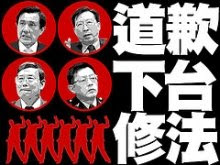
(Aims:)
The Wild Strawberries have urged President Ma and Prime Minister Liou to apologize for the actions taken by government and police during the time of the Chen-visit to Taiwan. They also ask the directors of National Police Agency and National Security Bureau, respectively, to step down from their offices, and for the law concerning the right to assemble (dating from Martial Law times and strictly restricting such assemblings) to be revised by the Legislative Yuan.
I hope for the Berries-Students to be at least as successfull as their predecessors who were protesting in 1990, one year after the CCP had crushed a student revolt so profundly and suddenly. In 1990, the KMT didn't dare take such action against peacefully demonstrating students. Eventually, the students' protests paved the way for ameliorating the constitution, being another stone on the way that led to democratisation. Only, our fear is that Ma will play on time and wait until the protesters spirit has vanished, so to refrain from any changes in his style of politics other than rhetoric (and his rhetoric being this and that, anyway).
A few days ago, they uploaded a video introducing their movement:
To work against frustration (mostly deriving from being almost completely ignored by the government) and gather new spirit in working towards a change, the movement is about to set a new step:
On December 7th, they are going to rally a few thousand people (hopefully) to march towards the Presidental Office, in obvious violation of the old Law on Assembling and without a police permit. Thus they are hoping to enhance the political debate about revising the law. Whether or not police forces will crush the "illegal" demonstration will be of significant influence for the future of that law. This should be a way to evoke reaction by the government (to "coax them out of their shell"), in one way or another, and prevent the protests from dying from inactivity and idleness.
There is also a lot more brand new information on some English-speaking blogs in Taiwan, for instance on "the view from Taiwan" and "David on Formosa". Especially the Taipei Times had some nice editorials on the student protests (example). Don't forget the protesters website and their effort to keep it updated several times a day, all in English.
An English Statement can be found here.
On this occasion, Anti-Flag spontaneously springs to mind: "You can kill the protester, but you can't kill the protest! You can murder the rebell, but you can't murder the rebellion!"
All I can wish for is: May your protest be longlived and bright, may it bring about the change we want to see!
Following is their statement in German:
Protesting the exaggerated and inappropriate actions taken by the Ma administration while hosting Chinese cross-straits envoy Chen Yunlin in Taiwan (huge police forces blocking protesters from coming any close to where the envoy met with high Taiwanese politicians, use of violence by the police forces, ban on showing ROC- and Tibetan flags, imprisonment of leading opposition politicians, etc.), has led Taiwan's students circa one month ago to form the "Wild Strawberries Movement". The movement has groups in six cities: Taipei, Kaohsiung, Tainan, Hsinchu, Chiayi, and Taichung. Their means is peaceful protest, most profoundly do they wish to hold out in a sit-in strike to pressure politicians to take on democracy and the people they represent more seriously. In the media, the Wild Strawberries have been misrepresented from the beginning, in what resembles a campaign to denounce their political engagement as being led by the opposition (i.e., the DPP) - despite their ever-repeated party neutrality and criticism towards all established parties. The KMT and pan-blue media here show just exactly the same will to manipulate public opinion and generate deep polarisation in between the people as they criticized the former Chen administration of.
This is the homepage: http://taiwanstudentmovement2008.blogspot.com/
(The Name:)
Their name seems deliberately chosen, for the young generation in Taiwan is somewhat pejoratively being called "strawberries" often (since they are said to be spoiled and unable to bear any sort of stress). Now Taiwan's students try to show that they have well recognised the signs of the present happenings: The fear that Taiwan's democratic environment and human rights situation might soon deteriorate (if they have not already).

(Aims:)
The Wild Strawberries have urged President Ma and Prime Minister Liou to apologize for the actions taken by government and police during the time of the Chen-visit to Taiwan. They also ask the directors of National Police Agency and National Security Bureau, respectively, to step down from their offices, and for the law concerning the right to assemble (dating from Martial Law times and strictly restricting such assemblings) to be revised by the Legislative Yuan.
I hope for the Berries-Students to be at least as successfull as their predecessors who were protesting in 1990, one year after the CCP had crushed a student revolt so profundly and suddenly. In 1990, the KMT didn't dare take such action against peacefully demonstrating students. Eventually, the students' protests paved the way for ameliorating the constitution, being another stone on the way that led to democratisation. Only, our fear is that Ma will play on time and wait until the protesters spirit has vanished, so to refrain from any changes in his style of politics other than rhetoric (and his rhetoric being this and that, anyway).
A few days ago, they uploaded a video introducing their movement:
(The Future:)
On December 7th, they are going to rally a few thousand people (hopefully) to march towards the Presidental Office, in obvious violation of the old Law on Assembling and without a police permit. Thus they are hoping to enhance the political debate about revising the law. Whether or not police forces will crush the "illegal" demonstration will be of significant influence for the future of that law. This should be a way to evoke reaction by the government (to "coax them out of their shell"), in one way or another, and prevent the protests from dying from inactivity and idleness.
An English Statement can be found here.
On this occasion, Anti-Flag spontaneously springs to mind: "You can kill the protester, but you can't kill the protest! You can murder the rebell, but you can't murder the rebellion!"
All I can wish for is: May your protest be longlived and bright, may it bring about the change we want to see!
Following is their statement in German:
Protestiert Gegen Polizeibrutalitaet!! Verteidigt Freiheit und Menschenrecht. (Statment in German)
Angefangen am 3. November, mit dem Besuch von Chen Yunlin, hat die Polizei zahlreiche Aktionen gegen Demonstranten durchgeführt, darunter die Beschlagnahmung und Zerstoerung von Eigentum, physische Gewalt, und sogar Verhaftungen. Die große Mehrheit der betroffenen Demonstranten befand sich nicht einmal in der Nähe von Chen Yunlin.
Durch Berichte in den Medien haben wir den Ernst der Situation erkannt. Es geht nicht nur um Details bei der Strafverfolgung, noch handelt es sich einfach um einen Konflikt zwischen Anhaengern verschiedener politischer Parteien. Es geht vielmehr um Polizeigewalt, die vom Staat gefördert wird und die die Zivilgesellschaft beschaedigt.
Alle diese Aktionen, die Menschenrechte und demokratische Werte ignorieren, erinnern an das Kriegsrecht. Aber der Premier Liu weicht seiner Verantwortung mit unklaren Entschuldigungen aus. Diese Reaktionen der Regierung empören und beschaemen uns.
Wir fragen uns: Muss Taiwan seine Standards bei Freiheit und Demokratie bis auf das Niveau von China senken, um mit China wirtschaftlich kooperieren zu können?
Innerhalb weniger Tage sind Freiheit und Demokratie, für die die Taiwanesen so hart gekaempft haben, durch die Polizeiaktionen ernsthaft beschaedigt worden. Unsere Regierung ignoriert dies und veranstaltet stattdessen Empfaenge und Bankette für den Gast aus China.
Wir sind eine Gruppe von Universitaetsprofessoren, Studenten, und Bürgern, die sich Sorgen um die zukünftige Entwicklung Taiwans machen. Unser Protest ist überparteilich und unabhaengig von anderen politischen Organisationen.
Wir werden weiter friedlich demonstrieren, bis unsere Forderungen erfüllt werden. Unsere Forderungen sind:
*
Präident Ma Ying-Jeou und Premierminister Liu Chao-Shiuan müssen sich öffentlich bei allen Bürgern für die Vorkommnisse entschuldigen.
*
Der Generaldirektor der nationalen Polizei, Wang Cho-Chiun, und der Direktor der Staatssicherheitsbehörde, Tsai Chao-Ming, müssen zurücktreten.
*
Das Parlament muss das Versammlungsgesetz, das die Versammlungsfreiheit der Menschen einschränkt, revidieren.
Nov 25, 2008
amnesty international Taiwan - Small Places Tour

Small Places Tour ist eine Kollaboration von amnesty international Taiwan 國際特赦組織台灣總會mit mehreren taiwanischen Bands, u.a. den Postrock-Heroen Sugarplum Ferry 甜梅號 und Aphasia 阿飛西雅, die im November und Dezember an verschiedenen Orten auf der Insel gemeinsame Auftritte organisieren, so z.B. in der bekannten Venue "The Wall" in Taipei. Angefangen worden ist diese weltweite Aktion meines Wissens übrigens von amnesty international Canada.
Nun hat eine der beteiligten Bands namens Echo 回聲樂團 ein Werbevideo für die Small Places Tour produziert, das wie ich finde auch hohen künstlerischen Ansprüchen genügt. Über die Musik kann man streiten, ist halt catchy Taiwan Pop/Rock.
Nov 6, 2008
International Scholars Concerned about Erosion of Taiwan's Justice
This is severe. Quoting a statement that has been published on the Website of the Formosan Association for Public Affairs FAPA http://www.fapa.org/Ma%
and signed by almost any outstanding Taiwan researchers throughout the US, and some from Europe and Australia.
This development needs more public and media awareness! It may sound obscure, but all evidence indicates that it is time for us to stand up for Taiwanese Democracy. It is by no means secure from violation! Some information here: http://michaelturton.blogspot.
/jacob
For Immediate Release
November 4, 2008
Contact: Iris Ho
二十位國際學者與友人聯署發表聲明,憂心台灣司法不公
二十位國際學者與關心台灣的國際友人於今日發表聯署聲明,
這是國民黨政府一系列大動作收押民進黨政府官員以來,
November 4, 2008
JOINT STATEMENT
US, European and Australian scholars and writers express concern about prosecutions in Taiwan
The undersigned, scholars and writers from the US, Europe and Australia wish to express their deep concern about the recent series of detentions in Taiwan of present and former DPP government officials. To date there have been at least seven such cases (See list below).
以下聯署的國際學者對於近日台灣政府一連串拘留卸任與現任民進黨
It is obvious that there have been cases of corruption in Taiwan, but these have occurred in both political camps. The political neutrality of the judicial system is an essential element in a democracy. It is also essential that any accused are considered innocent until proven guilty in the court of law.
很明顯的,貪污這個問題在台灣依然存在,
We also believe that the procedures followed by the prosecutor's offices are severely flawed: while one or two of the accused have been formally charged, the majority is being held incommunicado without being charged. This is a severe contravention of the writ of habeas corpus and a basic violation of due process, justice and the rule of law.
我們認為檢察官所採取的法律程序有著嚴重的缺失:雖然當一、
In the meantime, the prosecutor's offices evidently leak detrimental information to the press. This kind of "trial by press" is a violation of the basic standards of judicial procedures. It also gives the distinct impression that the Kuomintang authorities are using the judicial system to get even with members of the former DPP government. In addition, the people who are being held incommunicado are of course unable to defend themselves against the misreporting and the leaks in the news media.
在此同時,檢察官辦公室很明顯地將相關不利消息透露給媒體。
We do firmly believe that any alleged wrongdoings must be dealt with in a fair and open manner in an impartial court. Justice through the rule of law is essential to Taiwan's efforts to consolidate democracy and protect fundamental human rights.
我們深信任何宣稱的犯罪行為應該以公正與公開的方式,
We do not want to see Taiwan's hard-earned democracy jeopardized in this manner. Taiwan can justifiably be proud of its transition to democracy in the late 1980s and early 1990s. It would be sad for Taiwan and detrimental to its international image if the progress which was made during the past 20 years would be erased. Taiwan needs to move forward, not backwards to the unfair and unjust procedures as practiced during the dark days of Martial Law (1947-87).
我們不願見到台灣辛苦得來的民主陷入如此困境。台灣因 為在八零年代後期與九零年早期成功轉型為民主國家,而引以為傲。
Signed:
簽署人:
Nat Bellocchi, former Chairman of the American Institute in Taiwan
Julian Baum, former Taiwan Bureau Chief, Far Eastern Economic Review
Coen Blaauw, Formosan Association for Public Affairs, Washington DC
David Prager Branner, Director at Large (East Asia), American Oriental Society
Gordon G. Chang, author, "The Coming Collapse of China."
June Teufel Dreyer, Professor of Political Science, University of Miami, Florida
Edward Friedman, Professor of Political Science and East Asian Studies, University of Wisconsin, Madison
Bruce Jacobs, Professor of Asian Languages and Studies, Monash University, Melbourne, Australia
Richard C. Kagan, Professor Emeritus of History, Hamline University, St. Paul Minnesota
Jerome F. Keating, Associate Professor, National Taipei University (Ret.). Author, "Island in the Stream, a quick case study of Taiwan's complex history" and other works on Taiwan
Daniel Lynch, Associate Professor, School of International Relations, University of Southern California
Victor H. Mair, Professor of Chinese Language and Literature, University of Pennsylvania
Donald Rodgers, Associate Professor of Political Science, Austin College, Texas
Terence Russell, Professor of Chinese Language and Literature, University of Manitoba
Scott Simon, Professor of Sociology and Anthropology, University of Ottawa
John J. Tkacik Jr., Senior Research Fellow, The Heritage Foundation, Washington DC
Gerrit van der Wees, Editor Taiwan Communiqué, Washington DC
Vincent Wei-cheng Wang, Professor of Political Science, University of Richmond, Virginia
Arthur Waldron, Lauder Professor of International Relations, University of Pennsylvania
Stephen Yates, President of DC Asia Advisory and former Deputy Assistant to the Vice President for National Security Affairs
------------------------------
Specific cases of concern:
-- The arrest and detention on October 15th of former Interior minister Yu Cheng-hsien;
-- The arrest and detention on October 27th of former Hsinchu Science Park Director and Deputy Minister of Environmental Protection Dr. James Lee;
-- The arrest and detention on October 29th of DPP Chiayi County Commissioner Chen Ming-wen;
-- The indictment on October 30th of DPP Tainan City Councilor Wang Ting-yu;
-- The arrest and detention on October 31st of former National Security Council (NSC) secretary-general and Deputy Prime Minister Chiou I-jen;
-- The questioning of former Foreign Minister Dr. Mark Chen on November 3rd and insinuations in the press that he might be charged and arrested.
-- The arrest and detention on November 4th of DPP Yunlin County Magistrate Ms. Su Chih-fen.
Oct 8, 2008
Alive and kicking

... I am. Currently investing more creative energy into my jobs at the university (preparing a tutorial on scientific research methods), being elected member of my faculty's student union, and this.
Things are going really great for our Sinology student's paper "Dianmo" 點墨, better than we could have hoped for. A lot of people offered their willingness to contribute articles, among them very interesting insights into the life of a German doctor working with the minority peoples in Yunnan, articles on Aids-orphaned kids in China and jokes in a cultural context, interviews with German expert and romancier Tilman Spengler, recipes and Chinese underground music bands.
There is much to expect yet, for we almost cannot squeeze all the articles offered to us in one issue. But that allows for duration into the foreseeable future, making our completely self-organized paper not the matter of one day only - hopefully.
Dianmo was founded 19 March, 2008, and has soon to see its 3rd issues (end of October). The name is derived from the saying 胸無點墨, literally to not have a drop of ink in one's chest, that is, to be totally uneducated (and thus uncultivated).
In my opinion, our best asset is pursuing things in a very inclusionist way. Everyone who wants to is welcome to contribute. The paper is thus more and more becoming a German-wide matter, with people from Köln, Berlin, Weimar... participating. To guarantee stability within this "open source"-approach, all threads connect at the center which is the permanent editorial staff, all students of Sinology at the University of Leipzig. While the idea is to be traced back to the original initiative of my good friend Frank Andreß, credits for the incredibly professional layout go to Thomas Baier (info here).
Comments and ideas are dearly welcomed any time!
We encourage everyone to help us make this a better paper!
Oct 7, 2008
Why "neutrality" is no option
Foreign English teachers seemingly do have special rights attached to their position just by nature of their position, but please don't let just everyone who looks foreign have a say in public newspapers...
I am referring to David Pendery's piece in October 5th's Taipei Times, and editorial entitled "Neutrality is Taiwan's best option", the main argument being that a "neutral, non-violent stance" make it more probable for Taiwan to not be threatened by the PRC, the interior logic being that the PRC must feel offended by today's aggressive Taiwan and would thus welcome the generosity of a peace treaty offered by mighty evil ROC. A second part of the argument points out that international pressure on the PRC would be much too high to make military aggression against Taiwan a veritable option.
This just turns the actual situation upside down.
Now guess what will actually happen in case this policy were adopted... Since cross-Strait relations in the eyes of the PRC are not state-to-state relations, a disarming Taiwan could only prove in their mind that the island people have finally come to their mind and left all this secession-poison and terrorism against the integrity of the sole Chinese state behind them. Taiwan would be swallowed up by its "rightful" owner, since no arms would be there to defend the arriving army any longer. Of course no one would ask any Taiwanese for their say on it, since all Taiwanese clearly are ethnic Chinese and there can only be one empire under heaven to represent them. The "just-as-distant possibility of unification with China" would just not be that distant any more...
So what about the International Community? In my eyes, it is pretty clear to see what stance it had on the matter for over 30 years. Since most nations (well, it might as well be all of them) have officially adopted the "One China"-principle, there would be no legal obligation to object on a transfer of the island to the mainland - since even the Taiwanese have made clear that that was what they wanted (by allowing to disarm). Economy rules out morals. Right now, and for the future to come, every nations-with-a-say interest in the Chinese market will outrule its moral support for a fellow democracy like Taiwans by far. Do you want this to be the end of the line?
Just to be sure: I despise militarism, and I would welcome worldwide disarmament right away, but not at the cost of rationally giving up on my rights and my freedom.
Comparing Taiwanese disarmament to Gandhi and Martin Luther King just doesn't work at all. They employed an utterly non-violent and peaceful approach as the only reasonably tool at hand, for they acted from a position out of nothing. There was nothing to lose by Non-violence, so to speak. This is clearly not the case for Taiwan, which already has an established democratic political system and grants its citizens a lot of freedom. Since Taiwans arms clearly are not aggressive military weapons, there is also no point in evolving politics in an even less "violent" way. From as far as I know, Taiwan already has a "peaceful nation posture" and contains only "self-defence forces" (honestly, what use would there be in attacking anyone from Taiwan?). Taiwan simply has too much to lose to take an "idealist" position just to gamble and see what the outcome may be.
I am referring to David Pendery's piece in October 5th's Taipei Times, and editorial entitled "Neutrality is Taiwan's best option", the main argument being that a "neutral, non-violent stance" make it more probable for Taiwan to not be threatened by the PRC, the interior logic being that the PRC must feel offended by today's aggressive Taiwan and would thus welcome the generosity of a peace treaty offered by mighty evil ROC. A second part of the argument points out that international pressure on the PRC would be much too high to make military aggression against Taiwan a veritable option.
This just turns the actual situation upside down.
Looming behind this discussion is the possibility of war. With the discussion now largely at loggerheads, I believe that alternative solutions should be considered. Enter the neutrality and non-violence sanctioned here.
Admittedly these suggestions are problematic. Along with a constitutional amendment based on Japan’s — which states that the people “forever renounce war as a sovereign right of the nation and the threat or use of force as means of settling international disputes” — Taiwanese disarmament would have to take place. Though a dramatic move, this is by no means out of the question, having already been adopted by a select group of other peaceful, progressive nations. Of course, harsh international realities and threats cannot be ignored, and the maintenance of a viable national police or self-defense force would be necessary. This may acceptably be combined with a peaceful national posture.
In the short term, threats from China would probably not disappear, but in time we might well find that the nation would find its more aggressive tendencies limited. Were China to threaten a nation that had renounced war, for example, it would probably be subject to a storm of criticism and pressure from other nations. As well, other nations could likely support Taiwan politically and militarily, and pressure China to soften its stance if a neutral, non-violent stance were adopted. These developments could require China to pragmatically re-think it’s current positions vis-a-vis Taiwan.
Some will label this stance a capitulation, appeasement. In answer we say that the same was said of great non-violent peacemakers like Mohandas Gandhi and Martin Luther King, Jr. And as for those who want to dismiss these leaders with notions of hard-nosed realism and pragmatism ... good luck.
Now guess what will actually happen in case this policy were adopted... Since cross-Strait relations in the eyes of the PRC are not state-to-state relations, a disarming Taiwan could only prove in their mind that the island people have finally come to their mind and left all this secession-poison and terrorism against the integrity of the sole Chinese state behind them. Taiwan would be swallowed up by its "rightful" owner, since no arms would be there to defend the arriving army any longer. Of course no one would ask any Taiwanese for their say on it, since all Taiwanese clearly are ethnic Chinese and there can only be one empire under heaven to represent them. The "just-as-distant possibility of unification with China" would just not be that distant any more...
So what about the International Community? In my eyes, it is pretty clear to see what stance it had on the matter for over 30 years. Since most nations (well, it might as well be all of them) have officially adopted the "One China"-principle, there would be no legal obligation to object on a transfer of the island to the mainland - since even the Taiwanese have made clear that that was what they wanted (by allowing to disarm). Economy rules out morals. Right now, and for the future to come, every nations-with-a-say interest in the Chinese market will outrule its moral support for a fellow democracy like Taiwans by far. Do you want this to be the end of the line?
Just to be sure: I despise militarism, and I would welcome worldwide disarmament right away, but not at the cost of rationally giving up on my rights and my freedom.
Comparing Taiwanese disarmament to Gandhi and Martin Luther King just doesn't work at all. They employed an utterly non-violent and peaceful approach as the only reasonably tool at hand, for they acted from a position out of nothing. There was nothing to lose by Non-violence, so to speak. This is clearly not the case for Taiwan, which already has an established democratic political system and grants its citizens a lot of freedom. Since Taiwans arms clearly are not aggressive military weapons, there is also no point in evolving politics in an even less "violent" way. From as far as I know, Taiwan already has a "peaceful nation posture" and contains only "self-defence forces" (honestly, what use would there be in attacking anyone from Taiwan?). Taiwan simply has too much to lose to take an "idealist" position just to gamble and see what the outcome may be.
May 11, 2008
Taiwan und die Demokratie
Kurzer Artikel in einer amerikanischen Studentenzeitung, der sich endlich für eine Unterstützung der DEMOKRATIE Taiwan ausspricht.
Auf höchster politischer Ebene geht es viel zu selten um die "Systemfrage" (zugunsten wirtschaftlicher , strategischer, geopolitischer Erwartungen). Dabei sollte uns die weltweite Erosion von Demokratien zu denken geben. Die Demokratie ist nur eine Weltanschauung, mit ihren Wurzeln in der europäischen Aufklärung (und in der christlichen Tradition). Und gerade weil sie nur ein mögliches System unter vielen ist, können wir nicht anteinahmslos ihr gegenüber dastehen, sondern müssen uns als überzeugte Demokraten, die wir am Erhalt unserer politischen Mitbeteiligung interessiert sind, eindeutig positionieren!
Das soll ja nicht heißen, wir würden China abweisen oder als Feind betrachten. Es muss doch aber wohl selbst innerhalb Chinas möglich sein, dass es verschiedene Formen politischer Mitbestimmung gibt! China ist ja nicht per se antidemokratisch.
Eine Demokratie, die einem autoritären Regime untersteht, ist jedoch keine Demokratie mehr. Das faktische Vorhandensein von zwei politischen Systemen China, von zwei unabhängigen "chinesischen" Staaten (chinesischer Kulturraum, meinetwegen) muss ebensowenig zwangsläufig und in alle Ewigkeit eine Teilung bedeuten. Zusammenkommen können die Teile aber erst, wenn sich eines oder beide Systeme aneinander anpassen.
Ich fürchte, dass bei der VR-Führung diese Sicht der Realität zweifellos nicht auf Gegenliebe stößt, obwohl sie sich sehr wohl bewusst ist, dass sie faktisch keine Macht direkt über Taiwan hat. Dabei böte eine Entspannung große Chancen. Die zukünftige Möglichkeit einer Wiedervereinigung wäre ja ausgeschlossen. Außerdem wären Frieden und Stabilität der beste Motor für wirtschaftliche Zusammenarbeit und eine Intensivierung der Beziehungen. Beziehungen, mit denen China sicher eher ein gemeinsames Empfinden und "chinesische" Gefühle bei den Inselbewohnern etablieren könnte. Viel eher als mit der gegenwärtigen Droh- und Ausschlusspolitik. Diese führt absehbar nur zu einer Eskalation des Konfliktes in der ein oder anderen Weise (von Protestwahlergebnissen bis hin zum leider nicht unmöglichen Krieg). Nichts stärkt die langsame, natürliche Entwicklung hin zu einem festen taiwanischen Selbstverständnis mehr als die irrationale VR-chinesische Politik - je nach Umfrageart betrachten sich zwischen 40 und 95% der Bevölkerung als "taiwanisch". Der Artikel spricht interessanterweise von einem "konditionalen" Verständnis der Taiwaner: Unabhängigkeit WENN friedlich, Vereinigung WENN demokratisch.
Momentan stehen weder Option 1 noch 2 zur Verfügung. Tritt jedoch 1 ein, braucht es 2 nicht, und umgekehrt. Und was machen wir solange, bis sich China demokratisiert?
(denn das ist wohl der einzige Schlüssel zur Lösung dieser Probleme...)
Dass auf Taiwan lange nicht alles Gold ist, was demokratisch funkelt und glänzt, versteht sich von selbst. Da jedoch zuletzt vermehrt Skandale und Kritik an der "Dollardiplomatie" Taiwans (der einzige Weg, sich internationale Unterstützung zu sichern - solange, bis China den Reisbeutel ganz weit aufmacht - und ein absolut kritikabler!) von sich reden machten, sei auf Michael Turtons Blog aus Taichung verwiesen, der das Ganze immer ganz genüsslich und absolut demokratisch aufarbeitet. Daneben viel über Ma Ying-jeou und warum nicht er das eigentlich Problem ist, sondern dieselben KMT-Hardliner aus martial law-Zeiten, deren Macht im Hintergrund bedrohlich und unerkannt ist. (Erinnern wir uns an die "hohen" Ämter Deng Xiaopings in der 80ern und 90ern...)
Auf höchster politischer Ebene geht es viel zu selten um die "Systemfrage" (zugunsten wirtschaftlicher , strategischer, geopolitischer Erwartungen). Dabei sollte uns die weltweite Erosion von Demokratien zu denken geben. Die Demokratie ist nur eine Weltanschauung, mit ihren Wurzeln in der europäischen Aufklärung (und in der christlichen Tradition). Und gerade weil sie nur ein mögliches System unter vielen ist, können wir nicht anteinahmslos ihr gegenüber dastehen, sondern müssen uns als überzeugte Demokraten, die wir am Erhalt unserer politischen Mitbeteiligung interessiert sind, eindeutig positionieren!
Das soll ja nicht heißen, wir würden China abweisen oder als Feind betrachten. Es muss doch aber wohl selbst innerhalb Chinas möglich sein, dass es verschiedene Formen politischer Mitbestimmung gibt! China ist ja nicht per se antidemokratisch.
Eine Demokratie, die einem autoritären Regime untersteht, ist jedoch keine Demokratie mehr. Das faktische Vorhandensein von zwei politischen Systemen China, von zwei unabhängigen "chinesischen" Staaten (chinesischer Kulturraum, meinetwegen) muss ebensowenig zwangsläufig und in alle Ewigkeit eine Teilung bedeuten. Zusammenkommen können die Teile aber erst, wenn sich eines oder beide Systeme aneinander anpassen.
Ich fürchte, dass bei der VR-Führung diese Sicht der Realität zweifellos nicht auf Gegenliebe stößt, obwohl sie sich sehr wohl bewusst ist, dass sie faktisch keine Macht direkt über Taiwan hat. Dabei böte eine Entspannung große Chancen. Die zukünftige Möglichkeit einer Wiedervereinigung wäre ja ausgeschlossen. Außerdem wären Frieden und Stabilität der beste Motor für wirtschaftliche Zusammenarbeit und eine Intensivierung der Beziehungen. Beziehungen, mit denen China sicher eher ein gemeinsames Empfinden und "chinesische" Gefühle bei den Inselbewohnern etablieren könnte. Viel eher als mit der gegenwärtigen Droh- und Ausschlusspolitik. Diese führt absehbar nur zu einer Eskalation des Konfliktes in der ein oder anderen Weise (von Protestwahlergebnissen bis hin zum leider nicht unmöglichen Krieg). Nichts stärkt die langsame, natürliche Entwicklung hin zu einem festen taiwanischen Selbstverständnis mehr als die irrationale VR-chinesische Politik - je nach Umfrageart betrachten sich zwischen 40 und 95% der Bevölkerung als "taiwanisch". Der Artikel spricht interessanterweise von einem "konditionalen" Verständnis der Taiwaner: Unabhängigkeit WENN friedlich, Vereinigung WENN demokratisch.
Momentan stehen weder Option 1 noch 2 zur Verfügung. Tritt jedoch 1 ein, braucht es 2 nicht, und umgekehrt. Und was machen wir solange, bis sich China demokratisiert?
(denn das ist wohl der einzige Schlüssel zur Lösung dieser Probleme...)
Dass auf Taiwan lange nicht alles Gold ist, was demokratisch funkelt und glänzt, versteht sich von selbst. Da jedoch zuletzt vermehrt Skandale und Kritik an der "Dollardiplomatie" Taiwans (der einzige Weg, sich internationale Unterstützung zu sichern - solange, bis China den Reisbeutel ganz weit aufmacht - und ein absolut kritikabler!) von sich reden machten, sei auf Michael Turtons Blog aus Taichung verwiesen, der das Ganze immer ganz genüsslich und absolut demokratisch aufarbeitet. Daneben viel über Ma Ying-jeou und warum nicht er das eigentlich Problem ist, sondern dieselben KMT-Hardliner aus martial law-Zeiten, deren Macht im Hintergrund bedrohlich und unerkannt ist. (Erinnern wir uns an die "hohen" Ämter Deng Xiaopings in der 80ern und 90ern...)
Mar 21, 2008
Neues aus Taiwan
Überblick über die Hintergründe des Konfliktes Taiwan-China im deutschlandfunk.
War die Freude der Taiwaner 1945 wirklich "riesengroß, dass sie endlich (!!!) in den Schoß des Mutterlandes zurückkamen"??? Hab ich da was verpasst?
Ansonsten recht ausgeglichener Beitrag, viele Expertenstimmen.
Länge: 18 Minuten
Und das eindeutige Bekenntnis Steinmeiers, Tibet und Taiwan seien Bestandteil des chinesischen Territoriums, ist eine riesengroße Sauerei!
War die Freude der Taiwaner 1945 wirklich "riesengroß, dass sie endlich (!!!) in den Schoß des Mutterlandes zurückkamen"??? Hab ich da was verpasst?
Ansonsten recht ausgeglichener Beitrag, viele Expertenstimmen.
Länge: 18 Minuten
Und das eindeutige Bekenntnis Steinmeiers, Tibet und Taiwan seien Bestandteil des chinesischen Territoriums, ist eine riesengroße Sauerei!
Subscribe to:
Comments (Atom)