
Showing posts with label Democracy. Show all posts
Showing posts with label Democracy. Show all posts
May 4, 2012
Orphan of Asia - Taiwan and the Impossibility of the Taiwanese
Jacob Tischer, Student at Departments of Sinology and on Religious Studies, Leipzig University, Visiting Research Associate at the Institute of Ethnology, Academia Sinica, Taiwan
The debate on Taiwan's identity is especially within Taiwan extremely tense and conflictual. This is due to the problematic situation in the conflict with China, which precludes Taiwan as the largest country not represented in the UN from international participation. Such precarious existence has grave economic, political and psychological ramifications, impacting Taiwan and its people in sports, science, international treaties and health issues like SARS. Chinese propaganda suggests that Taiwan is culturally uniformly Chinese, but I maintain that the matter is certainly more complex than that. The issue of Taiwanese identity will be tracked here in its historical, ethnic, cultural, political, and legal dimensions. In the resulting existential tension of their everyday experience as citizens of an internationally marginalised, yet functioning independent political entity, and Western swing towards an economically opening, but still authoritarian China, Taiwanese elites are virtually forced to form a distinct identity in opposition to Chinese nationalism. This identity turns out to have emerged through shared historical experience and continues to evolve around the consensual identification of Taiwan’s residents with their democratic state - both key features to distinguish them from Chinese sovereignty claims.
Ethnic and cultural identity in historical perspective
The island in the South China Sea, which was known previously under the name Formosa, has been inhabited for about 8,000 years by Austronesian settlers. Because of its tremendous genealogical diversity, it is the probable starting point of the Austronesian colonization of the Pacific islands. In Chinese and Western narratives, however, Taiwan's history does not begin until its consecutive occupation by the Dutch (1624-62) and Spanish (1626-42) regimes, the Zheng kingdom of the historically illustrious Ming loyalist Koxinga’s descendants (1662-83), the Manchu-Chinese Qing Dynasty (1683-1895) - each of which controlled only parts of the plains of the mostly mountainous island - and as the Japanese Empire’s first colony (1895-1945).
After Japan's surrender Taiwan was occupied by troops of the Republic of China (ROC) and since the retreat of Chiang Kai-shek in 1949 forms the ROC’s remaining, albeit internally and externally contested, territory. Chiang's Chinese-nationalist party (KMT) ruled in dictatorial fashion through the coercion of martial law until 1987. Since the 1980s, however, lack of international legitimacy, a growing opposition movement, and external pressure on the part of journalists, NGOs, and the USA forced the regime to adopt democratising policies. In 1996, the first democratic presidential elections were held despite Chinese military threats; in 2000 a former dissident was elected president, and 2008 saw the KMT return to power. The question of Taiwan's political and cultural affiliation could be suppressed no longer in a free political system and – in light of the sensitive political situation in East Asia today – firms more urgent than ever. In recent survey polls more than 50% of the population identify themselves as “Taiwanese” only and less than 4% as “Chinese”, revealing a rapid transformation of identity and a call for subjectivity of the formerly subaltern. Although made possible by political liberalisation since 1987, this full-scale Taiwanisation has its socio-political forebears in the literary indigenisation (Xiangtu wenxue, literally “home-soil literature”) and democratic movements of the 1970s, its roots reaching as far back as the collective experience of Japanese colonisation.
However, even the concepts of an ethnically Chinese Taiwan are highly ambiguous and interpretative. Immigration from the southern Chinese provinces of Fujian and Guangdong did not begin to an appreciable degree until the 17th century first through labour migration for the Dutch colony and small-time merchants. These pioneers’ descendants now form the population of the “Taiwanese” (Chin. Benshengren, “people of this province”, about 85% of the population of 23 million). The immigrants formed close-knit settlements and organisations by common language, provenance from the mainland, and patrilineal descent (Chen 1994). Sociolinguistically, Hakka (15%) and Hoklo (70%) can be distinguished among them, but only the Hakka identity firms historically constant (Wang 2007). Hoklo spokesmen further divided into subethnical groups based on origin, kinship, or surname and did not conceive of themselves as part of a larger, “national” community until the beginning 20th century. With Hakka and Aborigines they engaged in numerous armed conflicts, but also within rivaling subethnic groups in feud strife (Lamley 1981). Taiwan in Qing-Chinese understanding was a frontier territory outside the confines of Chinese civilisation, hence government control was weak. A popular saying has it that every three years a major uprising was due, something that statistics can confirm. Local religious cults provided an important communal identity marker and organisational anchor in these conflicts. However, religion was also crucial in establishing supraethnic cooperation and in the construction of a common, Taiwan-based identity on the expense of impoverishing links to mainland origin (Shih 2006).
The Austronesians (today 2%) were subdued and until recently categorized by different civilising projects of Confucian, Christian, and Nationalist provenance according to their degree of Sinicisation as "cooked" (domesticated, shufan) or "raw savages” (shengfan), but never on their own terms (Harrell 1995). Scientifically neglected until of late has been the degree of Plains Aborigines’ assimilation into the Benshengren group. Since in Qing times migration was restricted, it was almost exclusively male pioneers who went to Taiwan and because of denied access of females and families to a considerable part took Austronesian wives. Their offspring were recorded following paternal descent and so over the course of generations "han-ised". Due to growing Chinese “civilisational” pressure, up to the 20th century whole Aborigine settlements adopted Chinese surnames and constructed patrilineal descent lines from the Chinese mainland (Brown 2004). This fact has long been overlooked in the discourse on "Chinese" Taiwan but is becoming increasingly prominent in Taiwan's modern search for identity. Scientific evidence demonstrating genetic differences between Hoklo in Taiwan and South China is a powerful means to assert Taiwan’s uniqueness. However, the distinction of Hakka and Hoklo as well as Benshengren identities from Waishengren (literally "people from outside the province”, about 12% of today's population who came to Taiwan in 1949 with Chiang Kai-shek) reflects at least as much socio-cultural as ethnic or genetic factors. A new approach distinct from Taiwan as a geographically and economically peripheral “frontier zone” is the sea-centered interpretation of its’ “island history”, which aims to include the Aboriginals and their histories but also puts Taiwan in relation to the larger Pacific island region (Tsao 2000).
Religion has been an important factor in the establishment of identities. The Chinese immigrant communities organised locally around central temple cults. With the adoption of Christianity, the Aborgine groups won a strong ally and identity marker. Without the support of internationally networked churches, even more tribes’ identities might have been merged into becoming Hoklo. In recent years, the languages and even long-lost identities of groups such as the Siraya in Tainan County are under reconstruction using early Dutch bibles.
Legal and political identity
Taiwan’s international position is ambivalent: De facto independent since 1949, it is not recognized by the UN de jure. Taiwan meets all requirements for inclusion in the UN and would, unlike some newly recognized states, not have to be created through intervention. However, the ruling regime in Taiwan is the state "Republic of China", founded in 1911 on the Chinese Mainland. Until 1971, the ROC held China’s permanent seat in the UN Security Council before it was transferred to the People’s Republic of China as tribute to changing political realities.
After Japanese surrender in 1945, Taiwan was taken over by the Allies under U.S. military government authority and subsequently occupied by troops of the Republican China, but was not formally ceded to the latter at any point which in recent years has led to lawsuits by Taiwanese nationals to be granted American citizenship. A decision on Taiwan's political affiliation is strategically postponed by the United States continuously to this day, even though more and more Taiwanese raise claim to exert their legally guaranteed right to self-determination and decision on their own future (Chow 2008). The U.S. government keeps the island as part of its protective umbrella in the Pacific in deliberate legal ambivalence. All the more surprising in this context appears recent Taiwanese history, in which the island’s inhabitants grew their state into a democratization theory model case of economic and political development.
Political identity concerning the idea of a national community in Taiwan remains controversial. Communal awareness surpassing ethnic boundaries first became manifest during the Japanese occupation period as anti-Japanese resistance. After its retreat to the island, a KMT feudal caste attempted to maintain mainland Chinese reality, trying to establish a hegemonic ethnicised Chinese high culture, which endeavored to make Taiwan a model Chinese province and suppressed alternative readings. Exclusive access to resources by ethnic standards promoted the confinement of social groups and brought forth the collective idea of bipolar Benshengren vs Waishengren identities. Tension between both groups clashed most infamously in the island-wide 28 February 1947 uprising which was stroke down brutally and followed by a 40-year period of near-fascist rule known as “White Terror”. The ethnic groups’ hostility is still perceivable today, since Taiwanese nationalism is routinely accused of Hoklo-ethnic exclusivism - just as the KMT Chinese nationalism equaled pure Waishengren exclusivism. The narrative of Taiwanese nationalism as a history of resistance against oppression by foreign colonial powers in the eyes of some researchers prevented the emergence of an inclusive nationalism (Wu 2004). On the other hand, ethnic mobilization which increased since the 1970s led to the creation of an opposition party (DPP) and the democratization of the political system. Mainlander sensibilities, however, remain salient in public discourse, as the recent success of Lung Ying-tai’s book on the Chinese civil war (1949: Da jiang, da hai) suggests. A missed opportunity of reconciliation among the different groups may be the price Taiwan has paid for its peaceful change, as the KMT’s position of power proved impossible to be challenged effectively, leaving a critical reappraisal of its inglorious history in Taiwan out of the necessary to survive as one political party among others.
Every scientific treatise will be confronted with the fact that the ethnic, cultural, and political dimensions of identity in Taiwan itself usually get mixed up indiscriminately. Many adversaries understand the establishment of "Taiwanese identity" as a mere political project by independence supporters. The quest to create a common ethnic and cultural basis for the new political system sometimes gets dismissed as "ethnic racism" and DPP extremism harmful to relations with China and therefore to the economy. In fact, however, the construction of Taiwanese identity was closely connected with the demand for democracy, which today is recognized by all social strata and apparently also by the formerly dictatorial KMT. For the stability of the democratic state in the medium term, however, an established conjoint Taiwanese identity is necessary. Only a second, broader and more inclusivist definition of Taiwanese identity tied to state membership will work toward that end. Lee Teng-hui’s (President 1988-2000) concept of the "new Taiwanese" (Xin Taiwanren) to symbolically include the Waishengren was a step in that direction. With further cultural development apart from direct Chinese control traditional ethnic differences will diminish in favour of new forms of expression. Taiwan's young are in the fast-paced, deliberate process of creating a specific culture blending local, oriental, and western influences. Although definitions of Taiwan's social, ethnic, or cultural identity are fragmented and contested, its political identity firms as a popular consensus to identify with Taiwan's democracy. Whether this modern and multicultural country will have to eke out its existence as "orphan of Asia" crucially depends on Western support for its vibrant democracy.
(Hi)story’s morale
This article intended to show that PR Chinese claims of a monoculturally Chinese Taiwan suffering from chronic separatism are a highly selective reading of the situation at best. It is linked to assumptions of Han Chinese identification which do not take any notice of inner Taiwanese discourses on identity whatsoever, yet are internationally accepted as valid. The people of Taiwan have gone through many identity crises and changes, from being officially Japanese to Chinese and now creating their own identity in a mere hundred years time. More appropriate to Taiwanese intrasocietal discourse would be a perspective on Taiwanese identity which centers on the reality of people’s lives and their identification with the liberal democratic system instead of relying on literature review, textual analysis, and abstract scientific theorizing. Political science would benefit from integrating the more sympathetic sentiment of such an anthropological approach of letting people speak for themselves.
A formal, internationally valid declaration of independence as Republic of Taiwan would – contrary to mantra-like repeated and in Western media oft uncritically accepted PRC propaganda – not pose a change of the much-quoted status quo, but merely its formalization. Changing the status quo, i.e. abandoning U.S. support for Taiwan's sovereignty as a "pawn" in the conflict with China, would not defuse the highly conflictual situation between the two antipodes. For the rising power will continue to invest in a reversal of power relations, or, in the Chinese perception, of a return to the "proper" world order with China at its civilizational center. Because of its democratic achievements and over many decades different development from the PRC the conclusion can only read – even in the context of legal ambiguity and political instability – international support for the self-determination of Taiwan's residents, regardless of whether one views them as Chinese or not!
Literature
Blundell, D. (2009), Austronesian Taiwan: Linguistics, History, Ethnology, Prehistory, Taipei.
Brown, M. (2004), Is Taiwan Chinese? The Impact of Culture, Power, and Migration on Changing Identities, Berkeley.
Chen, C. et al. (1994), Ethnicity in Taiwan: Social, Historical, and Cultural Perspectives, Taipei.
Chow, P. (2008), The "One China" Dilemma, New York.
Davison, G. (2003), A Short History of Taiwan: The Case for Independence, Westport.
Fleischauer, S. (2008), Der Traum von der eigenen Nation: Geschichte und Gegenwart der Unabhängigkeitsbewegung Taiwans, Wiesbaden.
Harrell, S. et al. (1994), Cultural Change in Postwar Taiwan, Boulder.
Harrell, S. (1995), Cultural Encounters on China's Ethnic Frontiers, Seattle.
Lamley, H. (1981), “Subethnic Rivalry in the Ch’ing Period”, in: E. Ahern et al., The Anthropology of Taiwanese Society, 282-318, Palo Alto.
Lung, Y. (2009), 1949: Da jiang da hai, Taipei.
Rubinstein, M. (2007²), Taiwan: A New History, New York.
Shih, F. (2006), “From Regulation and Rationalisation, to Production: Government Policy on Religion in Taiwan”, in: D. Fell et al., What Has Changed? Taiwan Before and After the Change in Ruling Parties, Wiesbaden, 265-283.
Shih, F. et al. (2008), Re-writing Culture in Taiwan, London.
Tsao, Y. (2000), Taiwan zaoqi lishi yanjiu xiju (The Sequel to Research on Taiwan’s Early History), Taipei.
Wachman, A. (1994), Taiwan: National Identity and Democratization, Armonk.
Wang, L. (2007), “Diaspora, Identity and Cultural Citizenship: The Hakkas in ‘Multicultural Taiwan’”, in: Ethnic and Racial Studies 30 (5), 875-895.
Wu, J. et al. (2004), Reimagining Taiwan: Nation, Ethnicity, and Narrative, Taipei.
This article was published in Powision, no. 9: Identitäten, in 2010.

Feb 23, 2011
The "Internet Revolutions" and the Possibility of a Different Kind of "Revolution" in China?
These thoughts originate in an interesting blog post by Alex Pasternack on the Twitter-generated "Jasmine Revolution" (or not?) in China on February 20.
The form of organised protest may well change in a virtual reality-influenced environment, especially as regards the possibilities of organising protest in an authoritarian, monitored society.
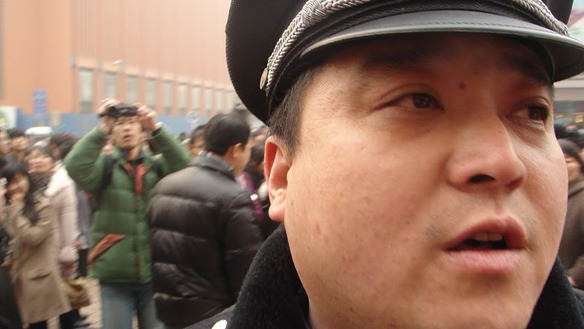
Interesting to see in what direction "social networks" on the Internet will influence "social gatherings" or "protest", or indeed "social relations" in a wider sense.
Meanwhile, yesterday's regimes continue using force on their own people whose support they have long lost...
The form of organised protest may well change in a virtual reality-influenced environment, especially as regards the possibilities of organising protest in an authoritarian, monitored society.
Maybe the combination of social media and pseudoevents points a surreal way forward for public dissent in China in the web era: organizers needn’t actually gather people, as Falun Gong supporters quietly but visibly did in the late 1990s around the capital, at the movement’s eventual peril, and as occasionally happens today, in gatherings of petitioners and others that are often promptly shut down by scores of police.
Instead, they can simply spread word about a protest via one of China’s networking sites, then wait for the police – along with the journalists, and perhaps a few sympathizers with cameras – to show up and shut down something that isn’t even there. You don’t just get a “protest”; you get a display of fear by the government. Do it again, and the number of “protests” grows, along with the number of police. Repeat. [...]
Interesting to see in what direction "social networks" on the Internet will influence "social gatherings" or "protest", or indeed "social relations" in a wider sense.
Meanwhile, yesterday's regimes continue using force on their own people whose support they have long lost...
Jun 4, 2010
About my Intentions as a Potential "Scholar": the Ethical Component in “Science”
What the people of Taiwan do in their communal construction and discussion of identity, I do according to my own calling and self-understanding as a young “scholar” doing research: support for/legitimation of their constructive efforts via scientific backing (delivering “facts”). Give them a voice in “rational” “objective” scientific discourse which makes for the internationally recognised forum/parliament of debating legitimate decision-making based selectively on terms of orthodoxy and heterodoxy (“rational” vs. “irratonal”), reflecting well-hidden (or taken for granted) power structures which exercise scientific discourse to a point where certain assumptions become consent. Thus, science ultimately serves as legitimising agency and advisory committee to the political executive. Science is neither innocent nor independent. Everyone choses which side they are on. Ideally, I view it as an imperative for any influential intellectual/scholar to not act on their own behalf or blindly bear existing structures of power, but to illuminate and side with the weak, the oppressed, the unheard, to – after objective-as-possible assessment of their situation and overall environment –work towards amelioration of society according to our conscience and scientific ideals of objectivity and impartiality. I believe we should do so along our adopted standards many of which are “Western” in nature (democracy, human rights) but which should nevertheless not be withheld from anybody outside their reach who choses to embrace them. I call for political activity by intellectuals! It is us who need to be outspoken and deliver factual and reasonable arguments in public debate, but we should not be confined by the class many of us feel part of. Instead, we need to include and enhance those voices which are not heard through their own efforts. We need to remember society of the relativity of many of its ideas and convictions, but on stable ground. For albeit constructed or imagined, we chose certain convictions, one way or the other. We would even chose to “transcend” (or deconstruct, or destroy) any idea available. Thus, we need to stay alert about the consequences of our thinking. So my conviction is we shall always think through alternative views, keep in mind our own relativity, but firmly chose our grounding, for we cannot stand without firm ground. Paradoxically, although I am convinced that my belief is relative at best, I am still able to believe. I believe what I believe in, and since I know this is me only and totally irrelevant (or relative) to the bigger picture, of course I must accept what others believe in. But I accept it as equally relative, so that still leaves me a chance to try and convince them of what I believe in. However, I can do so only through word and persuasion, by means legitimable in light of my accepting their opinion.
Talking about cultural differences, there is no “universal nature” in “human rights”, but we who enjoy their liberties and freedom are to opt for supporting those who freely chose to lead lives along similar lines, even if that means opposing reigning power in a foreign context. We have to do so to ensure the longevity of these our very ideals against an all-encompassing relativism, and we can do so only by acknowledging the historically constructed nature and not given “nature” of liberal democracy, offering it to everybody as one political philosophy among many – the superiority of which we believe in – and support those who decide for themselves to follow it. Since it is a singular political doctrine with absolute claim we propagate, does that justify military operations to safeguard its proliferation and endurance in other countries? Can we morally justify the suffering and even killing of innocent people with the outlook of achieving a better or more just society for them, a view not necessarily shared by the ones so “rescued”? In any case, understanding Western liberal democracy and human rights as one political doctrine competing for power with other, structurally similar doctrines, at least allows for the implementation of military might for a better end – social peace, multiculturalism. In contrast, perceiving them as naturally (or genetically) endowed with the human condition would inextricably lead to a moral dilemma of undermining the end – the state so to be achieved – with the means employed to reach it, and so making it virtually impossible to convince people to convert to the alleged higher moral state innate to liberal values.
Dec 4, 2009
Criticizing Han Ethnocentrism in Taiwan and China
To be clarified beforehand: I am radically anti-racist and anti-nationalist, I consider proselytizing a crime against an individuals self-determination (although some religious determinations turned out to be better advocates of preserving cultural identities and propagating cultural diversity), and I wish for mutual respect, tolerance, and one multicultural global society without discrimination nor borders.
Let Taiwan serve as a two-fold case in point for my argument, which is to say that there is a very frightening component about Chinese Han Ethnocentrism, something masquerading as "cultural" which is very hard to distinguish from other areas such as politics and ethnicity.
By referring to two layers, I mean looking at Taiwan from an micro and a macro level angle. The macro level is rather easy to describe, since it entails the way the Chinese empire spread through the course of many centuries, incorporating colonized local people and by way of proving its "cultural" superiority convincing most ethnic groups to submit to and overtake Chinese culture. This is especially true today, when life becomes ever faster, information can be accessed almost everywhere, and there is fierce competition for job opportunities with an widening gap of the haves vs. the not-haves. This means as long as there is no real appreciation for any non-Chinese culture and multicultural diversity within the so-called ethnic Chinese group, people with a distinct culture have to get rid of some of their cultural traits, especially those that might potentially clash with Chinese custom and behaviour.
I am to this day convinced that there is no genuine appreciation of foreignness in China. In part this is due to an overaggressive nationalism which was launched in the beginning of the 20th century to confront Western invasion into China, and at the same time was a reaction to what was felt necessary at the time: the building of a strong nation state to compete with other nations. Along with a nation state, the concept of "race" was prevalent at that time and in a process of westernization (as means to self-strengthening, without losing cultural roots) seemingly had to be introduced or at least, if already existing, modified in China. Keeping traditional cultural roots didn't stay at the political agenda of the most successful movements for long. The Communist regime stands for breaking ties with most fundamental traditional Chinese idea(l)s, especially those relating to society and social relationships. However, it was constantly felt necessary to strengthen a certain nationalist awareness, which after the end of the possibility of Communist legitimation took over as one of the two foundations of the modern Chinese nation state, the other being economic prosperity. In combination they aim for China becoming the world's foremost economic power. This ideology necessarily has a couple of dogmas that cannot be touched, among them the triple 'T' (Tibet, Taiwan, Tian'anmen), which cause a lot of harm in and around China and should be examined critically. Excuses centering on China's exotic nature ("Maybe the Chinese are like that") are not of any help here, because the root of the problem is not genuinely Chinese but rather imported - it lies in the concepts of nationalism and capitalist economy. Current Chinese society is in these aspects very far from what traditional China may have looked like. My criticism as such is thus not aimed at something inherently "Chinese", but on nowadays implementations and importations of essentially Western ideas. I actually would very much like China to be more "Chinese", as I think this ongoing marriage with some mutilated currents of Western thought is a very dangerous one. Realistically, I am not hoping for many Chinese people to accept this criticism, something that may be due to national pride having already taken deep roots in most of the population. What I myself cannot accept, however, is that innocent people in a country separate from China should suffer from dogma-infested actions deriving from this misguided interpretation of outdated Western concepts.
The funny and really scary thing about Chinese ethnocentrism is that in cooperation with the Chinese language that doesn't favour definite word-meaning relationships it can quite easily clothe its appearance in more pleasant phrases such as "cultural Chineseness" (which, apparently, is aimed to include all "cultural" Chinese from overseas - Singapore, USA, Indonesia - in the great Chinese community whose representative is, of course, the People's Republic - there is even a word for this that bridges the gap between ethnicity, politics, and culture: 華人世界). This does amazingly often work with Western scholars and politicians who take Chinese phrases (designed to be foremost pleasant to hear) for their concrete meaning, mostly without having the time to cast a critical look on how those phrases relate to reality.
To me, if an ethnic group (however wildly constructed this "ethnicity" may be) separates itself as clearly as is the case with Chinese "cultural" ambitions, which at closer look reveal quite direct imperialist intentions, anti-Chinese sentiment in these places is quite a natural thing to expect. As is the case in Taiwan. Taiwanese "ethnic" identity is clearly constructed against and under the threat of Chinese ambitions to take over the island of Formosa. If there were no political pressure on Taiwan, the formation of Taiwanese identities would not have to be directed against China, but it could more naturally evolve as some sort of post-nationalist citizen- and democracy-based identity which is much needed indeed, if we are to confront Taiwan's current and future problems in society and human-nature relations effectively.
At the centre of the problem may well lie the question: What on earth are ethnic Han? - As a friend of mine put it once, the "Han" are a wild mix of different peoples, quite naturally so if one considers traditional Chinese political and cultural concepts (i.e. the imperial claim to represent everything under heaven, of course every cultural group can become part of "everything under heaven"). This makes the "Han" distinction itself more a cultural one than an ethnic one. "Friendly takeover" has happened before, many of the people now considered "Han" were "barbarians" a few centuries ago - I have a hard time believing that the "Han" may be supposed to just be much more effective in out-populating so many peoples. The modern Han race is settled on ideology and mythology, with history serving as its primary legitimation (the "5000 years of Chinese culture"), at the same time "Han" is essentially a synonym for "Chinese" today, representing about 93% of the PRC population, which is pretty convenient in legitimating China's sole representation by "Han" politicians. Some hint in how arbitrarily the "Chinese race" has been constructed can be found in comparing differences between Han and "Manchu", who are officially recognized as a minority, that is, not "Han", and differences between inner-Han groups with their own language etc. (for instance, Hakka, Hoklo, Cantonese). (On another note this may tell us a lot with Chinese preoccupation with the Northern part of the country, whilst the South has always been thought of as populated by uncivilized barbarians.)
All I want to say is that I question the Han qualifying as a single ethnic group that can be used by serious scholarship. As long as there is no genetic evidence, I keep on doubting. It appears to me that the construction process serves very real political purposes. A politically manipulated term, however, can not be mingled with independent science.
Then there is what I called the "micro level" of Han ethnocentrism.
Again, taking Taiwan as an example, on one hand the island is the concrete aim of Chinese cultural-imperialist ambitions (macro level). On the other hand, there is Han ethnocentrism within Taiwan. Although cultural diversity is recognised in Taiwan by distinguishing four different groups (Aboriginals, Hoklo, Hakka, Mainlanders), there is considerable cloudiness to how distinct the groups are. For instance, a big part of the Hoklo-"Taiwanese" are comprised of Hoklo-Hakka and former flatland aboriginals marriages. The only group easily distinguishable are the mainlanders retreating with Chiang Kaishek in 1949, although intermarriage with Taiwanese Hoklo or wives from overseas are common, so that lines get blurred. Talking more specifically about "ethnicity", it seems that all groups are taken together as "ethnic Chinese" (= Han), the only outside group being Taiwans "First Nations", the austronesian aborignals.
Let's continue this further. The Austronesians have been subdued by the influx and weapon-technological advance of immigrants from China to the point of marginalisation. Until very recently, the "ethnically Chinese" people have never doubted their superiority to the aboriginals in any aspect. This is why they took their land and resettled them in concrete buildings without bothering to ask for the politically inferior groups opinion. As Fiorella Allio, engaged French anthopologist among the Yami tribe, tells that the Yami on the Taiwanese island Botel Tobago has been resettled, and their traditional fishing grounds have become a nuclear waste deposit site. How much more disrespectful can you be in dealing with other people? All of this is reflected in the way Taiwanese politicians treat the land - there has been no consideration about a policy's effects on the natural environment (ideological reasons for Chinese indifference towards the land - for many decades, most officials have been mainlanders - can be found elsewhere - Taiwan has always been considered a tropical backwater of no use to Chinese officials. Interestingly, this has changed significantly over the past years, but to a bigger degree for mainland China than for local politicians, I fear). Still, the Aboriginals today may be welcome folklore to many Taiwanese, but they are not really an integrated part of society. They have lower incomes and education levels, higher mortgage and unemployment rates, are prone to become alcoholic, and even the tribes living next door are often separated from "Han" society and driven further out as settlement patterns spread. Settlement spreads, but not to include them, but drive them further away. Professor Hsia Chu-joe 夏鑄九 (National Taiwan University, Graduate Institute of Building and Planning) whom I heard give a talk on the planned new law on the Management of State Property Land at the NGO House in Taipei a few weeks ago put it in these terms: "When are the Han ever going to accept the Aboriginals as people just like themselves? When are they going to accept anybody outside themselves?
Let Taiwan serve as a two-fold case in point for my argument, which is to say that there is a very frightening component about Chinese Han Ethnocentrism, something masquerading as "cultural" which is very hard to distinguish from other areas such as politics and ethnicity.
By referring to two layers, I mean looking at Taiwan from an micro and a macro level angle. The macro level is rather easy to describe, since it entails the way the Chinese empire spread through the course of many centuries, incorporating colonized local people and by way of proving its "cultural" superiority convincing most ethnic groups to submit to and overtake Chinese culture. This is especially true today, when life becomes ever faster, information can be accessed almost everywhere, and there is fierce competition for job opportunities with an widening gap of the haves vs. the not-haves. This means as long as there is no real appreciation for any non-Chinese culture and multicultural diversity within the so-called ethnic Chinese group, people with a distinct culture have to get rid of some of their cultural traits, especially those that might potentially clash with Chinese custom and behaviour.
I am to this day convinced that there is no genuine appreciation of foreignness in China. In part this is due to an overaggressive nationalism which was launched in the beginning of the 20th century to confront Western invasion into China, and at the same time was a reaction to what was felt necessary at the time: the building of a strong nation state to compete with other nations. Along with a nation state, the concept of "race" was prevalent at that time and in a process of westernization (as means to self-strengthening, without losing cultural roots) seemingly had to be introduced or at least, if already existing, modified in China. Keeping traditional cultural roots didn't stay at the political agenda of the most successful movements for long. The Communist regime stands for breaking ties with most fundamental traditional Chinese idea(l)s, especially those relating to society and social relationships. However, it was constantly felt necessary to strengthen a certain nationalist awareness, which after the end of the possibility of Communist legitimation took over as one of the two foundations of the modern Chinese nation state, the other being economic prosperity. In combination they aim for China becoming the world's foremost economic power. This ideology necessarily has a couple of dogmas that cannot be touched, among them the triple 'T' (Tibet, Taiwan, Tian'anmen), which cause a lot of harm in and around China and should be examined critically. Excuses centering on China's exotic nature ("Maybe the Chinese are like that") are not of any help here, because the root of the problem is not genuinely Chinese but rather imported - it lies in the concepts of nationalism and capitalist economy. Current Chinese society is in these aspects very far from what traditional China may have looked like. My criticism as such is thus not aimed at something inherently "Chinese", but on nowadays implementations and importations of essentially Western ideas. I actually would very much like China to be more "Chinese", as I think this ongoing marriage with some mutilated currents of Western thought is a very dangerous one. Realistically, I am not hoping for many Chinese people to accept this criticism, something that may be due to national pride having already taken deep roots in most of the population. What I myself cannot accept, however, is that innocent people in a country separate from China should suffer from dogma-infested actions deriving from this misguided interpretation of outdated Western concepts.
The funny and really scary thing about Chinese ethnocentrism is that in cooperation with the Chinese language that doesn't favour definite word-meaning relationships it can quite easily clothe its appearance in more pleasant phrases such as "cultural Chineseness" (which, apparently, is aimed to include all "cultural" Chinese from overseas - Singapore, USA, Indonesia - in the great Chinese community whose representative is, of course, the People's Republic - there is even a word for this that bridges the gap between ethnicity, politics, and culture: 華人世界). This does amazingly often work with Western scholars and politicians who take Chinese phrases (designed to be foremost pleasant to hear) for their concrete meaning, mostly without having the time to cast a critical look on how those phrases relate to reality.
To me, if an ethnic group (however wildly constructed this "ethnicity" may be) separates itself as clearly as is the case with Chinese "cultural" ambitions, which at closer look reveal quite direct imperialist intentions, anti-Chinese sentiment in these places is quite a natural thing to expect. As is the case in Taiwan. Taiwanese "ethnic" identity is clearly constructed against and under the threat of Chinese ambitions to take over the island of Formosa. If there were no political pressure on Taiwan, the formation of Taiwanese identities would not have to be directed against China, but it could more naturally evolve as some sort of post-nationalist citizen- and democracy-based identity which is much needed indeed, if we are to confront Taiwan's current and future problems in society and human-nature relations effectively.
At the centre of the problem may well lie the question: What on earth are ethnic Han? - As a friend of mine put it once, the "Han" are a wild mix of different peoples, quite naturally so if one considers traditional Chinese political and cultural concepts (i.e. the imperial claim to represent everything under heaven, of course every cultural group can become part of "everything under heaven"). This makes the "Han" distinction itself more a cultural one than an ethnic one. "Friendly takeover" has happened before, many of the people now considered "Han" were "barbarians" a few centuries ago - I have a hard time believing that the "Han" may be supposed to just be much more effective in out-populating so many peoples. The modern Han race is settled on ideology and mythology, with history serving as its primary legitimation (the "5000 years of Chinese culture"), at the same time "Han" is essentially a synonym for "Chinese" today, representing about 93% of the PRC population, which is pretty convenient in legitimating China's sole representation by "Han" politicians. Some hint in how arbitrarily the "Chinese race" has been constructed can be found in comparing differences between Han and "Manchu", who are officially recognized as a minority, that is, not "Han", and differences between inner-Han groups with their own language etc. (for instance, Hakka, Hoklo, Cantonese). (On another note this may tell us a lot with Chinese preoccupation with the Northern part of the country, whilst the South has always been thought of as populated by uncivilized barbarians.)
All I want to say is that I question the Han qualifying as a single ethnic group that can be used by serious scholarship. As long as there is no genetic evidence, I keep on doubting. It appears to me that the construction process serves very real political purposes. A politically manipulated term, however, can not be mingled with independent science.
Then there is what I called the "micro level" of Han ethnocentrism.
Again, taking Taiwan as an example, on one hand the island is the concrete aim of Chinese cultural-imperialist ambitions (macro level). On the other hand, there is Han ethnocentrism within Taiwan. Although cultural diversity is recognised in Taiwan by distinguishing four different groups (Aboriginals, Hoklo, Hakka, Mainlanders), there is considerable cloudiness to how distinct the groups are. For instance, a big part of the Hoklo-"Taiwanese" are comprised of Hoklo-Hakka and former flatland aboriginals marriages. The only group easily distinguishable are the mainlanders retreating with Chiang Kaishek in 1949, although intermarriage with Taiwanese Hoklo or wives from overseas are common, so that lines get blurred. Talking more specifically about "ethnicity", it seems that all groups are taken together as "ethnic Chinese" (= Han), the only outside group being Taiwans "First Nations", the austronesian aborignals.
Let's continue this further. The Austronesians have been subdued by the influx and weapon-technological advance of immigrants from China to the point of marginalisation. Until very recently, the "ethnically Chinese" people have never doubted their superiority to the aboriginals in any aspect. This is why they took their land and resettled them in concrete buildings without bothering to ask for the politically inferior groups opinion. As Fiorella Allio, engaged French anthopologist among the Yami tribe, tells that the Yami on the Taiwanese island Botel Tobago has been resettled, and their traditional fishing grounds have become a nuclear waste deposit site. How much more disrespectful can you be in dealing with other people? All of this is reflected in the way Taiwanese politicians treat the land - there has been no consideration about a policy's effects on the natural environment (ideological reasons for Chinese indifference towards the land - for many decades, most officials have been mainlanders - can be found elsewhere - Taiwan has always been considered a tropical backwater of no use to Chinese officials. Interestingly, this has changed significantly over the past years, but to a bigger degree for mainland China than for local politicians, I fear). Still, the Aboriginals today may be welcome folklore to many Taiwanese, but they are not really an integrated part of society. They have lower incomes and education levels, higher mortgage and unemployment rates, are prone to become alcoholic, and even the tribes living next door are often separated from "Han" society and driven further out as settlement patterns spread. Settlement spreads, but not to include them, but drive them further away. Professor Hsia Chu-joe 夏鑄九 (National Taiwan University, Graduate Institute of Building and Planning) whom I heard give a talk on the planned new law on the Management of State Property Land at the NGO House in Taipei a few weeks ago put it in these terms: "When are the Han ever going to accept the Aboriginals as people just like themselves? When are they going to accept anybody outside themselves?
Although historically the Chinese political system apparently has been particularly adept at assimilating foreign cultural-ethnic groups, the outcome of this assimilation process seems to have been dictated by political power relations. Coming from a stronger, even hegemonic, position of power, the Chinese were able to conquer and assimilate outsiders according to their own terms. For as long as they were still culturally distinct, conquered minorities must have been on the marginal peripheries of a Chinese-dominated society. Support for this assumption can be found in the recent history of Taiwan’s colonization (where the trend has been somewhat stopped) where Plains Aborigines were married into becoming Hoklo-Chinese and whole settlements switched ethnic affiliation (Brown 2004), whereas the remaining distinct Aboriginal peoples live on the margins of society. But it can also be found in South China itself, where minorities live in economically and structurally weak regions and have tremendous trouble asserting themselves in a Chinese-dominated economy and polity. The recent colonization of Tibet by immensely successful Han entrepreneurs, without Tibetans profiting as much from the region’s economic opening, is another case in point. Something similar may happen in the vast, thinly populated space north of the Manchurian border in Siberia, where hundreds of thousands of Chinese have migrated.
Chinese Han ethnocentrism from China, as relating to Taiwan, is manifested in that it does not take into account the Taiwanese people's opinion regarding the future and status of their island which is a country independent from China. We might perceive this nationalist ethnocentrism as sort of outsider-friendly (even for hardline unificationists there must be some sense of Taiwan being different from China, since otherwise there wouldn't be need for such a thing as "unification") and dogmatic. Taiwan has to be kept from declaring official independence to uphold the mythological foundation of the Chinese nation state. This is a very aggressive view on cross-straits relations, especially for its denying Taiwan to make use of the basic international right for self-determination by threatening it to use violence. The only solution to this problem is either China giving up its territorial claims on Taiwan (not likely to happen), or the Taiwanese people giving in to a mixture of international pressure and economic promises (much more likely to happen). From a moral point of departure, the lack of Western support for democratic Taiwan is of great concern to me. This undermines Western democracies moral authority even further, since we are essentially buying into authoritarian China's promise of a great economic market, and selling out democratic kin in return... Apparently, 2012 is the year to look out for. If we are lucky, the world will be ending that year anyway.
For all that is good, and if a society really wants to progress, it has to look beyond the confines of its own cultural and ethnic boundaries. It has to learn to position itself in the place of any other culture that it is facing. This is the only way to enhance mutual understanding and avert competition that might lead to subordination of one people under the other. I consider this an essentially globalised human desire, because it will be the only way to the traditional Chinese ideal of "harmony" 和諧 within society, in the relations with other societies, and in dealing with the environment. To give these thoughts some additional weight, let me quote famous anthropologist Clifford Geertz:
"the primary question for any cultural institution anywhere, now that nobody is leaving anybody else alone and isn´t ever again going to, is not whether everything is going to come seamlessly together, or whether, contrariwise, we are all going to persist in our separate prejudices. It is whether human beings are going to be able, in Java or Connecticut, through law, anthropology, or anything, to imagine principled lives they can practically lead [together]."
Dec 11, 2008
Police forces end to nonviolent student sit-ins in Taipei!
Timing couldn't have been more ironic:
In the night after the 60-year declaration of universal human rights on December 10, at around 3 to 4 a.m., the expressedly non-violent student protesters of the Wild Strawberry Movement were forced by the police to leave their home for one month, Liberty Square (the former CKS Memorial Hall). This move made President Ma's speech of the day look awkward:
This is what a friend from Taiwan wrote:
I am not sure whether anyone anticipated a move like that at the moment. But sad it is, indeed. I feel like it should be clear for everybody to see what this government is trying to accomplish, only that media in the west go out of their way to stress its "pragmatism" towards China and not mention hell about what is happening bit by bit: the vanishing of what used to be one of the worlds premier democratisation processes, a prime example for political theory until just recently. And this is truely sad, especially with the symbolic date serving as symbolic background. I'm confused whether Ma did it purposedly right then. Since actions speak louder than words, their symbolic meaning are crashing his smooth rhetoric, and this is frightening.
What else can you do when there is no opposition left? Presidency, Government, Police and Military, and a huge part of the media are working hand in hand with the ruling party to re-establish the one-party state of old. This is what I fear.
And it will have an impact on democratisation processes around the world.
In the night after the 60-year declaration of universal human rights on December 10, at around 3 to 4 a.m., the expressedly non-violent student protesters of the Wild Strawberry Movement were forced by the police to leave their home for one month, Liberty Square (the former CKS Memorial Hall). This move made President Ma's speech of the day look awkward:
"Thanks to the government's continued efforts to uphold human rights, Taiwan has now become "the world's freest country" in terms of the people's right to assembly, which [Ma] said was very well demonstrated by several protests at the ceremony in support of a variety of causes."
This is what a friend from Taiwan wrote:
http://www.ocot.tw/blog/Note also that the eviction fell right into a time when plans for a more coordinated collaboration with Tibetan activists (e.g. for inviting the Dalai Lama to Taiwan) were being mulled over. My friend explicitly says that the reason policemen stated for evicting the students was "helping the Tibetans".archives/1034 這是現場的影片..我前一天在那裡睡覺..我們的家沒了....!12/ 10是世界人權日...三小時之後..大約半夜3點多.. 警察來把現場的西藏人(8號那天...西藏的人開始靜坐)... 他們先把西藏人帶走..再來是我們!!他們說... 因為我們幫助西藏的人...所以也要把我們趕走...!! 我很難過...台灣的人權...慢慢被流失!!!
I am not sure whether anyone anticipated a move like that at the moment. But sad it is, indeed. I feel like it should be clear for everybody to see what this government is trying to accomplish, only that media in the west go out of their way to stress its "pragmatism" towards China and not mention hell about what is happening bit by bit: the vanishing of what used to be one of the worlds premier democratisation processes, a prime example for political theory until just recently. And this is truely sad, especially with the symbolic date serving as symbolic background. I'm confused whether Ma did it purposedly right then. Since actions speak louder than words, their symbolic meaning are crashing his smooth rhetoric, and this is frightening.
What else can you do when there is no opposition left? Presidency, Government, Police and Military, and a huge part of the media are working hand in hand with the ruling party to re-establish the one-party state of old. This is what I fear.
And it will have an impact on democratisation processes around the world.
Dec 7, 2008
Ma doesn't want the Dalai Lama in Taiwan...
...but that doesn't mean that he won't come, does it?
Ma's rebuff of the Dalai Lama coming to Taiwan is good news because:
It will enhance international attention to what is happening in Taiwan. In his inauguration speech, Ma welcomed the Dalai Lama to come to Taiwan anytime. Now, Taiwan students and NGOs are thinking about inviting him on their behalf.
According to Lynn Miles, fighting for democracy and human rights in Taiwan since the 70s, this is the way politics should be done by the people:
That is why we need to change things on our own! For if we want to see things change, we need to be the change we want to see!
Ma's rebuff of the Dalai Lama coming to Taiwan is good news because:
It will enhance international attention to what is happening in Taiwan. In his inauguration speech, Ma welcomed the Dalai Lama to come to Taiwan anytime. Now, Taiwan students and NGOs are thinking about inviting him on their behalf.
According to Lynn Miles, fighting for democracy and human rights in Taiwan since the 70s, this is the way politics should be done by the people:
People! This is what we must all be doing -- taking the movement to the people. People-to-people connections, once consumated, can put an end to this tired, year-in-and-year out chasing after corrupt politicians who are already in someone else's pocket long before we even get past their secretaries.Governments do not speak in the name of the people they are supposed to represent. When it comes to this, evidence can be found in the matter on Taiwan:
Wild Strawberries offers us an excellent opportuunity to do this people-to-people grassroots work. Student organizations should be at the top of our list, and human rights NGOs, and so on.
Consider this. Virtually all of the world's peoples outside of China recognize Taiwan as a country. Go anywhere in the world and if someone asks you what country you are from, and you say "Taiwan," that is the end of the matter. Pure and simple. So what you have is the people of the world recognizing Taiwan, on the one hand, while their governments do not recognize Taiwan on the other. How then can we call them democracies? They have all been corrupted by the big-money power!
That is why we need to change things on our own! For if we want to see things change, we need to be the change we want to see!
International Scholars' Open Letter, Responding to Taiwan's Justice Minister
Open Letter no. 2 was published in the Taipei Times on 2 December:
The Formosan Association for Public Affairs
552 7th Street. SE. Washington, DC 20003
| Support Democracy, Support Taiwan. |
For Immediate Release
December 2, 2008, 2008
Contact: Iris Ho at 202.547.3686
On Friday November 28th a group of prominent international scholars and writers sent an open letter to Taiwan's Justice Minister Wang Ching-feng, expressing continued concern about political arrests and detentions in Taiwan. The group was responding to an open letter from the Minister, which was published in the Taipei Times on Tuesday, November 25th.
In the response, the scholars and writers stated: "Based on the information available to us, however, we remain concerned about choices made by prosecutors in applying existing legal authority and strongly believe in the need for reform." The letter went on to detail concerns about "preventive detention", detention without formal charges, the absence of lawyer-client confidentiality, leaks by prosecutors to the press, and political bias in the judicial system.
The scholars and writers expressed fear that the current judicial procedures being used in Taiwan is endangering the country's democratization, and is damaging the goodwill that Taiwan has developed internationally. They concluded by expressing the hope and expectation that Taiwan's government will quickly correct the present injustices, and move towards reform of the judicial system.
------------------------------
November 28th 2008
The Honorable Wang Ching-feng
Minister of Justice
130 Chung-Ching S. Rd, Sec 1
Taipei, Taiwan
Dear Minister Wang,
In an open letter to the Taipei Times, published on November 25th 2008, you responded to our joint statement regarding the erosion of justice in Taiwan. We appreciate your acknowledgement of the sincerity of our concerns, and are grateful to receive a prompt and serious reply. Based on the information available to us, however, we remain concerned about choices made by prosecutors in applying existing legal authority and strongly believe in the need for reform. Please allow us to highlight a number of specific points:
1. The procedure of "preventive detention." This procedure is obviously intended for serious criminal cases in which the suspect is likely to flee the country. In his November 13th article in the South China Morning Post, Professor Jerome Cohen states that "it ought to be invoked rarely."
Yet, during the past weeks, it has been used across the board, and it has been used only against present and former members of the DPP government. This casts severe doubts on the impartiality of the judicial system. We also wish to point out that the people involved were detained under deplorable circumstances, and that they were not even allowed to see relatives.
2. The open letter contains the argument that when they were detained, the present and former DPP government officials "were all informed of the charges that had been brought against them." This is simply not correct: when they were detained, they were subject to lengthy interrogations – in some cases for up to 20 hours – which bore the character of a "fishing expedition", and do not represent a formal indictment in any legal sense. In most cases the prosecutors had had months of time to collect information: if they did have sufficient evidence of wrong-doing, they should formally have charged the persons and let them have their day in a scrupulously impartial court of law. That would be the desirable procedure under the rule of law in a democratic society.
3. The open letter also states that the persons involved had "the right and ability to communicate with their attorneys to seek legal assistance." It neglects to mention that in all cases where people were detained, the discussions with the lawyers were recorded and videotaped, while a guard took notes. This information was then immediately transmitted to the respective prosecutors. We don't need to point out that this is a grave infringement on international norms regarding the lawyer-client privilege, and makes mounting an adequate defense problematic at best.
4. On the issue of leaks to the press, the letter states that under the Code of Criminal Procedure information on ongoing investigations can only be disclosed by spokespersons of the prosecutor's offices and that unauthorized disclosure is subject to criminal prosecution. The fact of the matter is that during the past weeks, the media has been filled with information on the ongoing investigations which could only have come from the prosecutors. We may point out one example, but there are numerous others:
Only a few hours after former Foreign Minister Mark Chen was questioned on November 3rd, the Apple Daily (a local tabloid) ran an article that "the prosecutors are thinking of charging Dr. Chen in relation to the case."
The issue of violation of the principle of secret investigation was also raised by Shih Lin District Court Judge Hung Ing-hua, who strongly criticized the present situation and procedures followed by your Ministry in an article in the Liberty Times on November 17th 2008.
We may also mention that we find it highly peculiar that no steps whatsoever have been taken against the various prosecutors who leaked information, while we just learned that the Ministry of Justice is now taking steps against Mr. Cheng Wen-long, the lawyer for former President Chen Shui-bian, who presumably "leaked" information to the press. The Ministry sent a formal request to the Taipei District Prosecutor's Office asking the office to investigate and prosecute, and also sent a formal request to Taiwan Lawyer's Association and asked the association to review the case and see whether Cheng should have his license revoked.
It is our understanding that the statements Mr. Cheng made were in relation to former President Chen's views on Taiwan's situation and its future, and an expression of love for his wife, but did not have any bearing on the case against him. We hope you realize that if the Ministry proceeds along these lines, this will be perceived as a direct confirmation of the strong political bias of the judicial system.
5. The letter states that it is untrue that Taiwan's judicial system is susceptible to political manipulation. If this is the case, how can it be explained that in the past weeks, only DPP officials have been detained and given inhumane treatment such as handcuffing and lengthy questioning, while obvious cases of corruption by members of the KMT – including in the Legislative Yuan -- are left untouched by the prosecutors or at best stalled in the judicial process?
We may also refer to expressions of concern by Prof. Jerome Cohen and by lawyer Nigel Li, who expressed his deep concerns about the preventive detentions in an editorial in the China Times on November 9th 2008. In his editorial, Mr. Li praised the remarks made by prosecutor Chen Rui-ren, who was part of the legal team prosecuting the special fund cases, that the prosecutors' offices should "avoid the appearance of targeting only one particular political group."
The fact that the Special Investigation Task Force was set up under the DPP Administration or that the prosecutor general was nominated by President Chen is not at issue here. The problem is that the present system is being used in a very partial fashion.
We may add that the fact that you yourself have publicly discussed the content of the cases does create a serious imbalance in the playing field, and undermines the basic dictum that a person should be considered innocent until proven guilty in a court of law. Under the present circumstances it is hard to see how the persons involved – including former President Chen Shui-bian – can have a fair trial in Taiwan.
6. Lastly, the statement by the US State Department is interpreted in the letter as an "endorsement" of Taiwan's legal system and the procedures followed. It should be noted that in international diplomatic language, the term "we have every expectation" means "we are concerned and we will watch the situation closely."
For the past two decades, Taiwan has faced a difficult situation internationally. What has given Taiwan important credibility in democratic countries around the world has been its democratization. We fear that the current judicial procedures being used in Taiwan endanger this democratization, and endanger the goodwill that Taiwan has developed internationally.
In conclusion: we do remain deeply disturbed by the erosion of justice in Taiwan, and express the sincere hope and expectation that your government will maintain fair and impartial judicial practices and quickly correct the present injustices. As an editorial in the November 20th issue of the London-based Economist indicated, Taiwan is "hungry for justice", and we also hope that your government will be willing to initiate judicial reform which would move Taiwan towards a fully fair and impartial judicial system which earns the respect and admiration from other democratic countries around the world.
Respectfully yours,
Signatories of the November 4th Joint Statement
- Nat Bellocchi, former Chairman of the American Institute in Taiwan
- Coen Blaauw, Formosan Association for Public Affairs, Washington DC
- Stéphane Corcuff, Associate Professor of Political Science, China and Taiwan Studies, University of Lyon, France
- Gordon G. Chang, author, "The Coming Collapse of China."
- David Curtis Wright, Associate Professor of History, University of Calgary
- June Teufel Dreyer, Professor of Political Science, University of Miami, Florida
- Edward Friedman, Professor of Political Science and East Asian Studies, University of Wisconsin, Madison
- Mark Harrison, Senior Lecturer, Head of Chinese School of Asian Languages and Studies, University of Tasmania, , Australia
- Bruce Jacobs, Professor of Asian Languages and Studies, Monash University, Melbourne, Australia
- Richard C. Kagan, Professor Emeritus of History, Hamline University, St. Paul Minnesota
- Jerome F. Keating, Associate Professor, National Taipei University (Ret.). Author, "Island in the Stream, a quick case study of Taiwan's complex history" and other works on Taiwan
- Daniel Lynch, Associate Professor, School of International Relations, University of Southern California
- Victor H. Mair, Professor of Chinese Language and Literature, University of Pennsylvania
- Donald Rodgers, Associate Professor of Political Science, Austin College, Texas
- Terence Russell, Professor of Chinese Language and Literature, University of Manitoba
- Scott Simon, Professor of Sociology and Anthropology, University of Ottawa
- Michael Stainton, York Center for Asia Research, Toronto
- Peter Tague, Professor of Law, Georgetown University
- John J. Tkacik Jr., Senior Research Fellow, The Heritage Foundation, Washington DC
- Vincent Wei-cheng Wang, Professor of Political Science, University of Richmond, Virginia
- Arthur Waldron, Lauder Professor of International Relations, University of Pennsylvania
- Gerrit van der Wees, Editor Taiwan Communiqué, Washington DC
- Stephen Yates, President of DC Asia Advisory and former Deputy Assistant to the Vice President for National Security Affairs
AI urging Taiwan Police to avoid using force at protests
AMNESTY INTERNATIONAL
PUBLIC STATEMENT
AI Index No: ASA 38/001/2008
3 December 2008
Taiwan: Police should avoid using excessive force at upcoming protests
Amnesty International has urged Taiwan's police force to comply with international guidelines on the use of force and crowd control at the planned student protests on Sunday 7 December.
The organization also joins calls for the Control Yuan, the body mandated by the Taiwan Constitution with supervisory power over the Executive branch, to conduct an independent inquiry into alleged excessive police force during November's protests.
The Wild Strawberry Student Movement has staged sit-ins since 6 November to protest against what they consider the use of excessive force during the Taiwan visit of Chen Yunlin, chairman of the China-based Association for Relations Across the Taiwan Strait. Civil society groups in Taiwan are investigating multiple claims that individuals suffered head injuries and broken fingers at the hands of police during the protests.
According to police reports on 8 November, approximately 10,000 police officers had been deployed during Chen's visit; 149 police officers and 200-300 individuals were injured; 18 were arrested.
Taiwanese civil society groups claim that police have applied the Assembly and Parade Law arbitrarily to silence dissent. According to the students' spokesperson, they will not seek police approval, as required by the law, but will only "report" their plans to law enforcement authorities, in line with amendments advocated by the Movement.
The Movement is organizing the protest on Sunday 7 December to criticize the government's failure to amend the Assembly and Parade Law.
Amnesty International said Taiwan's Control Yuan should address the serious concerns raised by civil society in Taiwan and the government should cease the practice of using the Assembly and Parade Law to deny freedom of assembly and allow individuals to protest peacefully. Amnesty International also called on Taiwanese police and judicial authorities to ensure that they investigate any protesters accused of engaging in violence in a fair, transparent, and timely manner in compliance with international standards.
Background
On 3-7 November 2008, Chen Yunlin, chairman of the Association for Relations Across the Taiwan Straits, led a 60-member delegation from the People's Republic of China to visit Taiwan and meet with President Ma Ying-jeou.
The police barred protesters displaying Taiwanese and Tibetan flags and anti-China slogans along the routes taken by the envoy and confiscated or damaged some of these items. The police also closed a shop near the hotel where Chen Yunlin had dinner with Kuomintang honorary chairman Lien Chan when the shop loudly broadcast music from an album titled 'Songs of Taiwan'.
There were additional reports of arbitrary detention and police brutality, some of which, according to the police, were in response to the violence of protesters.
Following the visit, hundreds of students have staged sit-ins across Taiwan protesting the police's handling of the protests and demanding amendments to the Assembly and Parade Law, which has been misused to prevent protests.
On 6 November the students started their sit-ins outside the offices of the Executive Yuan or (Executive branch), where they were eventually removed by police on the grounds of illegal assembly. They continued the sit-ins at the National Taiwan Democracy Memorial Hall and organized a daily demonstration calling for immediate amendments to the Assembly and Parade Law, apologies from the president and head of government and the resignations of the heads of the police and national security.
On 18 November Taipei police announced a list of 66 "troublemakers", who had allegedly thrown gas bombs and stones at the police and spat at the Taichung mayor. There were also reports that the police had pressured journalists and their supervisors to hand over video tapes to identify suspects who allegedly took part in the violence.
END/
Public Document
For more information please call Amnesty International's press office in London, UK, on +44 20 7413 5566 or email: press@amnesty.org
International Secretariat, Amnesty International, 1 Easton St., London WC1X 0DW, UK
http://www.amnestyusa.org/
Dec 2, 2008
Strawberries Going Wild
(History:)
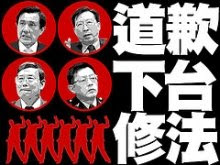
Protesting the exaggerated and inappropriate actions taken by the Ma administration while hosting Chinese cross-straits envoy Chen Yunlin in Taiwan (huge police forces blocking protesters from coming any close to where the envoy met with high Taiwanese politicians, use of violence by the police forces, ban on showing ROC- and Tibetan flags, imprisonment of leading opposition politicians, etc.), has led Taiwan's students circa one month ago to form the "Wild Strawberries Movement". The movement has groups in six cities: Taipei, Kaohsiung, Tainan, Hsinchu, Chiayi, and Taichung. Their means is peaceful protest, most profoundly do they wish to hold out in a sit-in strike to pressure politicians to take on democracy and the people they represent more seriously. In the media, the Wild Strawberries have been misrepresented from the beginning, in what resembles a campaign to denounce their political engagement as being led by the opposition (i.e., the DPP) - despite their ever-repeated party neutrality and criticism towards all established parties. The KMT and pan-blue media here show just exactly the same will to manipulate public opinion and generate deep polarisation in between the people as they criticized the former Chen administration of.
This is the homepage: http://taiwanstudentmovement2008.blogspot.com/
(The Name:)
Their name seems deliberately chosen, for the young generation in Taiwan is somewhat pejoratively being called "strawberries" often (since they are said to be spoiled and unable to bear any sort of stress). Now Taiwan's students try to show that they have well recognised the signs of the present happenings: The fear that Taiwan's democratic environment and human rights situation might soon deteriorate (if they have not already).
(Aims:)
The Wild Strawberries have urged President Ma and Prime Minister Liou to apologize for the actions taken by government and police during the time of the Chen-visit to Taiwan. They also ask the directors of National Police Agency and National Security Bureau, respectively, to step down from their offices, and for the law concerning the right to assemble (dating from Martial Law times and strictly restricting such assemblings) to be revised by the Legislative Yuan.
I hope for the Berries-Students to be at least as successfull as their predecessors who were protesting in 1990, one year after the CCP had crushed a student revolt so profundly and suddenly. In 1990, the KMT didn't dare take such action against peacefully demonstrating students. Eventually, the students' protests paved the way for ameliorating the constitution, being another stone on the way that led to democratisation. Only, our fear is that Ma will play on time and wait until the protesters spirit has vanished, so to refrain from any changes in his style of politics other than rhetoric (and his rhetoric being this and that, anyway).
A few days ago, they uploaded a video introducing their movement:
To work against frustration (mostly deriving from being almost completely ignored by the government) and gather new spirit in working towards a change, the movement is about to set a new step:
On December 7th, they are going to rally a few thousand people (hopefully) to march towards the Presidental Office, in obvious violation of the old Law on Assembling and without a police permit. Thus they are hoping to enhance the political debate about revising the law. Whether or not police forces will crush the "illegal" demonstration will be of significant influence for the future of that law. This should be a way to evoke reaction by the government (to "coax them out of their shell"), in one way or another, and prevent the protests from dying from inactivity and idleness.
There is also a lot more brand new information on some English-speaking blogs in Taiwan, for instance on "the view from Taiwan" and "David on Formosa". Especially the Taipei Times had some nice editorials on the student protests (example). Don't forget the protesters website and their effort to keep it updated several times a day, all in English.
An English Statement can be found here.
On this occasion, Anti-Flag spontaneously springs to mind: "You can kill the protester, but you can't kill the protest! You can murder the rebell, but you can't murder the rebellion!"
All I can wish for is: May your protest be longlived and bright, may it bring about the change we want to see!
Following is their statement in German:
Protesting the exaggerated and inappropriate actions taken by the Ma administration while hosting Chinese cross-straits envoy Chen Yunlin in Taiwan (huge police forces blocking protesters from coming any close to where the envoy met with high Taiwanese politicians, use of violence by the police forces, ban on showing ROC- and Tibetan flags, imprisonment of leading opposition politicians, etc.), has led Taiwan's students circa one month ago to form the "Wild Strawberries Movement". The movement has groups in six cities: Taipei, Kaohsiung, Tainan, Hsinchu, Chiayi, and Taichung. Their means is peaceful protest, most profoundly do they wish to hold out in a sit-in strike to pressure politicians to take on democracy and the people they represent more seriously. In the media, the Wild Strawberries have been misrepresented from the beginning, in what resembles a campaign to denounce their political engagement as being led by the opposition (i.e., the DPP) - despite their ever-repeated party neutrality and criticism towards all established parties. The KMT and pan-blue media here show just exactly the same will to manipulate public opinion and generate deep polarisation in between the people as they criticized the former Chen administration of.
This is the homepage: http://taiwanstudentmovement2008.blogspot.com/
(The Name:)
Their name seems deliberately chosen, for the young generation in Taiwan is somewhat pejoratively being called "strawberries" often (since they are said to be spoiled and unable to bear any sort of stress). Now Taiwan's students try to show that they have well recognised the signs of the present happenings: The fear that Taiwan's democratic environment and human rights situation might soon deteriorate (if they have not already).

(Aims:)
The Wild Strawberries have urged President Ma and Prime Minister Liou to apologize for the actions taken by government and police during the time of the Chen-visit to Taiwan. They also ask the directors of National Police Agency and National Security Bureau, respectively, to step down from their offices, and for the law concerning the right to assemble (dating from Martial Law times and strictly restricting such assemblings) to be revised by the Legislative Yuan.
I hope for the Berries-Students to be at least as successfull as their predecessors who were protesting in 1990, one year after the CCP had crushed a student revolt so profundly and suddenly. In 1990, the KMT didn't dare take such action against peacefully demonstrating students. Eventually, the students' protests paved the way for ameliorating the constitution, being another stone on the way that led to democratisation. Only, our fear is that Ma will play on time and wait until the protesters spirit has vanished, so to refrain from any changes in his style of politics other than rhetoric (and his rhetoric being this and that, anyway).
A few days ago, they uploaded a video introducing their movement:
(The Future:)
On December 7th, they are going to rally a few thousand people (hopefully) to march towards the Presidental Office, in obvious violation of the old Law on Assembling and without a police permit. Thus they are hoping to enhance the political debate about revising the law. Whether or not police forces will crush the "illegal" demonstration will be of significant influence for the future of that law. This should be a way to evoke reaction by the government (to "coax them out of their shell"), in one way or another, and prevent the protests from dying from inactivity and idleness.
An English Statement can be found here.
On this occasion, Anti-Flag spontaneously springs to mind: "You can kill the protester, but you can't kill the protest! You can murder the rebell, but you can't murder the rebellion!"
All I can wish for is: May your protest be longlived and bright, may it bring about the change we want to see!
Following is their statement in German:
Protestiert Gegen Polizeibrutalitaet!! Verteidigt Freiheit und Menschenrecht. (Statment in German)
Angefangen am 3. November, mit dem Besuch von Chen Yunlin, hat die Polizei zahlreiche Aktionen gegen Demonstranten durchgeführt, darunter die Beschlagnahmung und Zerstoerung von Eigentum, physische Gewalt, und sogar Verhaftungen. Die große Mehrheit der betroffenen Demonstranten befand sich nicht einmal in der Nähe von Chen Yunlin.
Durch Berichte in den Medien haben wir den Ernst der Situation erkannt. Es geht nicht nur um Details bei der Strafverfolgung, noch handelt es sich einfach um einen Konflikt zwischen Anhaengern verschiedener politischer Parteien. Es geht vielmehr um Polizeigewalt, die vom Staat gefördert wird und die die Zivilgesellschaft beschaedigt.
Alle diese Aktionen, die Menschenrechte und demokratische Werte ignorieren, erinnern an das Kriegsrecht. Aber der Premier Liu weicht seiner Verantwortung mit unklaren Entschuldigungen aus. Diese Reaktionen der Regierung empören und beschaemen uns.
Wir fragen uns: Muss Taiwan seine Standards bei Freiheit und Demokratie bis auf das Niveau von China senken, um mit China wirtschaftlich kooperieren zu können?
Innerhalb weniger Tage sind Freiheit und Demokratie, für die die Taiwanesen so hart gekaempft haben, durch die Polizeiaktionen ernsthaft beschaedigt worden. Unsere Regierung ignoriert dies und veranstaltet stattdessen Empfaenge und Bankette für den Gast aus China.
Wir sind eine Gruppe von Universitaetsprofessoren, Studenten, und Bürgern, die sich Sorgen um die zukünftige Entwicklung Taiwans machen. Unser Protest ist überparteilich und unabhaengig von anderen politischen Organisationen.
Wir werden weiter friedlich demonstrieren, bis unsere Forderungen erfüllt werden. Unsere Forderungen sind:
*
Präident Ma Ying-Jeou und Premierminister Liu Chao-Shiuan müssen sich öffentlich bei allen Bürgern für die Vorkommnisse entschuldigen.
*
Der Generaldirektor der nationalen Polizei, Wang Cho-Chiun, und der Direktor der Staatssicherheitsbehörde, Tsai Chao-Ming, müssen zurücktreten.
*
Das Parlament muss das Versammlungsgesetz, das die Versammlungsfreiheit der Menschen einschränkt, revidieren.
Nov 25, 2008
amnesty international Taiwan - Small Places Tour

Small Places Tour ist eine Kollaboration von amnesty international Taiwan 國際特赦組織台灣總會mit mehreren taiwanischen Bands, u.a. den Postrock-Heroen Sugarplum Ferry 甜梅號 und Aphasia 阿飛西雅, die im November und Dezember an verschiedenen Orten auf der Insel gemeinsame Auftritte organisieren, so z.B. in der bekannten Venue "The Wall" in Taipei. Angefangen worden ist diese weltweite Aktion meines Wissens übrigens von amnesty international Canada.
Nun hat eine der beteiligten Bands namens Echo 回聲樂團 ein Werbevideo für die Small Places Tour produziert, das wie ich finde auch hohen künstlerischen Ansprüchen genügt. Über die Musik kann man streiten, ist halt catchy Taiwan Pop/Rock.
Nov 6, 2008
International Scholars Concerned about Erosion of Taiwan's Justice
This is severe. Quoting a statement that has been published on the Website of the Formosan Association for Public Affairs FAPA http://www.fapa.org/Ma%
and signed by almost any outstanding Taiwan researchers throughout the US, and some from Europe and Australia.
This development needs more public and media awareness! It may sound obscure, but all evidence indicates that it is time for us to stand up for Taiwanese Democracy. It is by no means secure from violation! Some information here: http://michaelturton.blogspot.
/jacob
For Immediate Release
November 4, 2008
Contact: Iris Ho
二十位國際學者與友人聯署發表聲明,憂心台灣司法不公
二十位國際學者與關心台灣的國際友人於今日發表聯署聲明,
這是國民黨政府一系列大動作收押民進黨政府官員以來,
November 4, 2008
JOINT STATEMENT
US, European and Australian scholars and writers express concern about prosecutions in Taiwan
The undersigned, scholars and writers from the US, Europe and Australia wish to express their deep concern about the recent series of detentions in Taiwan of present and former DPP government officials. To date there have been at least seven such cases (See list below).
以下聯署的國際學者對於近日台灣政府一連串拘留卸任與現任民進黨
It is obvious that there have been cases of corruption in Taiwan, but these have occurred in both political camps. The political neutrality of the judicial system is an essential element in a democracy. It is also essential that any accused are considered innocent until proven guilty in the court of law.
很明顯的,貪污這個問題在台灣依然存在,
We also believe that the procedures followed by the prosecutor's offices are severely flawed: while one or two of the accused have been formally charged, the majority is being held incommunicado without being charged. This is a severe contravention of the writ of habeas corpus and a basic violation of due process, justice and the rule of law.
我們認為檢察官所採取的法律程序有著嚴重的缺失:雖然當一、
In the meantime, the prosecutor's offices evidently leak detrimental information to the press. This kind of "trial by press" is a violation of the basic standards of judicial procedures. It also gives the distinct impression that the Kuomintang authorities are using the judicial system to get even with members of the former DPP government. In addition, the people who are being held incommunicado are of course unable to defend themselves against the misreporting and the leaks in the news media.
在此同時,檢察官辦公室很明顯地將相關不利消息透露給媒體。
We do firmly believe that any alleged wrongdoings must be dealt with in a fair and open manner in an impartial court. Justice through the rule of law is essential to Taiwan's efforts to consolidate democracy and protect fundamental human rights.
我們深信任何宣稱的犯罪行為應該以公正與公開的方式,
We do not want to see Taiwan's hard-earned democracy jeopardized in this manner. Taiwan can justifiably be proud of its transition to democracy in the late 1980s and early 1990s. It would be sad for Taiwan and detrimental to its international image if the progress which was made during the past 20 years would be erased. Taiwan needs to move forward, not backwards to the unfair and unjust procedures as practiced during the dark days of Martial Law (1947-87).
我們不願見到台灣辛苦得來的民主陷入如此困境。台灣因 為在八零年代後期與九零年早期成功轉型為民主國家,而引以為傲。
Signed:
簽署人:
Nat Bellocchi, former Chairman of the American Institute in Taiwan
Julian Baum, former Taiwan Bureau Chief, Far Eastern Economic Review
Coen Blaauw, Formosan Association for Public Affairs, Washington DC
David Prager Branner, Director at Large (East Asia), American Oriental Society
Gordon G. Chang, author, "The Coming Collapse of China."
June Teufel Dreyer, Professor of Political Science, University of Miami, Florida
Edward Friedman, Professor of Political Science and East Asian Studies, University of Wisconsin, Madison
Bruce Jacobs, Professor of Asian Languages and Studies, Monash University, Melbourne, Australia
Richard C. Kagan, Professor Emeritus of History, Hamline University, St. Paul Minnesota
Jerome F. Keating, Associate Professor, National Taipei University (Ret.). Author, "Island in the Stream, a quick case study of Taiwan's complex history" and other works on Taiwan
Daniel Lynch, Associate Professor, School of International Relations, University of Southern California
Victor H. Mair, Professor of Chinese Language and Literature, University of Pennsylvania
Donald Rodgers, Associate Professor of Political Science, Austin College, Texas
Terence Russell, Professor of Chinese Language and Literature, University of Manitoba
Scott Simon, Professor of Sociology and Anthropology, University of Ottawa
John J. Tkacik Jr., Senior Research Fellow, The Heritage Foundation, Washington DC
Gerrit van der Wees, Editor Taiwan Communiqué, Washington DC
Vincent Wei-cheng Wang, Professor of Political Science, University of Richmond, Virginia
Arthur Waldron, Lauder Professor of International Relations, University of Pennsylvania
Stephen Yates, President of DC Asia Advisory and former Deputy Assistant to the Vice President for National Security Affairs
------------------------------
Specific cases of concern:
-- The arrest and detention on October 15th of former Interior minister Yu Cheng-hsien;
-- The arrest and detention on October 27th of former Hsinchu Science Park Director and Deputy Minister of Environmental Protection Dr. James Lee;
-- The arrest and detention on October 29th of DPP Chiayi County Commissioner Chen Ming-wen;
-- The indictment on October 30th of DPP Tainan City Councilor Wang Ting-yu;
-- The arrest and detention on October 31st of former National Security Council (NSC) secretary-general and Deputy Prime Minister Chiou I-jen;
-- The questioning of former Foreign Minister Dr. Mark Chen on November 3rd and insinuations in the press that he might be charged and arrested.
-- The arrest and detention on November 4th of DPP Yunlin County Magistrate Ms. Su Chih-fen.
May 11, 2008
Taiwan und die Demokratie
Kurzer Artikel in einer amerikanischen Studentenzeitung, der sich endlich für eine Unterstützung der DEMOKRATIE Taiwan ausspricht.
Auf höchster politischer Ebene geht es viel zu selten um die "Systemfrage" (zugunsten wirtschaftlicher , strategischer, geopolitischer Erwartungen). Dabei sollte uns die weltweite Erosion von Demokratien zu denken geben. Die Demokratie ist nur eine Weltanschauung, mit ihren Wurzeln in der europäischen Aufklärung (und in der christlichen Tradition). Und gerade weil sie nur ein mögliches System unter vielen ist, können wir nicht anteinahmslos ihr gegenüber dastehen, sondern müssen uns als überzeugte Demokraten, die wir am Erhalt unserer politischen Mitbeteiligung interessiert sind, eindeutig positionieren!
Das soll ja nicht heißen, wir würden China abweisen oder als Feind betrachten. Es muss doch aber wohl selbst innerhalb Chinas möglich sein, dass es verschiedene Formen politischer Mitbestimmung gibt! China ist ja nicht per se antidemokratisch.
Eine Demokratie, die einem autoritären Regime untersteht, ist jedoch keine Demokratie mehr. Das faktische Vorhandensein von zwei politischen Systemen China, von zwei unabhängigen "chinesischen" Staaten (chinesischer Kulturraum, meinetwegen) muss ebensowenig zwangsläufig und in alle Ewigkeit eine Teilung bedeuten. Zusammenkommen können die Teile aber erst, wenn sich eines oder beide Systeme aneinander anpassen.
Ich fürchte, dass bei der VR-Führung diese Sicht der Realität zweifellos nicht auf Gegenliebe stößt, obwohl sie sich sehr wohl bewusst ist, dass sie faktisch keine Macht direkt über Taiwan hat. Dabei böte eine Entspannung große Chancen. Die zukünftige Möglichkeit einer Wiedervereinigung wäre ja ausgeschlossen. Außerdem wären Frieden und Stabilität der beste Motor für wirtschaftliche Zusammenarbeit und eine Intensivierung der Beziehungen. Beziehungen, mit denen China sicher eher ein gemeinsames Empfinden und "chinesische" Gefühle bei den Inselbewohnern etablieren könnte. Viel eher als mit der gegenwärtigen Droh- und Ausschlusspolitik. Diese führt absehbar nur zu einer Eskalation des Konfliktes in der ein oder anderen Weise (von Protestwahlergebnissen bis hin zum leider nicht unmöglichen Krieg). Nichts stärkt die langsame, natürliche Entwicklung hin zu einem festen taiwanischen Selbstverständnis mehr als die irrationale VR-chinesische Politik - je nach Umfrageart betrachten sich zwischen 40 und 95% der Bevölkerung als "taiwanisch". Der Artikel spricht interessanterweise von einem "konditionalen" Verständnis der Taiwaner: Unabhängigkeit WENN friedlich, Vereinigung WENN demokratisch.
Momentan stehen weder Option 1 noch 2 zur Verfügung. Tritt jedoch 1 ein, braucht es 2 nicht, und umgekehrt. Und was machen wir solange, bis sich China demokratisiert?
(denn das ist wohl der einzige Schlüssel zur Lösung dieser Probleme...)
Dass auf Taiwan lange nicht alles Gold ist, was demokratisch funkelt und glänzt, versteht sich von selbst. Da jedoch zuletzt vermehrt Skandale und Kritik an der "Dollardiplomatie" Taiwans (der einzige Weg, sich internationale Unterstützung zu sichern - solange, bis China den Reisbeutel ganz weit aufmacht - und ein absolut kritikabler!) von sich reden machten, sei auf Michael Turtons Blog aus Taichung verwiesen, der das Ganze immer ganz genüsslich und absolut demokratisch aufarbeitet. Daneben viel über Ma Ying-jeou und warum nicht er das eigentlich Problem ist, sondern dieselben KMT-Hardliner aus martial law-Zeiten, deren Macht im Hintergrund bedrohlich und unerkannt ist. (Erinnern wir uns an die "hohen" Ämter Deng Xiaopings in der 80ern und 90ern...)
Auf höchster politischer Ebene geht es viel zu selten um die "Systemfrage" (zugunsten wirtschaftlicher , strategischer, geopolitischer Erwartungen). Dabei sollte uns die weltweite Erosion von Demokratien zu denken geben. Die Demokratie ist nur eine Weltanschauung, mit ihren Wurzeln in der europäischen Aufklärung (und in der christlichen Tradition). Und gerade weil sie nur ein mögliches System unter vielen ist, können wir nicht anteinahmslos ihr gegenüber dastehen, sondern müssen uns als überzeugte Demokraten, die wir am Erhalt unserer politischen Mitbeteiligung interessiert sind, eindeutig positionieren!
Das soll ja nicht heißen, wir würden China abweisen oder als Feind betrachten. Es muss doch aber wohl selbst innerhalb Chinas möglich sein, dass es verschiedene Formen politischer Mitbestimmung gibt! China ist ja nicht per se antidemokratisch.
Eine Demokratie, die einem autoritären Regime untersteht, ist jedoch keine Demokratie mehr. Das faktische Vorhandensein von zwei politischen Systemen China, von zwei unabhängigen "chinesischen" Staaten (chinesischer Kulturraum, meinetwegen) muss ebensowenig zwangsläufig und in alle Ewigkeit eine Teilung bedeuten. Zusammenkommen können die Teile aber erst, wenn sich eines oder beide Systeme aneinander anpassen.
Ich fürchte, dass bei der VR-Führung diese Sicht der Realität zweifellos nicht auf Gegenliebe stößt, obwohl sie sich sehr wohl bewusst ist, dass sie faktisch keine Macht direkt über Taiwan hat. Dabei böte eine Entspannung große Chancen. Die zukünftige Möglichkeit einer Wiedervereinigung wäre ja ausgeschlossen. Außerdem wären Frieden und Stabilität der beste Motor für wirtschaftliche Zusammenarbeit und eine Intensivierung der Beziehungen. Beziehungen, mit denen China sicher eher ein gemeinsames Empfinden und "chinesische" Gefühle bei den Inselbewohnern etablieren könnte. Viel eher als mit der gegenwärtigen Droh- und Ausschlusspolitik. Diese führt absehbar nur zu einer Eskalation des Konfliktes in der ein oder anderen Weise (von Protestwahlergebnissen bis hin zum leider nicht unmöglichen Krieg). Nichts stärkt die langsame, natürliche Entwicklung hin zu einem festen taiwanischen Selbstverständnis mehr als die irrationale VR-chinesische Politik - je nach Umfrageart betrachten sich zwischen 40 und 95% der Bevölkerung als "taiwanisch". Der Artikel spricht interessanterweise von einem "konditionalen" Verständnis der Taiwaner: Unabhängigkeit WENN friedlich, Vereinigung WENN demokratisch.
Momentan stehen weder Option 1 noch 2 zur Verfügung. Tritt jedoch 1 ein, braucht es 2 nicht, und umgekehrt. Und was machen wir solange, bis sich China demokratisiert?
(denn das ist wohl der einzige Schlüssel zur Lösung dieser Probleme...)
Dass auf Taiwan lange nicht alles Gold ist, was demokratisch funkelt und glänzt, versteht sich von selbst. Da jedoch zuletzt vermehrt Skandale und Kritik an der "Dollardiplomatie" Taiwans (der einzige Weg, sich internationale Unterstützung zu sichern - solange, bis China den Reisbeutel ganz weit aufmacht - und ein absolut kritikabler!) von sich reden machten, sei auf Michael Turtons Blog aus Taichung verwiesen, der das Ganze immer ganz genüsslich und absolut demokratisch aufarbeitet. Daneben viel über Ma Ying-jeou und warum nicht er das eigentlich Problem ist, sondern dieselben KMT-Hardliner aus martial law-Zeiten, deren Macht im Hintergrund bedrohlich und unerkannt ist. (Erinnern wir uns an die "hohen" Ämter Deng Xiaopings in der 80ern und 90ern...)
Mar 20, 2008
Über die psychologische Notwendigkeit der taiwanischen vollen Unabhängigkeit
Weil es mir sehr am Herzen liegt und am Samstag schon auf Taiwan der neue Präsident gewählt und über ein UN-Beitritts-Referendum abgestimmt wird, hier eine Antwort-Email an einen Freund, der überlegt, dort zu studieren.
Es geht um die Frag, ob Taiwan unabhängig sein sollte oder nicht, und warum.
Dies ist mein Herzblut, ich hoffe, damit einige Herzen erweichen zu können... :)
Natürlich, die Mehrheit der Taiwaner denkt wahrscheinlich wie du, denkt Sicherheit:
Warum den status quo aufs Spiel setzen, wo sich damit doch so fein Geld verdienen lässt? Anders formuliert: Aus Angst, Desinteresse oder der Hoffnung darauf, dass sich schon nichts ändern wird, gehen sie nicht bis zum äußersten, sondern nur den halben Weg - nicht warm und nicht kalt, nicht Fisch und nicht Fleisch, wie wir sagen würden. Was als Wahren der "Mitte" im Chinesischen aber durchaus veritable Option ist.
Ich sehe das Problem vor allem als eines psychologischer Art. Hast du schon einmal überlegt, welche Legitimationslücken einer Demokratie erwachsen, die rein wirtschaftlichen Interessen hintangestellt wird?
Einer Demokratie zumal, die aus sich selbst heraus originiert und dennoch weltweit kein eindeutiges Bekenntnis, keine eindeutige Anerkennung von den anderen demokratischen Teilnehmern unserer internationalen Sorgenrunde findet - dass vielmehr Kontakte mit ihr verheimlicht werden/ halblegal geführt werden, so als schäme man sich dafür...
Und wenn dies alles auch noch zugunsten einer autoritären Herrschaft, nur aufgrund wirtschaftlicher Erwägungen geschieht?!
- Diese Demokratie wird ihrer Dringlichkeit, ihrer Heiligkeit beraubt - von innen wie von außen. Von außen ausgehöhlt. Sie wird für bare Münze genommen und in der Reihe von Prioritäten immer wieder und immer weiter nach hinten delegiert (zuerst kommt der Wohlstand "für alle" - natürlich nicht gleichmäßig, weswegen das eben immer mehr Zeit in Anspruch nimmt - das ist ja eine Endlosspirale, weil IMMER irgendjemand reicher ist; Wohlstand und Geldverdienen), bis... - ja, bis sie irgendwann irgendwohin verschwunden ist, und keiner hat etwas gemerkt oder auch nur etwas dagegen...
Von außen wird den Taiwanern vorgemacht, dass ihre Demokratie zwar schön und gut, gegen Chinas wirtschaftliches Potential aber nur zweitrangig ist. Kein idealistischer Fürsprecher wagt es sich mit China zu verscherzen, ins Hintertreffen zu geraten, indem er gegen solche moralische Doppelzüngigkeit aufsteht. In Taiwan wird die Frage nach Unabhängigkeit verdrängt und aufgeschoben - was die Möglichkeit einschließt, sich wieder zu vereinigen - wenn China "sich demokratisieren würde". Wozu es ganz sicher in den nächsten 50 Jahren kommen wird - zu einer zwanghaften Einverleibung Taiwans jedoch vielleicht schon, wenn lauter Duckmäuser in der UN sich von den Einflüsterungen ihrer von der Dollarsucht gezeichneten und sich in jede Spur von Geld verkrallenden WIrtschaftskanaillen leiten lassen.
Ich sage das vor dem bezeichnenden Hintergrund der gegenwärtigen Unruhen in Tibet, während welcher - ohne auf Details einzugehen, weil wir die nicht objektiv erfahren - die Grenzen der Toleranz Chinas, wie auch der Blauäugigkeit jener Apologeten, die ein solches autoritäres System schon als Alternative zur westlichen Demokratie sehen, für den Blindesten offensichtlich werden. Ich möchte nie und unter keinen Umständen einer solchen Diktatur ausgeliefert sein, die mein Leben bis zu dem Punkt kontrolliert, wo sie entscheidet, welche Internetseite ich besuchen darf.
Weißt du, was diese Situation für Taiwan verheißt?
- Eine Abwertung seiner Demokratie, und daraus folgend Perspektivlosigkeit, Politikverdrossenheit, Dekadenz. Machtgebaren, Ringen um EInfluss und ökonomische Ziele kommen vor sozialen und gesellschaftlichem Zusammenhalt, da finanzielle Werte (individualistisch, kalt) über demokratische (gemeinschaftlich, heiß) erhoben werden.
Und das müsste dir als Philosophiestudenten zu denken geben...
Erste Tendenzen sind erkennbar...
Von außen sind die Taiwaner gegenwärtig mehr oder weniger zur Akzeptanz ihrer Lage gezwungen - "was bleibt ihnen anderes übrig?" - und damit ihrer freien Selbstbestimmung beraubt! Für mich ist das ein nicht hinnehmbarer Zustand!
Und aus welchen Gründen geschieht dies?!
Zum Argument "chinesischer Kulturraum": Eine distinkte taiwanische Kultur und Identität ist definitiv vorhanden, da Taiwan insgesamt etwa 250 Jahre chinesisch war, 50 japanisch, vor dem 17. Jahrhundert nur sich selbst überlassen, und seit knapp 60 Jahren selbständig ist. Es war NIE Teil der VR China und ist infolge dessen verschont geblieben von "Großem SPrung nach vorn", Mao'scher Massenmobilisierung, Kulturrevolution und den damit einhergehenden Verletzungen an Volk und Kultur.
Auf Taiwan hat sich im Verlauf dieser 60 Jahre seit 1949 und insbesondere seit den 1990er Jahren eine ganz eigenständige, vom Festland definitiv verschiedene Kultur herausgebildet, zu deren Konsens u.a. ein gewachsenes Demokratieverständnis gehört. Der Anspruch der VR auf die Insel mutet daher lächerlich an. Ein Verlust taiwanischer Selbständigkeit wäre ein weiterer herber Schlag gegen die Hoffnung der liberalen Demokratien auf eine freie Welt im 21. Jahrhundert - zu dem sie dann selbst aus Profitgier auch noch beigetragen hätten.
Darum muss die Demokratie Taiwans geschützt werden, und das beste Mittel hierfür ist nunmal die international anerkannte und rechtsgültige Unabhängigkeit. Denn sie verheißt Stabilität, verschafft Sicherheit im Gegensatz zum labilen status quo, unter dem sich das demokratische Bewusstsein Taiwans aus Angst und der Unsicherheit ob des Bestehens der eigenen Existenz nicht völlig frei entfalten kann.
Taiwan geht es sprichwörtlich wie dem kleinen gallischen Dorf, das von Römern umstellt war. Ein Zaubertrank ist nicht zur Hand, dennoch müssen die Taiwaner ihrer Angst begegnen und sich auflehnen, wollen sie weiter bestehen und in einer Demokratie leben. Scheinbar ist keiner da, der den Dörflern in ihrer Ausweglosigkeit beistehen könnte, doch - zuerst muss man beweisen, dass man überhaupt zu kämpfen gewillt ist. Die Mitsteiter wagen sich dann aus Wäldern hervor, in denen man sie nicht vermutet hätte und aus Richtungen, die auf die man nicht gehofft hatte.
Liebe Grüße in die Welt, die ich liebe
Jacob
Mar 16, 2008
Taiwan in the media
Media surfin' Taiwan...
In German:
Das Datum für die Präsidentschaftswahlen nähert sich mit Riesenschritten: Nächsten Samstag, am 22.März 2008, ist es schon so weit.
Und während ich noch auf der Buchmesse am Stand der Taipeh-Vertretung über Ängste und Folgen ob der durch die KMT bei den Parlamentswahlen erreichten 2/3-Mehrheit und der Möglichkeit eines gleichzeitigen Sieges der KMT bei den Präsidentschaftswahlen unterhielt, waren andere nicht weniger aktiv.
Auf arte lief am 15. März eine 10 min-Doku über die Wünsche für eine UN-Aufnahme Taiwans, im Deutschlandfunk ebenfalls ein facettenreicher Beitrag über die taiwanische Suche nach einer eigenen Identität. Beide sehr empfehlenswert; zum dlf-Beitrag gelangt ihr hier, die Zeiten der nochmaligen Ausstrahlung der arte-Doku erfährt man an dieser Stelle.
Insgesamt lässt sich feststellen, dass es in den letzten Jahren zu einer intensiven Neuorientierung vor allem der jungen Taiwaner gekommen ist, die sich in der Mehrzahl als distinkt "taiwanisch" betrachten und nicht als Teil Chinas. Ein Problem, das ich sehe, ist, dass Angst vor einer Veränderung des bzw. Zufriedenheit mit dem status quo herrscht - die gegenwärtige Situation mit Demokratie und Freiheit wird als unveränderlich gegeben betrachtet. Problematisch daran ist, dass der Jugend ein politischer Antrieb und gewissermaßen auch eine Perspektive fehlt. Nur so konnte es passieren (neben der Reform des Wahlsystems), dass einer Partei ein für eine ausgeglichene Demokratie bedenkliches Stimmenvolumen gegeben wurde, während sich kleine Parteien nicht genügend Gehör verschaffen konnten oder sich als Alternative zu empfehlen wussten. Hier besteht dringend Handlungsbedarf.
Denn Taiwan ist nach Freedom House die freieste Demokratie ganz Asiens, und das bereits zum dritten Jahr in Folge. Noch beeindruckender wird die demokratische Entwicklung Taiwans, wenn man sich die Veränderung im Freedom House Ranking von den 70er Jahren bis heute anschaut.
UN für Taiwan!
Informations in English:
Here you find a lot of material on the Presidential elections next week, such as a presentation of the candidates, an overview of the latest buzz etc. (official site)
The change in attitudes towards a distinct Taiwanese identity can be viewed in a recent poll published on Taiwan Headlines: according to the source, somewhat around 80 to 90+ % of those being interviewed were in favour of Taiwan applying for UN membership. 79% of those asked thought it should did so under the name "Taiwan", more than 60% held the view that Taiwan is a sovereign nation.
This is great news for the referenda which are going to be held at the same time as the Presidential election - for the first time, one of them stands a chance to pass! I cannot stress enough the importance that Taiwanese people signal their wish to be part of the international community - no matter how likely a PR veto will prohibit Taiwan entering the UN at last.
In here, of particular significance is to show nations around the world how much Taiwan wishes to be handled as a fully matured partner worth being treated equally!
Stating my case here, I don't favour any of the two Presidential candidates (I have no chance to partake in the voting anyway), but I do want to give an urgent call for making the referendum pass!
Good luck!
In German:
Das Datum für die Präsidentschaftswahlen nähert sich mit Riesenschritten: Nächsten Samstag, am 22.März 2008, ist es schon so weit.
Und während ich noch auf der Buchmesse am Stand der Taipeh-Vertretung über Ängste und Folgen ob der durch die KMT bei den Parlamentswahlen erreichten 2/3-Mehrheit und der Möglichkeit eines gleichzeitigen Sieges der KMT bei den Präsidentschaftswahlen unterhielt, waren andere nicht weniger aktiv.
Auf arte lief am 15. März eine 10 min-Doku über die Wünsche für eine UN-Aufnahme Taiwans, im Deutschlandfunk ebenfalls ein facettenreicher Beitrag über die taiwanische Suche nach einer eigenen Identität. Beide sehr empfehlenswert; zum dlf-Beitrag gelangt ihr hier, die Zeiten der nochmaligen Ausstrahlung der arte-Doku erfährt man an dieser Stelle.
Insgesamt lässt sich feststellen, dass es in den letzten Jahren zu einer intensiven Neuorientierung vor allem der jungen Taiwaner gekommen ist, die sich in der Mehrzahl als distinkt "taiwanisch" betrachten und nicht als Teil Chinas. Ein Problem, das ich sehe, ist, dass Angst vor einer Veränderung des bzw. Zufriedenheit mit dem status quo herrscht - die gegenwärtige Situation mit Demokratie und Freiheit wird als unveränderlich gegeben betrachtet. Problematisch daran ist, dass der Jugend ein politischer Antrieb und gewissermaßen auch eine Perspektive fehlt. Nur so konnte es passieren (neben der Reform des Wahlsystems), dass einer Partei ein für eine ausgeglichene Demokratie bedenkliches Stimmenvolumen gegeben wurde, während sich kleine Parteien nicht genügend Gehör verschaffen konnten oder sich als Alternative zu empfehlen wussten. Hier besteht dringend Handlungsbedarf.
Denn Taiwan ist nach Freedom House die freieste Demokratie ganz Asiens, und das bereits zum dritten Jahr in Folge. Noch beeindruckender wird die demokratische Entwicklung Taiwans, wenn man sich die Veränderung im Freedom House Ranking von den 70er Jahren bis heute anschaut.
UN für Taiwan!
Informations in English:
Here you find a lot of material on the Presidential elections next week, such as a presentation of the candidates, an overview of the latest buzz etc. (official site)
The change in attitudes towards a distinct Taiwanese identity can be viewed in a recent poll published on Taiwan Headlines: according to the source, somewhat around 80 to 90+ % of those being interviewed were in favour of Taiwan applying for UN membership. 79% of those asked thought it should did so under the name "Taiwan", more than 60% held the view that Taiwan is a sovereign nation.
This is great news for the referenda which are going to be held at the same time as the Presidential election - for the first time, one of them stands a chance to pass! I cannot stress enough the importance that Taiwanese people signal their wish to be part of the international community - no matter how likely a PR veto will prohibit Taiwan entering the UN at last.
In here, of particular significance is to show nations around the world how much Taiwan wishes to be handled as a fully matured partner worth being treated equally!
Stating my case here, I don't favour any of the two Presidential candidates (I have no chance to partake in the voting anyway), but I do want to give an urgent call for making the referendum pass!
Good luck!
Subscribe to:
Posts (Atom)