Showing posts with label Film. Show all posts

Dec 25, 2012

Film review "The Ides of March"


It may occur a bit contradictory that I don't have a lot to say about this movie, because in contrast to Law Abiding Citizen (see below), I quite liked this one. As has been written elsewhere, the movie's main theme is that power corrupts. And the movie is quite cynical about it. This portrait of an American election campaign appears so real that it might actually be shocking. In any way, it doesn't help much to restore my faith in such political practice. Campaigning is a lot different here in Germany, less focused on the candidate alone, yet I cannot imagine a complete qualitative difference from the scenario presented in the movie.

Ryan Gosling's play is outstanding. As a professional yet idealistic campaign manager, he has an enormous presence. Credits should also be due for George Clooney, who as director left Gosling enough room to develop his charisma and as actor gives his senator a multi-facetted character but still stays in the background. Clooney in Q&A sessions in the movie can be so charming and smart that you might actually be willing to vote for him once he decides to run for office for real.
All in all, while not especially cheerful this is a very entertaining and intelligent movie - I needed to check the subtitles more than once - with a lot of starpower and strong supporting performances (Philip Seymour Hoffmann and Marisa Tomei are impressive in their roles - they seem to have developed a powerful on-screen relationship, all the more so since ). Finally, the movie also boasts great poster design (above).
Strong recommendation!

(Rottentomatoes rating is at 85%, while at imdb it scores 7.2. Here is the trailer:

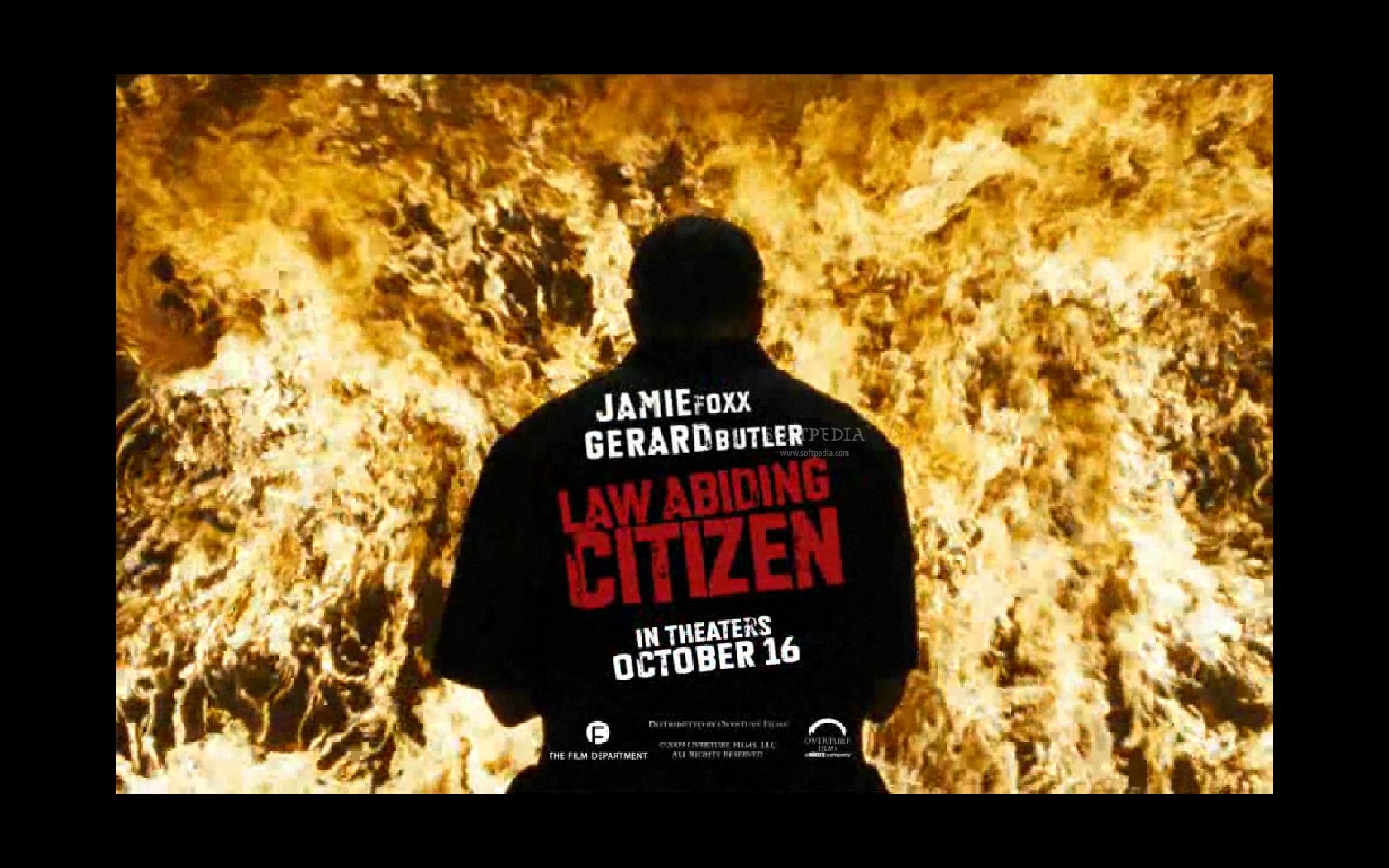
Film review "Law abiding citizen"


This purports to be a movie with a message. And, honestly, it could have been quite good. For a third of its total length, it sticks to that plan. But then, the plot gets out of hand, and while generating a certain degree of suspense, this is marred by how the original idea of criticizing the US practice of law enforcement is completely undercut and forgotten in the end.
Don't get me wrong, the plot still makes sense on a certain level, but it's just sad how its originality was laid to rest, in favour of an all-too-normal finish that could have appeared in every other movie. I will get to this in a minute.

-- Spoilers ahead --
 
The overall acting in my opinion was quite okay, but not more than standard. Gerard Butler plays his part well two thirds through the movie (not the last part but this is rather due to the overall plot's collapse). Frankly, though, it was hard for me to believe his metamorphosis from helpless family father to cold-blooded murderer and secret inventor-mastermind. However, I did never warm up to Jamie Foxx's style of play. His lack of empathy may have been part of the role, but his play also lacks charisma. Too often, he is uttering empty tough guy phrases of the „Don't you dare touch my family“-type. The domestic conflicts were implausible, too, as they were never resolved but still in the end everything was just fine. Granted, this is Hollywood, but why create such a fuss about stress at home in the first place? This is just misleading and leaves the viewer with a feeling of not being put off with a cheap solution.

Finally, here is my verdict on why I consider watching this movie a waste of time. As mentioned before, it is the end which is completely ruining the movie. Had they gone through with the quite interesting idea of criticizing the way the American law system works, this may have been a good movie. Disappointingly, this idea somehow gets lost halfway through the movie, when the guy who is trying to prove a point (Butler) apparently loses his own sense of judgment. His actions do not stand in any relation to the point he is trying to make.

I basically blame this on Hollywood's inability (or unwillingness) to think outside the box. So instead of creating a highly controversial movie, for which the potential is there, things get resolved the conventional way: No effort is made to try to understand a possible critique to the hegemonic system-in-practice, to the contrary, the bad guy is turned into a monster who is acting completely irrationally (on a sidenote, in my opinion the topic of terrorist motivation has been handled much better by the screenwriters of recent TV series Homeland). Butler turns out simply to be a threat to society that needs to be eliminated. No further examination of his ideas is required in order to keep the larger society safe.
There is some ambivalence remaining, insofar as Butler is playing a "brainiac", but this only helps the plot in furthering it to a climatic scenario of destruction. His character is not simply insane but rather completely crazy (or nuts), which makes him even more dangerous. With his brilliant yet vicious mind, he is seemingly always one step ahead. At the same time, his bloodthirst is getting ever more outrageous. In my opinion, this is some people in Hollywood showcasing their fear of really smart people with different ideas who seem so crazy that there can not be any reasonable way to understand them. Or grasp their motives. So what you do is misrepresent them, create a complete caricature. And in the end, the tough guy finds a way to outsmart the dangerously brilliant freak. I would call this symptom a technique of auto-legitimation. A defence of our existing view of the world, at the same time a normative reassurance that this is how things should be.

In the end of the movie, apparently Butler has achieved what he had set out to do: change the prosecutor's handling of legal affairs. Yet, this suddenly does not suffice to satisfy him anymore, and he needs to blow things up regardless. This is what bothered me, it betrays his motives from the start, and you feel fooled by the screenplay which seemed to promise otherwise.


("Law Abiding Citizen" has a score of 25% at rottentomatoes - however, 77% of viewers liked it there - and received 7.3 over at imdb. It stars Gerard Butler and Jamie Foxx in the lead roles. Nonetheless, I'll still be looking forward to Foxx's new, Tarantino-directed film "Django Unchained".)

Jan 9, 2011

Movies to watch in 2011

Here is my take on movies I am looking forward to seeing in 2011, in no particular order. You are welcome to comment and make suggestions!

Hesher

Looks like a great indie movie with one of my favourite and one of the most underrated of actors in it, Joseph Gordon-Levitt (Brick, 500 Days...) who plays a pot-smoking metal-head.
There is no trailer to the movie, it's only got a clip on the homepage, but it sure sounds great. Oh, and Natalie Portman is in it, and it was directed by Spencer Susser (short film I Love Sarah Jane).


Pirates of the Caribbean – On Stranger Tides

Yeah, I know, from indie to...
But the first three movies have been great fun, and you just gotta love Cap'n Jack Sparrow. Trailer looks awesome (might it be for the "addition-by-subtraction" of the-other-two-main-characters-whose-names-I-forget? - Anyway, Penelope Cruz is a surefire upgrade over Keira K.),


Rango

Same combination (Gore Verbinski + Jonny Depp) in anime, fun, and the West. Looks really fun,


especially considering that this is Jonny Depp acting for real, not smart-ass animation technology,


See?

127 Hours

I didn't like Danny Boyle's last film, this bestselling pseudo-Indian fairy-tale with the bonbon-sweet ending (despite featuring Freida Pinto aka the most beautiful face in recent film history). But this one here looks like an engaging story coupled with an academy-ripe performance by James Franco. The trailer features one of the very best rock songs recently written, Band of Horses' The Funeral, and perhaps that was the last tiny detail that got me totally enamoured with this movie. Gotta watch it!


True Grit

The annual dose of Wild Wild West. The real reason to look forward to this one, however, is its being directed by the Coen brothers. With Jeff Bridges and Määäätt Dääääimon. Trailer does not show that much yet, but it's supported by Jonny Cash, raising coolness levels by 200%.


Paul

Simon Clegg and Nick Frost, need I say more? This is going to be hilarious British humour by the Superbad-director. About an alien and lots of geek-stuff. Trailer.


The Tree of Life

Terrence Malick, Brad Pitt, and Sean Penn. Looks highly artistic, symbolic, and meaningful, might be heavy... Trailer

Battle: Los Angeles

Alien: Invasion. Unoriginal story, but looks like it is finally possible to combine explosive action with decent scripting, something like Transformers without Tourette and Attention Deficit Hyperactivity Disorder.


Twilight - Breaking Dawn

Just kidding. Although it is good we have those kinds of movies, so we can read entertaining reviews.

Biutiful

Two major reasons: Javier Bardem and Barcelona, Trailer. I'll just quote imdb: This is the story of Uxbal (Javier Bardem). Devoted father. Tormented lover. Mystified son. Underground businessman. Friend of the disposed. Ghost seeker. Spiritual sensitive. A survivor at the invisible margins in today's Barcelona ... Uxbal's story is simple: just one of the complex realities that we all live in today.

Red State

Something for the scientist of religion in me. "A group of misfits encounter fundamentalism gone to the extreme in Middle America."

The Way Back

imdb again: "A young military officer (Sturgess) leads an escape from a hellish gulag in Soviet-occupied Poland during WWII. Making a pact with six companions, the group embarks on a daring mission across Asia to hopeful safety in India." With Colin Farrell (whom I consider an actor since Bruges).


Essential Killing

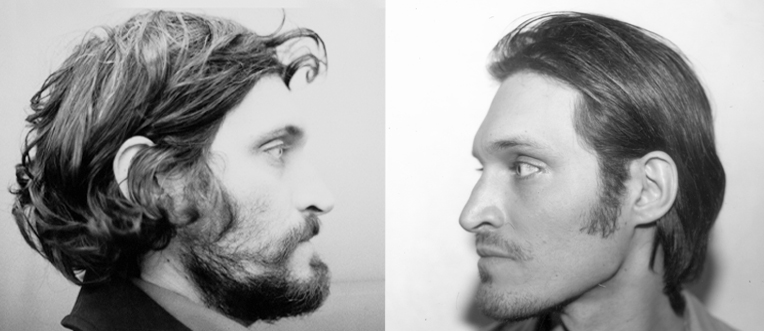
Vincent Gallo as an escaped prisoner in hostile environment, his usual enigmatic self. I don't especially like the movie's name, though.

Dec 25, 2010

Einmal Japan und zurück – Nuancen des populären neuen taiwanischen Kinos

Filmrezension

Einmal Japan und zurück – Nuancen des populären neuen taiwanischen Kinos

In diesem Artikel werden gegenwärtige kulturpolitische Tendenzen in Taiwan anhand der drei aktuellen und kommerziell erfolgreichen Filme CAPE NO. 7 海角七號, MONGA 艋舺 und 1895 IN FORMOSA 一八九 beleuchtet.

Cape No. 7 – Heimatfilm mit Wohlfühlatmosphäre

„Fuck Taipei!“ – mit diesen Worten beginnt Wei Te-Shens 魏德聖 Kassenschlager, der kommerziell erfolgreichste einheimische Film überhaupt. Und das ist durchaus programmatisch zu verstehen, spielt der Rest der Handlung doch fernab vom hochmodernen, kosmopolitischen und (dennoch) „hochchinesischen“ Taipei.
Wir befinden uns in und um Hengchun, der südlichsten Stadt Taiwans kurz vor dem Kenting-Nationalpark mit ihren malerischen alten Stadttoren. Hier wird noch Betelnuss gekaut, grundsätzlich ohne Helm Moped gefahren und – in Taiwanisch kommuniziert. Dabei ist die Handlung an sich zu vernachlässigen: Mit den örtlichen Gepflogenheiten über Kreuz stehende Japanerin versucht, das Konzert eines japanischen Schmusesängers am Strand zu organisieren, wird in lokale Machtkämpfe verwickelt und muss schließlich eine wild zusammengecastete Vorband aus dem Ort bühnenreif trimmen. Zwischendurch wird sie mit allerhand exzentrisch-trinkfester lokaler Gesellschaft und Folklore konfrontiert und verliebt sich in den mürrischen Aushilfsbriefträger, der – Ironie des Holzhammers – zu allem Überfluss auch noch Vorband-Sänger wider Willen ist. Kurz, die Lovestory wirkt nicht gerade nachvollziehbar, beansprucht die Nerven und strapaziert den Film auf insgesamt 2:10 Stunden, wobei der Höhepunkt eigentlich schon 40 Minuten vor dem Ende erreicht ist. Die Hauptdarsteller sind entweder kratzbürstig und mit dem immer gleichen Stirnrunzelblick gesegnet (Aga), oder kreischende Nervensägen (Tomoko). Dennoch kennt den Film in Taiwan jedes Kind; viele Menschen haben ihn gleich mehrfach im Kino angesehen, obwohl der Wiedersehfaktor bedenklich nah gegen Null tendiert. Don’t get me wrong, wie sie auch habe ich den Film sehr genossen – aber warum nur?
Das liegt vor allem am kuscheligen Heimatfilmflair einer fröhlichen Südtaiwan-Idylle mit Sonne, Meer und urigen Taiyu 台語-Sprechern, die kein Blatt vor den Mund nehmen. Taiwan ist eine kleine Insel, ein jeder ihrer Bewohner kann dies also mit eigenen Erlebnissen verknüpfen. Hier stecken denn auch das Herz und die Seele des Films: Es sind die sympathisch-skurrilen Figuren, die ihn sehenswert machen. Allen voran die älteren Darsteller, der überdrehte behornbrillte „Nationalschatz“ Opa Mo, der notorisch gut gelaunte Schlagzeuger „Frosch“ und Stadtratsvorsitzender Hung, dargestellt von Jonny Lin, welcher gerade seinen zweiten Frühling erlebt und mit seinen glaubwürdigen Rollen in Cape No. 7 und Monga Kultstatus im aktuellen taiwanischen Kino erspielt hat. Ihre für jeden Taiwan-Besucher durchweg nachvollziehbaren Charaktere würden in der ernsten Karriere- und Bürokratensprache Hochchinesisch nicht annähernd funktionieren. Implizit befördert Cape No. 7 damit aber eine Art „innerer Exotisierung“ Taiwans, einer Insel, deren großteils urbane Bevölkerung eben im Alltag kaum noch mit der beschaulichen dörflichen Atmosphäre in Kontakt kommt. Was nicht schlecht sein muss.

1895 – Rückblick voraus auf das neue Taiwan


Den Rahmen der Handlung bildet die japanische Eroberungskampagne zu Beginn der Besetzung Taiwans, welche aus zwei Perspektiven verfolgt wird: derjenigen der aufgeklärt und mitfühlend porträtierten Eroberer, die die Schönheit der Landschaft bewundern, und jener der lokalen Widerständler in der Gegend um das heutige Hsinchu. Kommuniziert wird in dem Film ausschließlich auf Hakka, Hoklo und Japanisch. Im Grunde sind die Motive beider Filme erstaunlich ähnlich. Sie heben Taiwans soziokulturelle und linguistische Diversität hervor. Gezeigt wird ein vielschichtiges Taiwan, das keine rein „chinesische“ Realität widerspiegelt, sondern in dem japanische Einflüsse keineswegs zweitrangig sind.
Im historischen Epos 1895 geschieht das ganz explizit in der Verbindung der Perspektiven von Besatzern und Widerstandskämpfern. Cape No. 7 sucht die Verbindung zur Vergangenheit über Liebesbriefe aus japanischer Zeit (die aber seltsam enthoben vom Filmgeschehen bleiben), heutige Popkultur-Verbindungen und Opa Mo, der beide zeitlichen Ebenen in einer Person verkörpert. Im Internet war Kritik zu lesen, warum eine ehemals japanisch kolonisierte Gesellschaft heute die Zeit der Kolonisierung schönfärben und darüber hinaus freiwillig zu ihrer erneuten „kulturellen Kolonisierung“ beitragen würde.[I.] Interessanterweise machen die in Cape No. 7 am japanisch-taiwanischen Kulturaustausch beteiligten Taiwaner durchweg von ihrer Subjektivität Gebrauch. Sie lassen sich keineswegs instrumentalisieren oder gar kolonisieren, sondern vermischen Elemente einer ganz Ostasien beeinflussenden japanischen Popkultur mit entschieden lokalen Ingredienzen.
Japan ist ein wichtiger Bestandteil des gegenwärtigen kulturellen Diskurses in „multicultural Taiwan“. Einerseits eine politisch geförderte Tendenz, entspricht sie andererseits aber auch den Realitäten sich rapide wandelnder Kulturen. Die Wahrung und Förderung kultureller Diversität ist eines der wichtigsten Projekte des v.a. DPP-geführten ersten Jahrzehnts seit 2000. Das Konsumverhalten der taiwanischen Kinobesucher zeigt hingegen nicht (nur) den Erfolg jener Politik, sondern vielmehr ihre Notwendigkeit. Politische Freiheit seit den 90er Jahren ermöglicht die freie Entfaltung von persönlicher wie Gruppen-Identität, was in 1895 und Cape No. 7 durch Kooperation und Heiterkeit in einer insgesamt wohlsituierten Gesellschaft positiv bewertet wird. 1895 handelt von reichen Hakka-Familien, traditionell stärker einem mythischen chinesischen Heimatland verbunden, doch veranlasst sie ihr Widerstandskampf gegen die Japaner zu enger Kooperation mit einer Bande von Hoklo-Freischärlern und ihren Ureinwohner-Kompagnons, nicht zum Partikularismus, sondern zur Vergemeinschaftung einer geographisch eng umschriebenen Schicksalsgemeinschaft. In Cape No. 7 wird großteils auf Taiyu kommuniziert, doch wird neben Japan auch Hakka („Malasun!“) und Ureinwohnern (vom Stamm der Rukai) große Präsenz eingeräumt. Geradezu symbolisch vereint wird „multicultural Taiwan“ in der auf der Bühne stehenden Band (allerdings ohne Waishengren, dafür mit christlichem Beistand), zu der sich im Duett einer polyglotten Version von Schuberts „Heidenröslein“(!) der japanische Minnesänger gesellt. Die Versuchung ist groß, die für manchen Slapstick genutzte Präsenz des Christentums im Film als weiteren Beleg anzuführen. Die Verbildlichung (des Wunsches?) eines harmonischen, auf Heiterkeit beruhenden Miteinanders der verschiedenen Bevölkerungsgruppen könnte das wahre Verdienst von Cape No. 7 sein. Auch wenn sich in der Realität Probleme ergeben, die der Film verschweigt, etwa die Vermarktung von „Ureinwohner-Schnaps“ durch Han-Entrepreneurs (Malasun) und die einhergehende Stigmatisierung der Yuanzhumin als allzeit benebelt-fröhliche Ohnesorgs.

Monga – Die nostalgische Verklärung des Bandenalltags

„These are the real Taiwan gangsters: Vulgar yet powerful (俗擱有力)!“

Doze Nius 鈕承澤 Film ist der zweite kommerziell äußerst erfolgreiche taiwanische Film seit Cape No. 7, dabei aber stilistisch anspruchsvoller und durchaus ansehnlich. Er erzählt eine Coming of Age-Geschichte in den Achtzigern im alten Taipeher Viertel Bangkah/Monga. Die Übernahme Mongas durch Waishengren stellt hier eine Zäsur dar, den Abschluss der guten alten Zeit. Von nun an gelten andere Spielregeln, es wird hart und auf Hochchinesisch verhandelt, Gewalt inbegriffen. Nicht zufällig endet gleichzeitig die Jugend der Hauptfiguren. Die Umstände werden rauer, die bisherige Leichtigkeit und Sorglosigkeit eines trotz aller Bandenkämpfe scheinbar behüteten Aufwachsens weicht dem Prinzip des Überlebens des Stärksten und endet in gegenseitigem Verrat. Taiwan hat seine Unschuld verloren.
Liebe zum Detail, Zeitlupen, intelligent eingesetzte Musik (in der Tradition von Millennium Mambo), die Faustkämpfe zu Walzer-Einlagen werden lässt, Kameraschwenks, Farben, die das Taiwan der 80er Jahre lebendig machen. Wirre Verfolgungsjagden durch schmale Gassen wellblechbedeckter Einstockhäuser, groteske Massenschlachten vor den Marksteinen Taipeis bis heute, Longshan-Tempel, Huaxi-Nachtmarkt und Snake Alley. Eine Geschichte von Freundschaft, Zusammenhalt und Erwachsenwerden. Jugendliches Balgen. Aberwitzige Situationen und wohldosierte Komik suggerieren die Sorglosigkeit unbeschwerten Lebens. Trügerisch, wie sich herausstellen soll. Denn das Leben im Gangstermilieu kann ein ernstes sein. All das, die bekannten Orte, die komödienhafte Leichtigkeit, der Gebrauch eines leicht ironischen Taiyu erzeugen ähnlich wie in Cape No. 7 eine Identifikation der Kinobesucher mit den Hauptfiguren, auf die sie im von hochanspruchsvollen Arthouse-Movies und belanglosen Schnulzen geplagten taiwanischen Kino lange gewartet haben. Allen voran der unwiderstehliche Boss Geta, gespielt von Jonny Lin. Spielerisch wird Geschichte aufgearbeitet und über das populäre Medium Film eine alternative Narrative taiwanischer Subjektivität erzeugt, die das Alltagsgeschehen und seine ganz normalen Helden und Unholde in den Fokus rückt. Nicht prominent, doch auch hier kommt Japan vor, als Ort der Sehnsucht für den jungen Hauptdarsteller. Konsequenterweise endet die Geschichte denn auch in einem versucht-poetischen, dabei jedoch vor allem pathetischen Verwandeln von Blutstropfen in fallende Kirschblüten – unmissverständliche Symbolik.
Ein zwar langer, bis auf das überdramatisierte Ende aber gelungener, kurzweiliger Film, der keinem weh tut. Man merkt Niu seine Zusammenarbeit mit Hou Hsiao-Hsien punktuell an. Als Bonus bekommt man einen Eindruck von den modischen Stilverbrechen Ostasiens, was Frisuren anbelangt. Das macht Lust auf mehr neues Kino aus Taiwan. Absolute (Geheim-?)Tipps sind die Episodenfilme des Paares Lou Yi-an 樓一安 und Singing Chen 陳芯宜, GOD MAN DOG 流浪神狗人 [II.] und A PLACE OF ONE’S OWN 一席之地, jeweils mit dem großartigen Jack Kao 高捷 in einer wunderbaren Rolle. Kaum warten mag ich auf das nächste Werk des Cape-Autoren, der nun aufgrund seiner Bekanntheit endlich seinen lange vertagten Film über den Wushe-Vorfall 霧社事件 von 1930, SEEDiQ BALE 賽德克·巴萊 [III.], finanziert bekommt. jt

Monga kommt am 9. Dezember 2010 als Monga – Gangs of Taipeh in die deutschen Kinos. Am 25. November startet die von Wim Wenders produzierte romantische Komödie Au Revoir Taipei.

(erscheint in Dianmo 11, http://dianmo.wordpress.com/ausgaben/)

Anmerkungen

I. Taiwanonymus, Movie Review: Cape No. 7, Kommentare, http://taiwanonymous.blogspot.com/2008/10/movie-review-cape-no-7.html.
III. 5 Min. Trailer: http://www.youtube.com/watch?v=yD1Mhl0MQVw&feature=related, Blog: http://www.wretch.cc/blog/seediq1930&category_id=12897222. Der Wushe-Vorfall war ein Aufstand der Dekedaya, die auf Kopfjagd gegen ihre japanischen Besatzer gingen, vgl. Rudolph, Taiwans multiethnische Gesellschaft, 127f.

Abbildungen
Cape No. 7_1 http://anna69.pixnet.net
Cape No. 7_2 http://cape7.pixnet.net
Monga_1 www.mongathemovie.com
Monga_2 http://en.wikipedia.org
1895 In Formosa http://asianmediawiki.com

Aug 16, 2010

Formosa Betrayed - film review

First of all, this is an important movie to see for everyone with an interest in Taiwanese or Asian history. Though mostly fictional, the film is based on a number of events in the 1980s. The good thing is: This movie is political, and it takes sides. Portraying the KMT regime in such a highly critical fashion, I don't think this movie might have been shot even in today's Taiwan. Although officially aiming at a neutral stance between blue and green, the movie must be called pro-TI (strange thing that neutrality today seems to imply the avoidance of mentioning anything shady about the KMT's past, or a "status quo" position in between independence and unification while altering the status quo via economic dependence is credited perfectly "neutral").


So, while the fact that it is a Hollywood produced flick surely has its advantages (concerning mostly the movie's outreach), there come a number of flaws with it. (I won't complain about Dawson's Creek ex teen idol Van der Beek starring the lead role.) Unfortunately, the acting is not very convicting since director Adam Kane was mostly relying on American actors with Asian background. Of course, their English is perfect, while there is only little Chinese in the movie and even less use of the Taiwanese language (except for the Kaohsiung demonstration). How police officer Chen was stumbling his few sentences in Mandarin - hurt. Even the most committed actor in this movie - Will Tiao - had an unmistakable American accent to his Chinese. This seriously made the film's atmosphere suffer. Another point of critique has to be its being shot in Thailand, which also means that the entire extra cast was Thai - and I would maintain that you can actually tell Taiwanese apart from Thai. The extra cast in a weird way did not feel involved in the film at all, most strikingly in the demonstration scene in Kaohsiung. I have seldom seen an agitated crowd acting less agitated. Even when security police was marching on, people hardly seemed to take notice and adjust their behaviour. The pictures of streets and houses had a certain artificial feel to them, like you could tell they were studio-made. I don't really buy into Thai studios being able to resemble Taiwan in the 80s more than parts of Taiwan today. Sure, the costs would have been higher, but if wanted there would have been some way...

To be honest, I was disappointed by the movie's overall artisanry. Like I said, this is an important movie, for it also depicts historical material (background on Chiang Kai-shek, the US and Red China etc.), but it will have a hard time attracting people solely for its entertainment value. This being said, I wish the film could be seen by more Taiwanese kids. Perhaps they will like the movie for its handsome lead actor and thus subtly internalise the messages delivered in the movie which present an alternative to mainstream KMT-imposed amnesia on its shady past. For this matter, it is definitely good news that Formosa Betrayed was showed to members of US Congress, too.
The film's title alluding to George Kerr's legendary journalist account of suppressed and abused Taiwan (1965) is a bit misleading, for at least I would expect a work more equivalent in content and quality to wear this book's name.

Citing film critic Roger Ebert on the movie:
As a result, "Formosa Betrayed" begins rather awkwardly, but ends by making a statement that explains a great many things. One question left unasked: Why did we promise to defend Taiwan with nuclear weapons but refuse to recognize it as a sovereign nation?
Review and presentation with more pictures in Chinese.
The Boston Globe has a review of the movie, and says the following of the acting:

Tiao is a passable actor at best, but he’s infinitely more genuine than Van Der Beek, who continues to be the same limited performer he was on TV’s “Dawson’s Creek,’’ just older, and, in this case, sweatier.

As a political thriller, “Formosa Betrayed’’ has enough suspense and intrigue to pull viewers along willingly. It doesn’t try too hard, which is refreshing. John Heard plays a veteran FBI colleague of Kelly’s; in another thriller he might be a double agent, but here he’s every bit as average as he seems.

And as a history lesson, the film is a decent primer. It will enlighten those who may not know much about the post-World War II era of Chinese rule over the island the Dutch named Formosa, a.k.a. Taiwan.


Along comes the trailer:


Mar 8, 2009

Wenn Kinder das Sagen hätten...

Kinder drücken meist direkt und ehrlich das aus, was sie denken. Was läge also näher, als Kinder zu den Themen zu Wort kommen zu lassen, die so klar und einfach beantwortet werden können, über die wir uns jedoch böse die Köpfe zerbrechen und manchmal sogar gegenseitig einschlagen würden...?


Surrender : Director: Tung-Wang Wu | Genre: Documentary | Produced In: 2004

Synopsis: SURRENDER is a documentary in which Taiwanese children of 4 to 8 years old talk about their views on surrendering to China. Asking children big questions sounds silly, and living under China's threat to Taiwan is no laughing matter. As in my other recent works, I explore the concept of reversal to provoke an accidental stream of unexplored thoughts and discover alternative perspectives on the conventional wisdom about social issues, in this case, China's constant threat to Taiwan.

Die hier interviewten hinreißenden Kinder leben auf Kinmen, der Insel direkt vor der Festlands-Küste, die aber zu Taiwan (resp. der Republik China) gehört. Infos über den Autoren, der 2004 mit "Surrender" auf dem Talent Campus der Berlinale vertreten war, hier.

Ich habe ein Weilchen hin und her überlegt, ob man Kinder unbedingt mit solchen Fragen konfrontieren muss... Und ich bin zu keinem Schluss gekommen. Warum sollte man ihnen nicht den Verstand zutrauen, auch mit solch heiklen Dingen umzugehen?

Dann wiederum drücken Kinder oft genug genau das aus, was sie in ihrem sozialen Umfeld tagtäglich zu hören und sehen bekommen. Mit diesem Gedanken im Hinterkopf können wir durchaus Schlüsse aus den Aussagen der Kinder ziehen... In Taiwan wird auch in der nächsten Generation kein "chinesisches" Bewusstsein entstehen, sondern sich der statistisch schon nachgewiesene Trend fortsetzen, sich distinkt, artikuliert und selbstbewusst als "Taiwaner" zu identifizieren.

Was mir nicht gefällt, ist dieser nationalistische Unterton bei allem und jedem, was das Verhältnis zwischen Taiwan und China anbetrifft. Ist verstärkter Nationalismus eine Form der Kompensation für die nicht gewährte Anerkennung dessen, was im Gefühl schon lange Realität ist, nämlich ein de jure anerkannter taiwanischer Staat? Ist der Nationalismus eine natürliche Reaktion auf die Drohung des "Anderen", sich der mühsam erkämpften Rechte und Freiheiten zu bemächtigen? Eine Trotzreaktion, die durch die so unverhältnismäßige machtpolitische Unterlegenheit einer kleinen Insel gegenüber dem Kontinent-gleichen China nur noch gesteigert wird?

Hier noch ein zweiter Eindruck des Regisseurs, Wu Tung-wang: